


President Ma Ying-jeou (馬英九) is “unlikely” to accelerate the process of reconciliation with China during his second term, former American Institute in Taiwan chairman Richard Bush told a forum in Washington on Tuesday.
He said that while some in Beijing would welcome negotiations on political and security issues, such negotiations were not on the agenda.
Bush made the remarks in a keynote speech at a major all-day conference organized by the Center for Strategic and International Studies and the Brookings Institution on the implications of Taiwan’s presidential and legislative elections.
“The two sides made progress in cross-strait relations over the last four years because they began with a conscious decision to focus on easy issues — mainly economic issues — and those matters have now been pretty much exhausted,” Bush said.
“Any new issues that Taipei and Beijing take up will probably be hard. This is even more true with political and security matters. On these, the two sides have not yet laid an adequate conceptual foundation,” he said.
“There is not a political foundation in Taiwan for such discussions,” he added.
“The smartest thing for them to do in Ma’s second term is consolidate the gains of the first term,” he said.
Bush, senior fellow and director of the Center for Northeast Asian Policy Studies at Brookings, said Taiwan faced a daunting policy agenda and needed a strategy to ensure that it remained economically competitive in a world of globalization and technological change.
Taiwan needed to improve its defense strategy and the ability to carry it out because it could “ never be absolutely certain that Beijing will never use its increasingly robust military power for some degree of coercion,” he said.
Because the Republic of China was at the core of future political and security relations with China, Taiwan needed to think in more depth about the content of sovereignty — “what it means, what is important and what is trivial,” Bush said.
Taiwan needed to reform its political system to make it a better vehicle for reflecting the public will and making policy choices, he said.
There was a potential for concrete steps in military confidence-building measures, assuming they were crafted in a way that fostered true mutual security, he added.
“I do hope that Beijing will be patient and understand that obstacles must be removed before movement in any new areas can occur,” Bush said.
He said that based on his own analysis, if Democratic Progressive Party (DPP) candidate Tsai Ing-wen (蔡英文) had been elected, Taiwan would have paid “some price” for her refusal to accept the so-called “1992 consensus.”
“It wouldn’t have been a terrible situation, it would have been more of a stall. But to the extent that this was the key question for Taiwan voters, they were unwilling to take that risk,” he said.
Bush said he expected US-Taiwan relations to continue to improve and that the two governments would complete work on some important initiatives such as the visa-waiver program.
“The area that is most compelling, is the economic relationship,” he said.
“It is not in Taiwan’s interest to be excluded from the economic liberalization that is going on in the Asia-Pacific even as it carries through with Economic Cooperation Framework Agreement [ECFA] with the People’s Republic of China,” he said.
“The United States should be a major target of Taiwan’s broader liberalization effort. This should be a strategic priority for both of our countries and in pursuing this priority, neither Taipei nor Washington should allow narrow domestic political interests to get in the way,” he said.
Bush said that Taiwan was important as a litmus test of what kind of great power China would become.
“If China approaches the Taiwan Strait issue in a way that is flexible, conceptually creative and responsive to the sensitivities of the people on Taiwan, that will indicate that China’s revival will be positive,” he said.
“If, on the other hand, China’s approach to Taiwan is conceptually rigid, unresponsive to popular feeling and laden with pressure tactics, that will send a different message about the broader trend,” he said.
Bonnie Glaser, a senior fellow in China studies at the Center for Strategic and International Studies, said the DPP would continue to play a critically important role in Ma’s second term.
Among other important duties, it would be tasked with keeping the ruling party honest.
She said Taiwan remained a “beacon of democracy to Asia and the world” and represented a model to which people in China could aspire to.
“Ma’s re-election for a second term will ensure continued stability and predictability in cross-strait relations, which is critical for American interests,” she said.
“The US will not have to worry about the reemergence of cross-strait tensions or the implications of reunification. The US will continue to support Ma’s pragmatic approach to dealing with Beijing,” Glaser said.
She added there was not likely to be pressure on Ma to move more slowly or quickly to enhance cross-strait relations.
“The US will leave it up to Taiwan to decide. Washington will expect to be consulted as a friend and quasi-ally with important interests at stake,” she said.
“US policy towards Taiwan will likely continue to be guided by the view that only a secure and confident Taiwan will negotiate with Beijing. US ties with Taiwan must therefor remain strong,” she said.
“In Ma’s second term, whether [US] President [Barack] Obama is re-elected or replaced by a Republican, it is likely that US arms sales to Taiwan will continue. The question is what will be sold,” she said.
“President Ma’s request to purchase F-16C/Ds remains a front burner issue,” she added.
Moderators for the conference’s three panels were Edward McCord, director of the Taiwan education and research program at the George Washington University; Nancy Bernkopf Tucker, professor of history at Georgetown University; and Cynthia Watson, professor of strategy at the National War College.
Among the panelists were Apple Daily columnist Antonio Chiang (江春男); Academia Sinica research fellow Chu Yun-han (朱雲漢) and associate research fellow David Huang (黃偉峰); and Carnegie Endowment vice president of studies Douglas Paal.
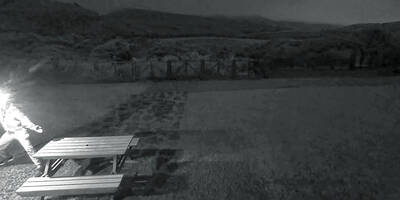
Yangmingshan National Park authorities yesterday urged visitors to respect public spaces and obey the law after a couple was caught on a camera livestream having sex at the park’s Qingtiangang (擎天崗) earlier in the day. The Shilin Police Precinct in Taipei said it has identified a suspect and his vehicle registration number, and would summon him for questioning. The case would be handled in accordance with public indecency charges, it added. The couple entered the park at about 11pm on Thursday and began fooling around by 1am yesterday, the police said, adding that the two were unaware of the park’s all-day live
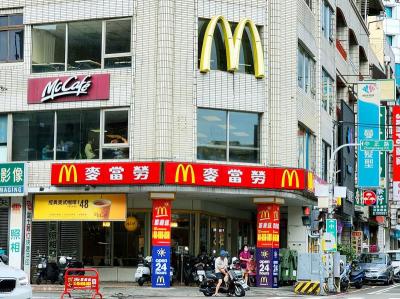
Fast food chain McDonald's is to raise prices by up to NT$5 on some products at its restaurants across Taiwan, starting on Wednesday next week, the company announced today. The prices of all extra value meals and sharing boxes are to increase by NT$5, while breakfast combos and creamy corn soup would go up by NT$3, the company said in a statement. The price of the main items of those meals, if ordered individually, would remain the same. Meanwhile, the price of a medium-sized lemon iced tea and hot cappuccino would rise by NT$3, extra dipping sauces for chicken nuggets would go up

Yangmingshan National Park’s Qingtiangang (擎天崗) nature area has gone viral after a park livestream camera observed a couple in the throes of intimate congress, which was broadcast live on YouTube, drawing large late-night crowds and sparking a backlash over noise, bright lights and disruption to wildlife habitat. The area’s livestream footage appeared to show a couple engaging in sexual activity on a picnic table in the park on Friday last week, with the uncensored footage streamed publicly online. The footage quickly spread across social media, prompting a tide of visitors to travel to the site to “check in” and recreate the

Minister of Digital Affairs Lin Yi-ching (林宜敬) yesterday cited regulatory issues and national security concerns as an expert said that Taiwan is among the few Asian regions without Starlink. Lin made the remarks on Facebook after funP Innovation Group chief executive officer Nathan Chiu (邱繼弘) on Friday said Taiwan and four other countries in Asia — China, North Korea, Afghanistan and Syria — have no access to Starlink. Starlink has become available in 166 countries worldwide, including Ukraine, Malaysia, the Philippines and Vietnam, in the six years since it became commercial, he said. While China and North Korea block Starlink, Syria is not


 RSS
RSS