


Campus restaurants at National Taiwan Normal University (NTNU) sparked controversy when a group of students launched an online campaign via Facebook to protest against what they said was overpriced food and the school’s refusal to meet their demands.
The three campus restaurants on Shida Road opened last year as part of a reconstruction of the university’s old military training office, offering bagels, pasta, pizza and set meals costing about NT$100.
However, lunch and dinner at the campus cafeteria costs between NT$50 and NT$70.
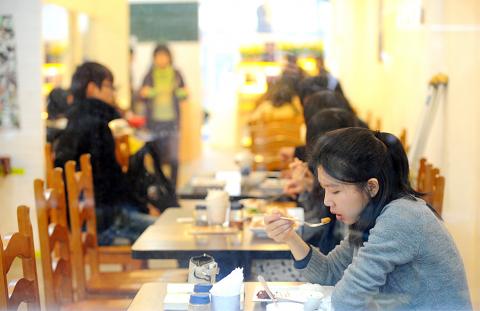
Photo: Lo Pei-der, Taipei Times
NTNU Student Association chairman Chen Yu-hsun (陳禹勳) said the campaign also challenged the school and the contractor of the renovation over what the students say is unreasonable rent that forced restaurants to sell expensive food.
“Eating at the campus restaurants is already like eating at a food court in a shopping mall. We asked restaurant owners to lower their prices, but they said the unreasonable rent they pay was the main reason behind the overpriced food,” he told a press conference at the Taipei City Council building yesterday.
The university’s deputy dean of general affairs, Chen Mei-yong (陳美勇), said the school had commissioned the reconstruction project and had outsourced the management of the restaurants to the contractor, Taishin Corp.
Taishin pays NT$200,000 per month to the school and leases space to the three restaurants, asking each to pay monthly rent of about NT$200,000.
Democratic Progressive Party Taipei City Councilor Kao Chia-yu (高嘉瑜) accused the university of allowing the contractor to demand “unreasonable” rent from campus restaurants, thereby exploiting both the restaurant operators and the students.
Kao urged the university to renegotiate the contract to protect the interests of students.
A manager at Taishin, Lin Kun-liang (林坤良), said the reconstruction project, which included the renovation of the old military training office and a complete redecoration of the outdoor environment, cost the company more than NT$5 million (US$169,500).
He said the company would pay a monthly subsidy of NT$40,000 to each of the restaurants, but declined to confirm whether it would consider further lowering the rent.
Chen said the university would continue to communicate with the contractor and the restaurant operators in the hope that the latter would agree to lower the price of their meals to between NT$50 and NT$70.

In a historic first, Taiwanese officials participated in this year’s Riga Strategic Communications Dialogue in Latvia from Wednesday to Friday last week, which debuted a breakout session focused on Taiwan The event organizer, the NATO Strategic Communications Center of Excellence, displayed Taiwan’s national flag and the officials’ formal titles on their Web site. Taiwanese attendees included National Security Council (NSC) Deputy Secretary-General Lin Fei-fan (林飛帆) and deputy head of the Taipei Representative Office in the UK, Chiang Ya-chi (江雅綺). In addition to the session discussing Taiwan titled “Taiwan: Navigating Strategic Communication in a Tense Environment,” the dialogue also included sessions
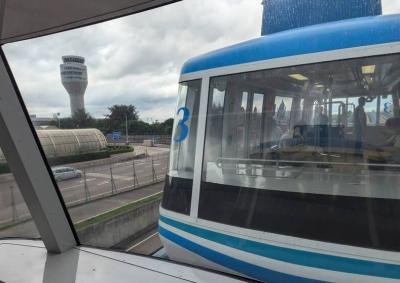
Taiwan Taoyuan International Airport is to suspend its automated Skytrain service connecting Terminal 1 and Terminal 2 starting on July 1 to facilitate connection works for the upcoming Terminal 3, the airport operator said today. Passengers and staff who need to travel between the two terminals after the suspension can instead use the Taoyuan MRT or the airport's 24-hour shuttle bus service, Taoyuan International Airport Corp said. The Taoyuan MRT Airport Line directly links the two terminals, while the shuttle buses are to operate around the clock, the company added. The Skytrain provides free transportation between the airport’s two terminals for travelers and
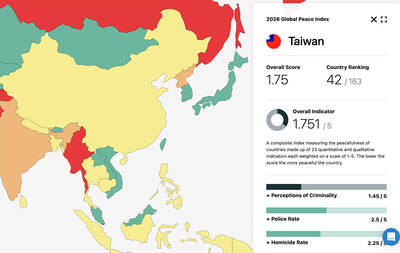
Taiwan ranked 42nd in terms of peacefulness among 163 countries, down five places from last year, according to this year’s Global Peace Index. With an overall score of 1.751, Taiwan dropped from 37th last year, the report published by the global Institute for Economics and Peace showed. The overall score measures a country’s level of peacefulness using 23 quantitative and qualitative indicators across three domains — ongoing domestic and international conflict, societal safety and security, and militarization. While Taiwan ranked 42nd worldwide, it was listed in ninth place among the 19 Asian-Pacific countries in the report, after New Zealand, Singapore, Japan, Malaysia,
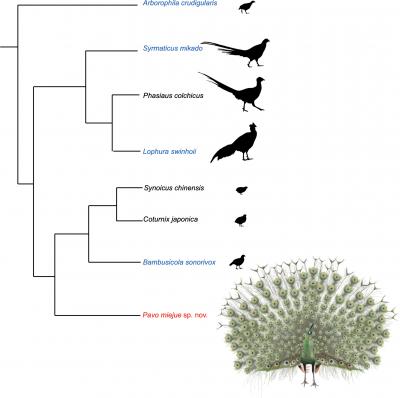
Through analyzing fossil evidence, a research team at National Taiwan University (NTU) discovered the largest endemic bird to have lived in Taiwan, naming it Pavo miejue, or extinct peafowl (滅絕孔雀). The Mikado pheasant, which is printed on the back of the NT$1,000 bank note, was previously believed to be the biggest endemic bird to Taiwan. The research team’s findings suggest that Pavo miejue lived during the Pleistocene epoch tens of thousands of years ago. It is the first endemic extinct bird species discovered and formally named in Taiwan. The study was coauthored by NTU Institute of Ecology and Evolutionary Biology professor Tsai Cheng-hsiu (蔡政修),


 RSS
RSS