


A full-size replica of a 17th-century Ming Dynasty armed merchant ship set off on its maiden voyage from Anping Harbor (安平漁港) in Tainan City yesterday to re-enact the scene of the arrival of a Chinese general more than 300 years ago.
Tainan Mayor Hsu Tain-tsair (許添財) launched the replica boat along with Oscar-winning director Ang Lee (李安).
The 29.5m wooden replica sailed, escorted by more than 10 modern ships and police helicopters, to the mouth of the Luermen River, the site of the landing of the Ming Dynasty’s Cheng Cheng-kung (鄭成功), better known as Koxinga, in 1661.
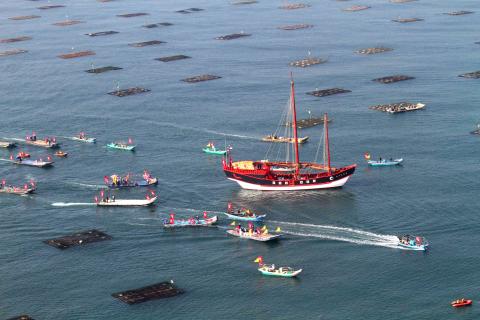
Photo provided courtesy of the Tainan City Government
The replica of the ancient ship is named Taiwan Cheng Kung to commemorate the military leader, who had forced the Dutch out of Taiwan in 1662 and making Taiwan his base for a campaign against the Manchu-ruled Qing dynasty.
To recreate the ship, the Tainan City Government sent officials to Japan in 2008 to obtain a copy of a painting of the vessel held at the Matsura History Museum in Hirado City, Nagasaki Prefecture, where Koxinga was born in 1624.
Based on the 1706 painting, the 270 tonne replica, with a displacement of 135 tonnes, was completed in 18 months and the Council for Cultural Affairs -provided NT$80 million (US$2.5 million) in funds
Unlike the sail-driven original, the replica is equipped with modern navigation devices and an engine. It will conduct a week-long, round-the-island voyage next year as part of celebrations for the 100th anniversary of the founding of the Republic of China.
The ship will also sail to Koxinga’s birthplace in Hirado, as well as Quanzhou in Fujian Province, China, and the outlying islands of Kinmen and Penghu, where Koxinga’s army was once based, the Tainan City Government said.
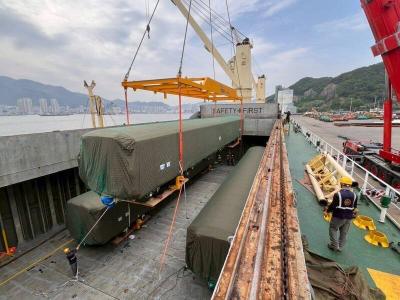
The first of 10 new high-capacity trains purchased from South Korea’s Hyundai Rotem arrived at the Port of Taipei yesterday to meet the demands of an expanding metro network, Taipei Rapid Transit Corp (TRTC) said yesterday. The train completed a three-day, 1,200km voyage from the Port of Masan in South Korea, the company said. Costing NT$590 million (US$18.79 million) each, the new six-carriage trains feature a redesigned interior based on "human-centric" transportation concepts, TRTC said. The design utilizes continuous longitudinal seating to widen the aisles and optimize passenger flow, while also upgrading passenger information displays and driving control systems for a more comfortable
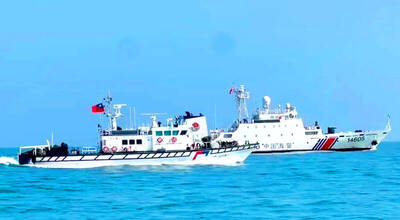
Instead of focusing solely on the threat of a full-scale military invasion, the US and its allies must prepare for a potential Chinese “quarantine” of Taiwan enforced through customs inspections, Stanford University Hoover fellow Eyck Freymann said in a Foreign Affairs article published on Wednesday. China could use various “gray zone” tactics in “reconfiguring the regional and ultimately the global economic order without a war,” said Freymann, who is also a nonresident research fellow at the US Naval War College. China might seize control of Taiwan’s links to the outside world by requiring all flights and ships entering or leaving Taiwan
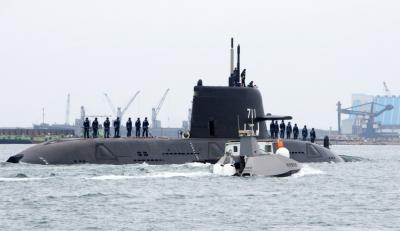
Taiwan's first indigenous defense submarine, the SS-711 Hai Kun (海鯤, or Narwhal), departed for its 13th sea trial at 7am today, marking its seventh submerged test, with delivery to the navy scheduled for July. The outing also marked its first sea deployment since President William Lai (賴清德) boarded the submarine for an inspection on March 19, drawing a crowd of military enthusiasts who gathered to show support. The submarine this morning departed port accompanied by CSBC Corp’s Endeavor Manta (奮進魔鬼魚號) uncrewed surface vessel and a navy M109 assault boat. Amid public interest in key milestones such as torpedo-launching operations and overnight submerged trials,
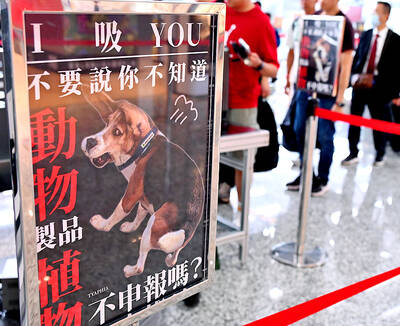
Quarantine awareness posters at Taiwan Taoyuan International Airport have gone viral for their use of wordplay. Issued by the airport branch of the Animal and Plant Health Inspection Agency, the posters feature sniffer dogs making a range of facial expressions, paired with advisory messages built around homophones. “We update the messages for holidays and campaign needs, periodically refreshing materials to attract people’s attention,” quarantine officials said. “The aim is to use the dogs’ appeal to draw focus to quarantine regulations.” A Japanese traveler visiting Taiwan has posted a photo on X of a poster showing a quarantine dog with a


 RSS
RSS