


Straits Exchange Foundation (SEF) Chairman Chiang Pin-kun (江丙坤) yesterday dismissed media reports that there were political reasons behind the selection of Chongqing as the location for inking the Economic Cooperation Framework Agreement (ECFA).
Chiang also dismissed media speculation that the signing of the ECFA was deliberately timed to coincide with the seventh anniversary of the signing of Hong Kong’s Closer Economic Partnership Arrangement (CEPA) with China.
“We’ve hoped to complete the signing of important agreements in the first half of the year,” Chiang said.
The Chinese-language Liberty Times (the Taipei Times’ sister newspaper) on Monday reported on the choice of Chongqing as the venue for the signing. It was the then-Chinese Nationalist Party administration’s (KMT) provisional capital during its war with the Chinese Communist Party (CCP) before the KMT fled to Taiwan and it was where the two once signed a peace agreement. The report said the selection of Chongqing as the location to sign the ECFA suggested the KMT agreed with the CCP’s stance that the two sides of the Taiwan Strait are awaiting “reunification.”
Dismissing the report during a trip to a historic pottery town with Beijing’s Association for Relations Across the Taiwan Straits Chairman Chen Yunlin (陳雲林) on Monday afternoon, Chiang said Chongqing CCP Secretary Bo Xilai (薄熙來) previously invited him to hold the fifth round of cross-strait talks in Chongqing.
“I thought we, the guests, might as well follow the host’s wishes,” Chiang said, adding that the choice did not have any special political significance.
Chiang later yesterday met with China’s Taiwan Affairs Office Director Wang Yi (王毅), who described the signing of the ECFA between Taiwan and China yesterday a major development and a milestones in the development of cross-strait peace.
Wang congratulated Chiang on the signing and told him and other SEF officials that the ECFA is expected to help both sides across the Taiwan Strait improve their competitiveness.
Wang and Chiang held a closed-door meeting after Wang finished his opening remarks.
Chiang is also to meet Bo this morning after the SEF and ARATS delegates plant memorial trees in a botanical garden. Chiang and his entourage are to wrap up their stay in China and return to Taipei this evening.
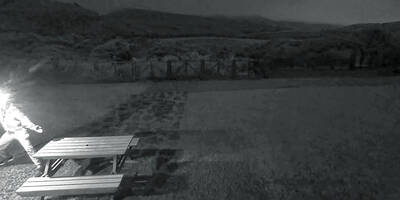
Yangmingshan National Park authorities yesterday urged visitors to respect public spaces and obey the law after a couple was caught on a camera livestream having sex at the park’s Qingtiangang (擎天崗) earlier in the day. The Shilin Police Precinct in Taipei said it has identified a suspect and his vehicle registration number, and would summon him for questioning. The case would be handled in accordance with public indecency charges, it added. The couple entered the park at about 11pm on Thursday and began fooling around by 1am yesterday, the police said, adding that the two were unaware of the park’s all-day live
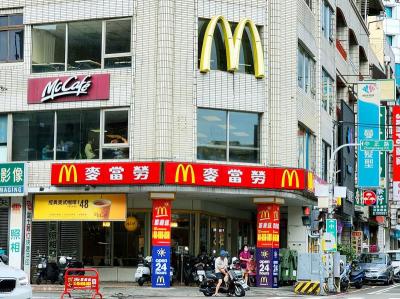
Fast food chain McDonald's is to raise prices by up to NT$5 on some products at its restaurants across Taiwan, starting on Wednesday next week, the company announced today. The prices of all extra value meals and sharing boxes are to increase by NT$5, while breakfast combos and creamy corn soup would go up by NT$3, the company said in a statement. The price of the main items of those meals, if ordered individually, would remain the same. Meanwhile, the price of a medium-sized lemon iced tea and hot cappuccino would rise by NT$3, extra dipping sauces for chicken nuggets would go up
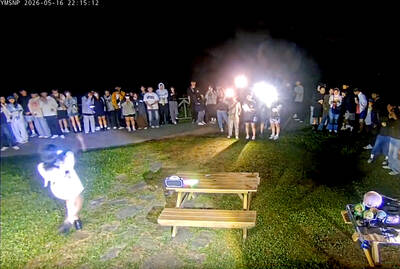
Yangmingshan National Park’s Qingtiangang (擎天崗) nature area has gone viral after a park livestream camera observed a couple in the throes of intimate congress, which was broadcast live on YouTube, drawing large late-night crowds and sparking a backlash over noise, bright lights and disruption to wildlife habitat. The area’s livestream footage appeared to show a couple engaging in sexual activity on a picnic table in the park on Friday last week, with the uncensored footage streamed publicly online. The footage quickly spread across social media, prompting a tide of visitors to travel to the site to “check in” and recreate the

Minister of Digital Affairs Lin Yi-ching (林宜敬) yesterday cited regulatory issues and national security concerns as an expert said that Taiwan is among the few Asian regions without Starlink. Lin made the remarks on Facebook after funP Innovation Group chief executive officer Nathan Chiu (邱繼弘) on Friday said Taiwan and four other countries in Asia — China, North Korea, Afghanistan and Syria — have no access to Starlink. Starlink has become available in 166 countries worldwide, including Ukraine, Malaysia, the Philippines and Vietnam, in the six years since it became commercial, he said. While China and North Korea block Starlink, Syria is not


 RSS
RSS