


Several women’s groups criticized the Ministry of the Interior (MOI) yesterday over its plan to decriminalize the sex industry, saying that doing so would only make the country a global leader in selling the female body.
Deputy Minister of the Interior Chien Tai-lang (簡太郎) reiterated last week that decriminalizing the sex industry was the ministry’s long-term policy objective, following the release of a constitutional interpretation that said a clause in the Social Order Maintenance Act (社會秩序維護法) that imposes penalties on sex workers, but not their clients, was unconstitutional.
The Council of Grand Justices explained that the clause was considered unconstitutional because it violates the spirit of equality as stated in the Constitution.
Although the women’s groups welcomed the interpretation itself, most of them disagreed with the ministry’s plan, saying it “overinterpreted the interpretation.”
“Chien thinks decriminalizing the sex industry is a [global] trend, but it still remains questionable whether such a measure would effectively manage the sex industry, make it a ‘clean’ industry and economically protect disadvantaged women in the industry,” Taipei Women’s Rescue Foundation executive director Kang Shu-hua (康淑華) told a press conference at the legislature yesterday.
Kang said legalizing the sex industry wouldn’t resolve all the issues associated with it, such as human trafficking and organized crime.
She said these issues did not improve when the area around Huaxi Street (華西街) in Taipei was made a red light district in 1956. Rather, the red light district simply led to more illegal prostitutes — many human trafficking victims.
While people who support the legalization of the sex industry cite examples of other countries where prostitution is legal to support their case, International Campaign to End Child Prostitution in Asian Tourism-Taiwan secretary-general Lee Li-fen (李麗芬) said some of those countries have realized a legal sex industry did not solve all of the issues and were considering doing a U-turn.
“Three years after Germany inaugurated the Act Regulating the Legal Situation of Prostitutes, it has been found to be ineffective and there has been little improvement of prostitutes’ working conditions because there was lack of social consensus on the law,” Lee said. “Sex workers are too afraid to expose their true identity and therefore only a handful of sex workers have signed employment contracts with brothels or become registered, self-employed prostitutes.”
Garden of Hope Foundation executive director Chi Hui-jung (紀惠容), on the other hand, said instead of legalizing the sex industry, the government should come up with a solution to resolve the social and economic problems that result in women working as prostitutes.
“Women in the sex industry are exploited — most of the money goes into the pockets of human traffickers, madams, pimps and brothel owners,” Chi said.
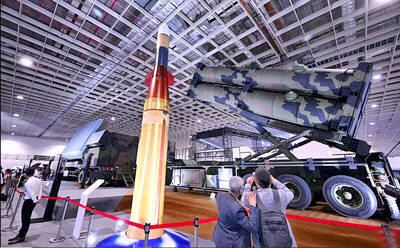
Taiwan is to commence mass production of the Tien Kung (天弓, “Sky Bow”) III, IV and V missiles by the second quarter of this year if the legislature approves the government’s NT$1.25 trillion (US$39.78 billion) special defense budget, an official said yesterday. Commenting on condition of anonymity, a defense official with knowledge of the matter said that the advanced systems are expected to provide crucial capabilities against ballistic and cruise missiles for the proposed “T-Dome,” an advanced, multi-layered air defense network. The Tien Kung III is an air defense missile with a maximum interception altitude of 35km. The Tien Kung IV and V
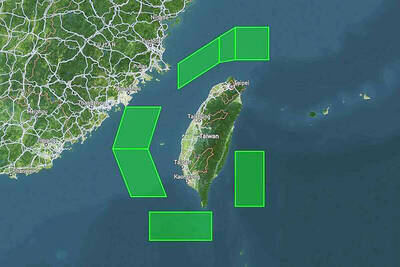
The disruption of 941 flights in and out of Taiwan due to China’s large-scale military exercises was no accident, but rather the result of a “quasi-blockade” used to simulate creating the air and sea routes needed for an amphibious landing, a military expert said. The disruptions occurred on Tuesday and lasted about 10 hours as China conducted live-fire drills in the Taiwan Strait. The Civil Aviation Administration (CAA) said the exercises affected 857 international flights and 84 domestic flights, affecting more than 100,000 travelers. Su Tzu-yun (蘇紫雲), a research fellow at the government-sponsored Institute for National Defense and Security Research, said the air
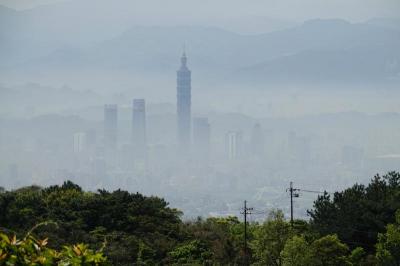
A strong continental cold air mass is to bring pollutants to Taiwan from tomorrow, the Ministry of Environment said today, as it issued an “orange” air quality alert for most of the country. All of Taiwan except for Hualien and Taitung counties is to be under an “orange” air quality alert tomorrow, indicating air quality that is unhealthy for sensitive groups. In China, areas from Shandong to Shanghai have been enveloped in haze since Saturday, the ministry said in a news release. Yesterday, hourly concentrations of PM2.5 in these areas ranged from 65 to 160 micrograms per cubic meter (mg/m³), and pollutants were
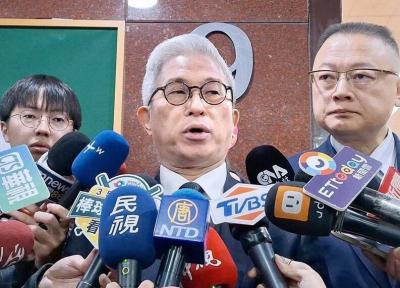
Taiwan’s armed forces have established response protocols for a wide range of sudden contingencies, including the “Wan Chun Plan” to protect the head of state, the Ministry of Defense (MND) said today. After US President Donald Trump on Saturday launched a series of airstrikes in Venezuela and kidnapped Venezuelan President Nicolas Maduro, concerns have been raised as to whether China would launch a similar “decapitation strike” on Taiwan. The armed forces regularly coordinate with relevant agencies and practice drills to ensure preparedness for a wide range of scenarios, Vice Minister of National Defense Hsu Szu-chien (徐斯儉) told reporters before a


 RSS
RSS