


President Ma Ying-jeou (馬英九) yesterday denied any tension between him and Taipei Mayor Hau Lung-bin (郝龍斌) following the problem-plagued launch of the Neihu MRT line earlier this month.
“The Neihu line experienced a system shutdown on July 10, but the line is becoming more stable now. There are absolutely no ill feelings between Mayor Hau and me on the matter,” Ma said while addressing a rally for his bid for Chinese Nationalist Party (KMT) chairman in Taipei.
Hau also attended the rally.
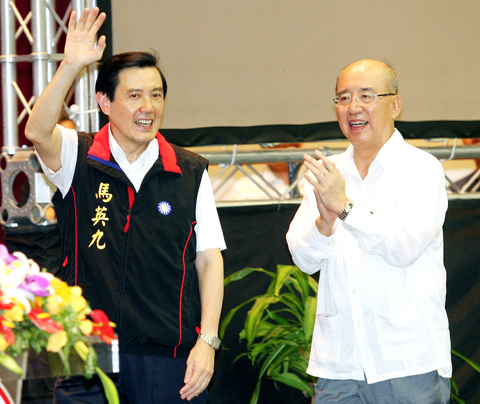
PHOTO: CNA
Speculation about tensions between Ma and Hau was rife after the Neihu line experienced a series of malfunctions and false alarms since its inauguration on July 4. Ma was reportedly unhappy about the Hau administration’s handling of the matter.
Construction of the Neihu Line, an extension of the Muzha Line, began in 2002 and was completed last year under the Hau administration.
Democratic Progressive Party Taipei City councilors have criticized Ma over a decision made when he was Taipei mayor to adopt a medium rather than high-capacity system for the Neihu Line and to use a different contractor than the one for the Muzha Line.
KMT Legislator Alex Tsai (蔡正元), who was a Taipei City councilor when Ma was mayor, said last week that Ma was the one who decided to adopt a medium-capacity system and construct the line above ground.
Ma told the rally it was the Executive Yuan that decided on a medium-capacity system for the Neihu Line in 1993 when it approved the construction.
In response to calls by city councilors for increased line capacity, the city government made a proposal to the Ministry of Transportation and Communications (MOTC) in 2000 in which the city government asked the ministry to provide subsidies if it approved a change in the capacity of the system, he said.
Then-MOTC minister Yeh Chu-lan (葉菊蘭) of the DPP declined to give subsidies and said the system should remain medium-capacity, Ma said.
“If we hadn’t decided on which system to adopt and begin construction back then, there probably would be no MRT line in Neihu today,” he said.
KMT Chairman Wu Poh-hsiung (吳伯雄), party officials, Taipei City councilors and local members cramped the rally site at Chenggong High School to cheer for Ma, but the microphones and audio system broke down, leaving Ma and Wu waiting on the podium for about 10 minutes before Ma was able to deliver his speech.
Ma promised to deal with party assets, enhance cooperation between the party and the government and continue party reform if elected. He visited Taitung and Hualien earlier yesterday to solicit support from party members.
Ma said he would solve the traffic problem in Hualien, but did not say whether the government would approve the construction of the Suhua Highway.
The elections for KMT chairman and party delegate will take place today. Ma, who is the only candidate for party chairman, is scheduled to make a speech at about 6pm at his campaign headquarter.
Ma will formally take over the chairmanship on Sept. 12 at the 18th party congress.
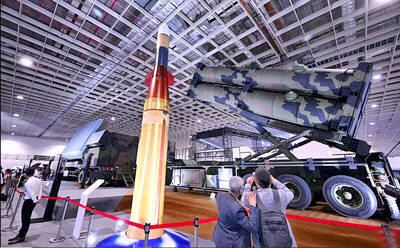
Taiwan is to commence mass production of the Tien Kung (天弓, “Sky Bow”) III, IV and V missiles by the second quarter of this year if the legislature approves the government’s NT$1.25 trillion (US$39.78 billion) special defense budget, an official said yesterday. Commenting on condition of anonymity, a defense official with knowledge of the matter said that the advanced systems are expected to provide crucial capabilities against ballistic and cruise missiles for the proposed “T-Dome,” an advanced, multi-layered air defense network. The Tien Kung III is an air defense missile with a maximum interception altitude of 35km. The Tien Kung IV and V
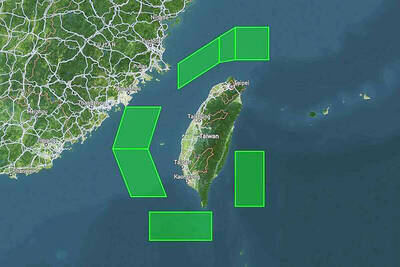
The disruption of 941 flights in and out of Taiwan due to China’s large-scale military exercises was no accident, but rather the result of a “quasi-blockade” used to simulate creating the air and sea routes needed for an amphibious landing, a military expert said. The disruptions occurred on Tuesday and lasted about 10 hours as China conducted live-fire drills in the Taiwan Strait. The Civil Aviation Administration (CAA) said the exercises affected 857 international flights and 84 domestic flights, affecting more than 100,000 travelers. Su Tzu-yun (蘇紫雲), a research fellow at the government-sponsored Institute for National Defense and Security Research, said the air
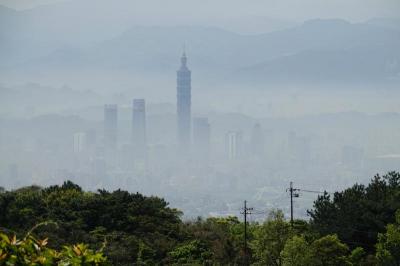
A strong continental cold air mass is to bring pollutants to Taiwan from tomorrow, the Ministry of Environment said today, as it issued an “orange” air quality alert for most of the country. All of Taiwan except for Hualien and Taitung counties is to be under an “orange” air quality alert tomorrow, indicating air quality that is unhealthy for sensitive groups. In China, areas from Shandong to Shanghai have been enveloped in haze since Saturday, the ministry said in a news release. Yesterday, hourly concentrations of PM2.5 in these areas ranged from 65 to 160 micrograms per cubic meter (mg/m³), and pollutants were
Taiwan’s armed forces have established response protocols for a wide range of sudden contingencies, including the “Wan Chun Plan” to protect the head of state, the Ministry of Defense (MND) said today. After US President Donald Trump on Saturday launched a series of airstrikes in Venezuela and kidnapped Venezuelan President Nicolas Maduro, concerns have been raised as to whether China would launch a similar “decapitation strike” on Taiwan. The armed forces regularly coordinate with relevant agencies and practice drills to ensure preparedness for a wide range of scenarios, Vice Minister of National Defense Hsu Szu-chien (徐斯儉) told reporters before a


 RSS
RSS