


A poll published yesterday showed that 53 percent of Taiwanese men and 38 percent of Taiwanese women were satisfied with their sex life.
The same poll also showed that on a chart of “most men with a happy sex life” among 13 Asian countries, Taiwan came in third place.
India was first with 73 percent of men satisfied with their sex life. On the same chart for women, Taiwan ranked fifth, while India again was on top with 65 percent of Indian women happy with their intimate relations.
The poll, titled “Asia Pacific Sexual Health and Overall Wellness,” was conducted by the Taiwan Erectile Dysfunction Advisory Council and Training (EDACT) between May and June last year. A total of 2,016 men and 1,941 women from 13 Asian countries participated in the poll through interviews or an online questionnaire. The results of the poll were made public at a press conference at the Regent Hotel in Taipei yesterday afternoon.
Rosie King, an Australian sex therapist from the Sydney Center for Sexual and Relationship Therapy, said that the hardness of a penis was key to whether a man and a woman had a satisfactory sex life.
“Its [hardness] depends on physical and mental health,” King said.
She said she had also discovered different priorities between Taiwanese men and women from the poll.
“We learned that ‘physical health’ is Taiwanese men’s priority and ‘being a spouse’ is Taiwanese women’s priority,” King said.
Although the poll showed that more than half of Taiwanese men were happy with their sex lives, Kaohsiung Veterans General Hospital chief urologist Jiann Bang-ping (簡邦平) said that he was seeing more and more male patients with sex-related difficulties.
“It seems to me that the sluggish economy has made men more impotent,” Jiann said.
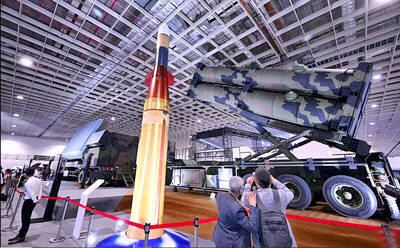
Taiwan is to commence mass production of the Tien Kung (天弓, “Sky Bow”) III, IV and V missiles by the second quarter of this year if the legislature approves the government’s NT$1.25 trillion (US$39.78 billion) special defense budget, an official said yesterday. Commenting on condition of anonymity, a defense official with knowledge of the matter said that the advanced systems are expected to provide crucial capabilities against ballistic and cruise missiles for the proposed “T-Dome,” an advanced, multi-layered air defense network. The Tien Kung III is an air defense missile with a maximum interception altitude of 35km. The Tien Kung IV and V
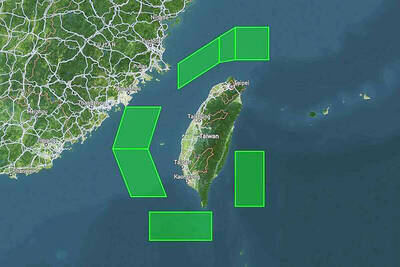
The disruption of 941 flights in and out of Taiwan due to China’s large-scale military exercises was no accident, but rather the result of a “quasi-blockade” used to simulate creating the air and sea routes needed for an amphibious landing, a military expert said. The disruptions occurred on Tuesday and lasted about 10 hours as China conducted live-fire drills in the Taiwan Strait. The Civil Aviation Administration (CAA) said the exercises affected 857 international flights and 84 domestic flights, affecting more than 100,000 travelers. Su Tzu-yun (蘇紫雲), a research fellow at the government-sponsored Institute for National Defense and Security Research, said the air
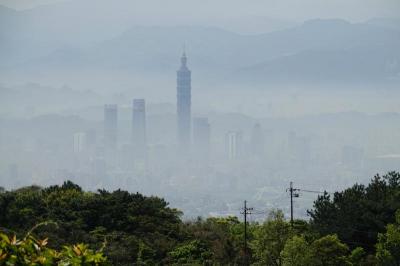
A strong continental cold air mass is to bring pollutants to Taiwan from tomorrow, the Ministry of Environment said today, as it issued an “orange” air quality alert for most of the country. All of Taiwan except for Hualien and Taitung counties is to be under an “orange” air quality alert tomorrow, indicating air quality that is unhealthy for sensitive groups. In China, areas from Shandong to Shanghai have been enveloped in haze since Saturday, the ministry said in a news release. Yesterday, hourly concentrations of PM2.5 in these areas ranged from 65 to 160 micrograms per cubic meter (mg/m³), and pollutants were
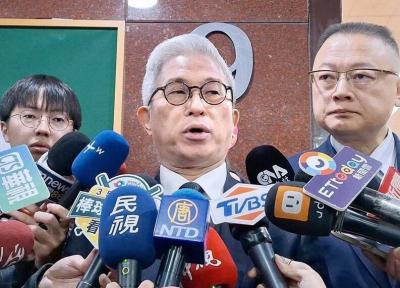
Taiwan’s armed forces have established response protocols for a wide range of sudden contingencies, including the “Wan Chun Plan” to protect the head of state, the Ministry of Defense (MND) said today. After US President Donald Trump on Saturday launched a series of airstrikes in Venezuela and kidnapped Venezuelan President Nicolas Maduro, concerns have been raised as to whether China would launch a similar “decapitation strike” on Taiwan. The armed forces regularly coordinate with relevant agencies and practice drills to ensure preparedness for a wide range of scenarios, Vice Minister of National Defense Hsu Szu-chien (徐斯儉) told reporters before a


 RSS
RSS