


The Taiwan Alzheimer's Disease Association (TADA) is encouraging families with elderly members to participate in a series of free workshops and health checks taking place on Sept. 15 and Sept. 16 to mark World Alzheimer's Day.
Those who want more information can call 0800-474-580 or visit online at www.tada2002.org.tw
The association's president, Lee Ming-been (李明濱), told a press conference yesterday that given the steady rise in the number of elderly people suffering from Alzheimer's disease in this country, it is imperative to communicate to the public what they can do to reduce the risk of developing the disease.
"There are more than 14,000 people living with Alzheimer's in this country," Lee said. "The figure is expected to increase to more than 15,000 next year."
The vast majority of those suffering from Alzheimer's are over 65. According to TADA figures, more than 5 percent of seniors over 65 are stricken with Alzheimer's.
There is no cure for Alzheimer's, but Chiu Ming-zhang (邱銘章), a neurologist at National Taiwan University Hospital said at yesterday's press conference that it is possible for the elderly to develop healthy habits and avoid risky behavior that might reduce the likelihood of developing Alzheimer's.
Current research suggests that eating a "Mediterranean diet" with plenty of fruits, vegetables, olive oil and other polyunsaturated oils as well as fish containing Omega-3 fatty acids ia helpful in staving off Alzheimer's, Chiu said.
It's also possible that behavioral modification such as increased exercise and challenging mental activities could help.
Risk factors to avoid include high blood pressure and blood sugar levels and excessive weight levels, Chiu said.
Because there is still much to learn about Alzheimer's, Chiu said, people cannot expect all recommendations to remain valid.
"New research in this area is coming out continuously," Chiu said. "It's important to keep up to date because ideas are getting debunked all the time."

The Executive Yuan yesterday announced that registration for a one-time universal NT$10,000 cash handout to help people in Taiwan survive US tariffs and inflation would start on Nov. 5, with payouts available as early as Nov. 12. Who is eligible for the handout? Registered Taiwanese nationals are eligible, including those born in Taiwan before April 30 next year with a birth certificate. Non-registered nationals with residence permits, foreign permanent residents and foreign spouses of Taiwanese citizens with residence permits also qualify for the handouts. For people who meet the eligibility requirements, but passed away between yesterday and April 30 next year, surviving family members
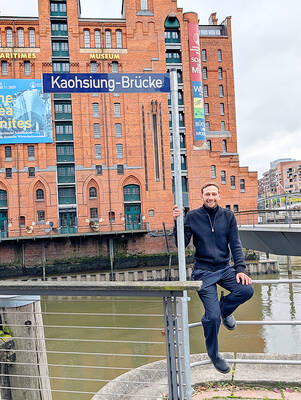
The German city of Hamburg on Oct. 14 named a bridge “Kaohsiung-Brucke” after the Taiwanese city of Kaohsiung. The footbridge, formerly known as F566, is to the east of the Speicherstadt, the world’s largest warehouse district, and connects the Dar-es-Salaam-Platz to the Brooktorpromenade near the Port of Hamburg on the Elbe River. Timo Fischer, a Free Democratic Party member of the Hamburg-Mitte District Assembly, in May last year proposed the name change with support from members of the Social Democratic Party and the Christian Democratic Union. Kaohsiung and Hamburg in 1999 inked a sister city agreement, but despite more than a quarter-century of
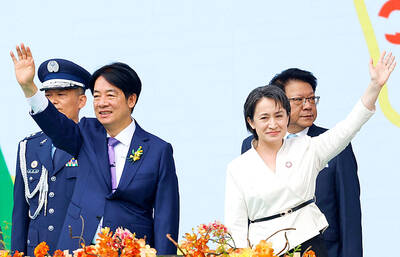
Taiwanese officials are courting podcasters and influencers aligned with US President Donald Trump as they grow more worried the US leader could undermine Taiwanese interests in talks with China, people familiar with the matter said. Trump has said Taiwan would likely be on the agenda when he is expected to meet Chinese President Xi Jinping (習近平) next week in a bid to resolve persistent trade tensions. China has asked the White House to officially declare it “opposes” Taiwanese independence, Bloomberg reported last month, a concession that would mark a major diplomatic win for Beijing. President William Lai (賴清德) and his top officials
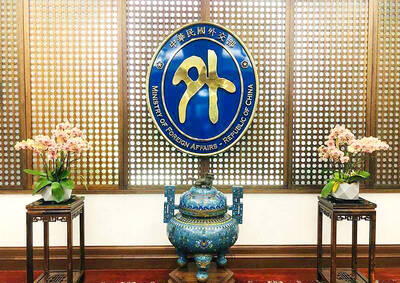
The Ministry of Foreign Affairs (MOFA) yesterday expressed “grave concerns” after Singaporean Prime Minister Lawrence Wong (黃循財) reiterated the city-state’s opposition to “Taiwanese independence” during a meeting with Chinese Premier Li Qiang (李強). In Singapore on Saturday, Wong and Li discussed cross-strait developments, the Singaporean Ministry of Foreign Affairs said in a statement. “Prime Minister Wong reiterated that Singapore has a clear and consistent ‘one China’ policy and is opposed to Taiwan independence,” it said. MOFA responded that it is an objective fact and a common understanding shared by many that the Republic of China (ROC) is an independent, sovereign nation, with world-leading


 RSS
RSS