


The consumer debt clearance regulations (
With the regulation, cardholders having unsecured debts or non-preferential debts of less than NT$12 million (US$360,000) can go to court to negotiate a repayment plan and method for rehabilitation, while those unable to pay back their debts can apply for bankruptcy.
But the regulation stipulates that debtors can only seek assistance from the courts if they fail to personally negotiate a payback plan with banks.
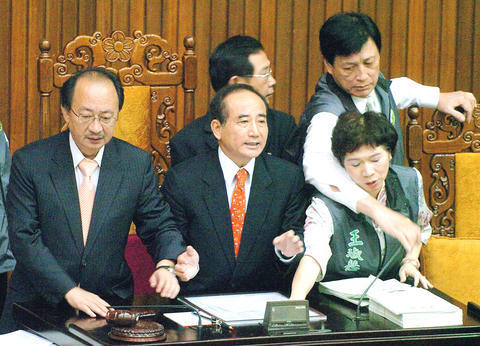
PHOTO: CHANG CHIA-MING, TAIPEI TIMES
The Financial Supervisory Commission (FSC), in charge of banking, said that 227,000 people had applied for the special debt-relief mechanism by the end of March, under which they were granted lower interest rates and longer payback periods.
The total number of indebted credit and cash cardholders nationwide is estimated to be 500,000, if borrowers outside the mechanism are included.
To prevent debtors from reneging on payback plans, the regulation states that debtors covered by the mechanism cannot apply for either rehabilitation or bankruptcy.
Exceptions are allowed if debtors are unable to comply with their plan through no fault of their own.
Debtors applying for rehabilitation or bankruptcy will be subject to certain restrictions. The regulation states that the courts are entitled to require debtors in rehabilitation to live frugally and can revoke their rehabilitation if they violate the requirements of their payback plan.
Those who are declared bankrupt would be barred from taking 175 kinds of jobs, most of them financial in nature, and would be barred from being civil servants for seven years.
Bankrupt individuals would also be prohibited from traveling abroad, taking taxis, eating expensive dinners or buying luxury goods.
If they are found to be purposely hiding properties or transferring assets to others, or living a luxurious lifestyle during the bankruptcy period, the court would be entitled to have them detained.
The extent of the consumer debt problem became apparent in the summer of 2005 and was blamed on the failure of banks to perform strict credit reviews when issuing new cards.
"Since the draft regulations were sent to the legislature last April, the banking sector has not stopped lobbying to try and block them," said Lin Feng-jeng (林峰正), president of the Judicial Reform Foundation.
Consensus on controversial articles was finally achieved on Thursday during negotiations attended by representatives from The Bankers Association of Taiwan, ROC, debt-relief activists, government officials and three legislators.
They were the Democratic Progressive Party Legislator Ker Chien-ming (
One of the biggest controversies was the initial provision that prohibited creditor banks from putting debtors' residences up for auction if they got into arrears on their mortgages during the rehabilitation period, which can last from six to eight years.
As the banks refused to make concessions, the provision was struck from the regulations, but a resolution was attached that demands banks include the spirit of the provision into their standard contracts when issuing mortgages.
Shyu, the main advocator of the regulations, said that the debtor side also gave up on a provision that would have allowed debtors in rehabilitation to only pay interest on their mortgages in exchange for the passage of the regulations.
"The nation has mortgages totalling NT$4.8 trillion. We had to consider the consequences the two provisions would cause banks in terms of unrecoverable debt," Ker said.
The regulations will become effective nine months after the president promulgates them.
In related news, lawmakers yesterday put a proposal to reinstate the controversial 18-percent preferential interest rate on the savings of retired civil servants, military officials and teachers on hold.
The pan-blue dominated legislature last December abolished a plan put into effect by the Examination Yuan in February last year that the government branch in charge of the country's civil service said would rationalize the retirement system.
The DPP asked for a reconsideration of the abolition ruling and the request was scheduled to be tackled in yesterday's plenary session, but the speaker decided to skip the issue.
Calling the KMT's effort a move that would stir up "widespread indignation and discontent," Wang urged the KMT to offer the public an apology for trying to force the bill through.
ADDITIONAL REPORTING BY FLORA WANG
Also see story:
Bankruptcy bill passed by legislature

The military has spotted two Chinese warships operating in waters near Penghu County in the Taiwan Strait and sent its own naval and air forces to monitor the vessels, the Ministry of National Defense (MND) said. Beijing sends warships and warplanes into the waters and skies around Taiwan on an almost daily basis, drawing condemnation from Taipei. While the ministry offers daily updates on the locations of Chinese military aircraft, it only rarely gives details of where Chinese warships are operating, generally only when it detects aircraft carriers, as happened last week. A Chinese destroyer and a frigate entered waters to the southwest
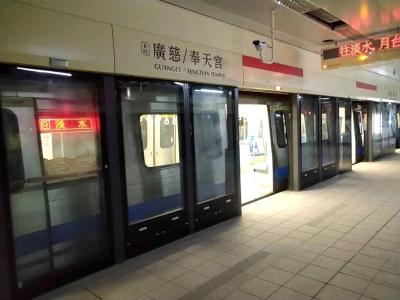
The eastern extension of the Taipei MRT Red Line could begin operations as early as late June, the Taipei Department of Rapid Transit Systems said yesterday. Taipei Rapid Transit Corp said it is considering offering one month of free rides on the new section to mark its opening. Construction progress on the 1.4km extension, which is to run from the current terminal Xiangshan Station to a new eastern terminal, Guangci/Fengtian Temple Station, was 90.6 percent complete by the end of last month, the department said in a report to the Taipei City Council's Transportation Committee. While construction began in October 2016 with an

NON-RED SUPPLY: Boosting the nation’s drone industry is becoming increasingly urgent as China’s UAV dominance could become an issue in a crisis, an analyst said Taiwan’s drone exports to Europe grew 41.7-fold from 2024 to last year, with demand from Ukraine’s fight against Russian aggression the most likely driver of growth, a study showed. The Institute for Democracy, Society and Emerging Technology (DSET) in a statement on Wednesday said it found that many of Taiwan’s uncrewed aerial vehicle (UAV) sales were from Poland and the Czech Republic. These countries likely transferred the drones to Ukraine to aid it in its fight against the Russian invasion that started in 2022, it said. Despite the gains, Taiwan is not the dominant drone exporter to these markets, ranking second and fourth

Japanese Prime Minister Sanae Takaichi’s comment last year on Tokyo’s potential reaction to a Taiwan-China conflict has forced Beijing to rewrite its invasion plans, a retired Japanese general said. Takaichi told the Diet on Nov. 7 last year that a Chinese naval blockade or military attack on Taiwan could constitute a “survival-threatening situation” for Japan, potentially allowing Tokyo to exercise its right to collective self-defense. Former Japan Ground Self-Defense Force general Kiyofumi Ogawa said in a recent speech that the remark has been interpreted as meaning Japan could intervene in the early stages of a Taiwan Strait conflict, undermining China’s previous assumptions


 RSS
RSS