

President Chen Shui-bian (陳水扁) yesterday called on the Taiwanese media to act more discreetly when covering elections, citing the American media's coverage of the US presidential election as an example.
Chen made the remarks while receiving members of the Ketagalan Academy (
The president said he has been scrutinizing the vote-counting process and results in the US election.
"While I comprehend the intensity of the election, [this intensity] is sometimes produced by the media, as each media outlet has its own preferences and expectations," Chen said.
He said that, in the US as well as in Taiwan, electoral confusion and turmoil were sometimes the result of the media's coverage.
For example, Chen said, some US media outlets covering the 2000 US presidential election had jumped the gun by reporting that presidential candidate Al Gore had won, only to later revise their reports to announce that George W. Bush had been elected.
He said a similar scenario was played out in Taiwan during the March presidential election, when some media outlets exaggerated their exit poll figures.
"It leads one to wonder whether there would be less electoral disputes were it not for the factor of the media in the process," Chen said.
Chen said that "this time around, the US media outlets were mindful of the lesson learned [from the previous US election] and therefore took precautions against acting in haste."
"This is a sign of improvement from which Taiwanese media should learn," he said.
Chen also responded to remarks Chinese Nationalist Party (KMT) Chairman Lien Chan (
Lien accused Chen of committing fraud during the March 20 election and said that a person who committed such an act "deserved be killed by everyone."
"What kind of democratic manner is that, to accuse the president of imposture before the court has even delivered its verdict?" Chen said.
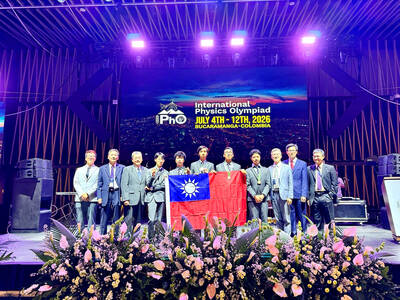
Taiwan tied for first with five golds at the 56th International Physics Olympiad (IPhO) held in Colombia this year, showcasing high school physics prowess. The team, led by National Taiwan Normal University physics professor Chen Chuan-Ren (陳傳仁), was represented by five students, who were chosen from 2,361 students nationwide via multiple selections to receive pre-competition training. Competing with 381 participants from 91 countries, all five students won a gold medal for Taiwan. Other countries earning five golds included China, India, Kazakhstan, South Korea and Russia. One of the five Taiwanese, Chien Kuo High School (CKHS) student Wu Ssu-chien (吳思謙) said he has enjoyed studying
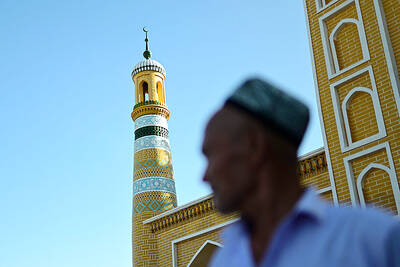
Beijing has been offering subsidized trips to China’s Xinjiang region for Taiwanese teachers as part of efforts to influence teachers and, indirectly, students, a government official said yesterday. With China subsidizing the trips, the teachers only need to pay a NT$4,000 registration fee for an eight-day, seven-night tour that includes accommodation and meals, the official said, speaking on condition of anonymity. Participants risk having their personal information collected and their social networks monitored by Chinese authorities, the official said. Chinese authorities are offering separate summer exchange programs targeting Taiwanese teachers and students, with the student program including study-related activities, they
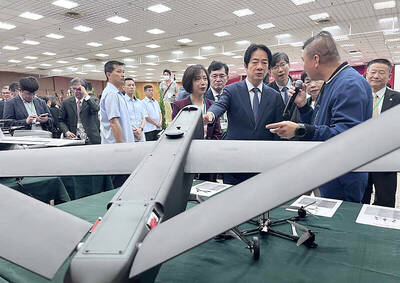
Saudi Arabia bought a record US$47.2 million of drones from Taiwan last month — a sign that the nation’s nascent uncrewed aerial vehicle (UAV) industry is becoming more attractive to buyers. The figure, released by the Ministry of Finance in Taipei last week, was the most in a month for any nation in data going back to June 2023. The Czech Republic has previously been a major buyer. It was unclear how Saudi Arabia intended to use the drones, which weighed an average of 7kg to 15kg. UAVs in that weight category can be used for a range of industrial and military purposes. Su
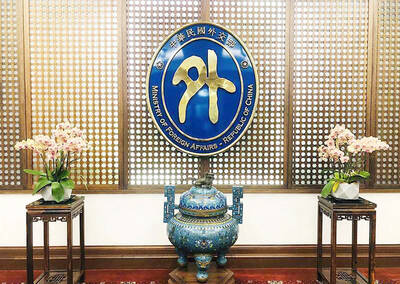
Taiwan will remove Cambodia from two visa facilitation programs on Aug. 1, while extending eased entry arrangements for Thailand, India and several other Southeast and South Asian countries, the Ministry of Foreign Affairs said Friday. Cambodian nationals will no longer be eligible for the Guanhong Project, which eases visa requirements for certain tour groups, or the Travel Authorization Certificate program, which offers conditional visa-free entry, MOFA said. In a news release, the ministry said Cambodia had failed to reciprocate Taiwan’s goodwill and had instead echoed China in statements undermining Taiwan’s sovereignty. MOFA also accused Cambodia of appearing to support Beijing’s possible use of


 RSS
RSS