


Vice President Annette Lu (
In a three-page statement issued Sunday evening, Lu described how she and President Chen Shui-bian (陳水扁) were shot while campaigning in Tainan City and explained why they had stayed calm instead of stopping the motorcade and searching for the assassins.
"The March 19 shooting has not been solved yet, and we are accused of having staged it. As the one who was shot at first, I feel it is necessary to explain to the public what happened," Lu wrote in her statement entitled "Facts of the March 19 Shooting."
Chinese Nationalist Party (KMT) Chairman Lien Chan (
In her statement, Lu said two bullets were fired as she and Chen were standing on the open-top Jeep waving to cheering supporters in Tainan.
"I heard two loud shots and felt a sharp pain on my right knee," she said.
She said she looked down and saw a hole in her pants and the wound was bleeding.
While covering the wound with tissues, her right hand touched the bottom of Chen's jacket and felt it was wet, so she realized Chen had also been shot. At the same time, she saw a bullet hole in the windshield of the Jeep.
While Chen continued to wave to supporters, Lu ordered the bodyguards to drive the Jeep to the nearest hospital, to avoid a second attack.
On the way to the hospital, Lu pointed out the bullet hole in the windshield to Chen.
According to Lu, Chen said: "So it was a gunshot. I thought it was the explosion of fireworks. You should have told me earlier."

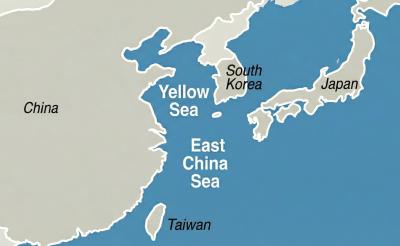
China has reserved offshore airspace in the Yellow Sea and East China Sea from March 27 to May 6, issuing alerts usually used to warn of military exercises, although no such exercises have been announced, the Wall Street Journal (WSJ) reported yesterday. Reserving such a large area for 40 days without explanation is an “unusual step,” as military exercises normally only last a few days, the paper said. These alerts, known as Notice to Air Missions (Notams), “are intended to inform pilots and aviation authorities of temporary airspace hazards or restrictions,” the article said. The airspace reserved in the alert is

NAMING SPAT: The foreign ministry called on Denmark to propose an acceptable solution to the erroneous nationality used for Taiwanese on residence permits Taiwan has revoked some privileges for Danish diplomatic staff over a Danish permit that lists “Taiwan” as “China,” Eric Huang (黃鈞耀), head of the Ministry of Foreign Affairs’ Department of European Affairs, told a news conference in Taipei yesterday. Reporters asked Huang whether the Danish government had responded to the ministry’s request that it correct the nationality on Danish residence permits of Taiwanese, which has been listed as “China” since 2024. Taiwan’s representative office in Denmark continues to communicate with the Danish government, and the ministry has revoked some privileges previously granted to Danish representatives in Taiwan and would continue to review
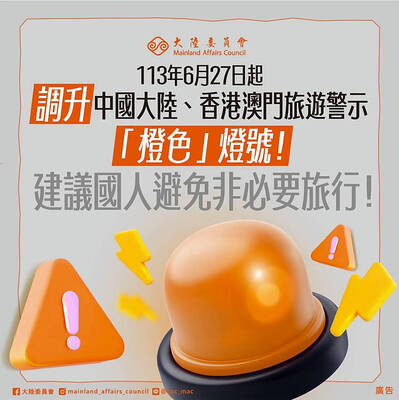
More than 6,000 Taiwanese students have participated in exchange programs in China over the past two years, despite the Mainland Affairs Council’s (MAC) “orange light” travel advisory, government records showed. The MAC’s publicly available registry showed that Taiwanese college and university students who went on exchange programs across the Strait numbered 3,592 and 2,966 people respectively. The National Immigration Agency data revealed that 2,296 and 2,551 Chinese students visited Taiwan for study in the same two years. A review of the Web sites of publicly-run universities and colleges showed that Taiwanese higher education institutions continued to recruit students for Chinese educational programs without
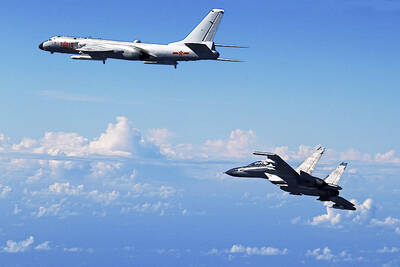
China has reserved offshore airspace over the Yellow Sea and East China Sea from March 27 to May 6, issuing alerts that are usually used to warn of military exercises, although no such exercises have been announced, the Wall Street Journal (WSJ) reported on Sunday. Reserving such a large area for 40 days without explanation is an “unusual step,” as military exercises normally only last a few days, the paper said. The alerts, known as notice to air missions (NOTAMs), “are intended to inform pilots and aviation authorities of temporary airspace hazards or restrictions,” the article said. The airspace reserved in the alert


 RSS
RSS