


Zanadau majority shareholder Su Hui-chen (
"After I made the case public last September, Liu asked me in November to stop divulging more details and said that he would pay me NT$20 million immediately if I agreed to do so," Su said. "However, I never got any money from him and he has denied everything as well."
According to Su, Liu planned to give the money to Lin Lan (
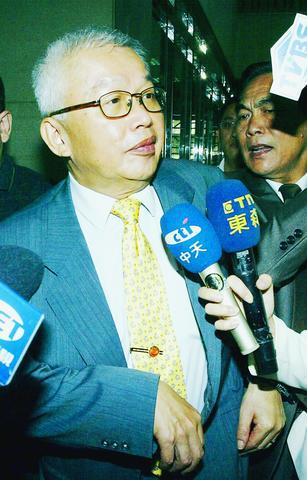
PHOTO: WANG MIN-WEI, TAIPEI TIMES
Su said Liu asked his former attorney, Chung Yung-sheng (
Lin, Chung and Su met at China Development Holding Corp's Ta-an office to discuss the matter in November, she said.
Su said she has no idea what happened to the NT$20 million as she never received it.
Liu has denied that he proposed such a deal.
Su told judges that Liu had asked Zanadau president Chen Shen-fu (陳伸夫) to tell her that Liu really did not receive any kickbacks from her.
According to the agreement between Su and Liu, Su was supposed to give a NT$1.06 billion kickback to Lawson Corp president Lee Ming-che (李明哲), who is a close friend of Liu's, in return for Liu's promise to help secure bank financing for Zanadau. Lee was supposed to share the kickback with Liu once the deal was completed.
Su gave her testimony in a hearing at the Taipei District Court yesterday morning.
During the hearing, Su told judges that she had written letters to Lee Teng-hui in 1995 and 1996 explaining the details of the case. She said she asked Tsai Wu-hsiung (
"As a result, I am quite sure that Lee knows everything about the Zanadau case," Su said.
Liu also attended yesterday's hearing. He did not have a chance to defend himself against Su's allegations as prosecutors and judges were questioning Su.
When the hearing was completed around noon, Liu, who was approached by reporters, said he could not comment on the case outside the courtroom.
In light of Su's testimony, Judge Hu Hung-wen (
In addition, Hu plans to hear testimony from Lee Teng-hui on Nov. 12. Lee confirmed on Monday that he had received the summons and will attend the hearing.

Yangmingshan National Park authorities yesterday urged visitors to respect public spaces and obey the law after a couple was caught on a camera livestream having sex at the park’s Qingtiangang (擎天崗) earlier in the day. The Shilin Police Precinct in Taipei said it has identified a suspect and his vehicle registration number, and would summon him for questioning. The case would be handled in accordance with public indecency charges, it added. The couple entered the park at about 11pm on Thursday and began fooling around by 1am yesterday, the police said, adding that the two were unaware of the park’s all-day live

A former soldier and an active-duty army officer were yesterday indicted for allegedly selling classified military training materials to a Chinese intelligence operative for a total of NT$79,440. The Taipei District Prosecutors’ Office indicted Chen Tai-yin (陳泰尹) and Lee Chun-ta (李俊達) for contravening the National Security Act (國家安全法) and the Anti-Corruption Act (貪污治罪條例). Chen left the military in September 2013 after serving alongside then-staff sergeant Lee, now an army lieutenant, at the 21st Artillery Command of the army’s Sixth Corps from 2011 to 2013, according to the indictment. Chen met a Chinese intelligence operative identified as “Wang” (王) through a friend in November

Minister of Digital Affairs Lin Yi-ching (林宜敬) yesterday cited regulatory issues and national security concerns as an expert said that Taiwan is among the few Asian regions without Starlink. Lin made the remarks on Facebook after funP Innovation Group chief executive officer Nathan Chiu (邱繼弘) on Friday said Taiwan and four other countries in Asia — China, North Korea, Afghanistan and Syria — have no access to Starlink. Starlink has become available in 166 countries worldwide, including Ukraine, Malaysia, the Philippines and Vietnam, in the six years since it became commercial, he said. While China and North Korea block Starlink, Syria is not
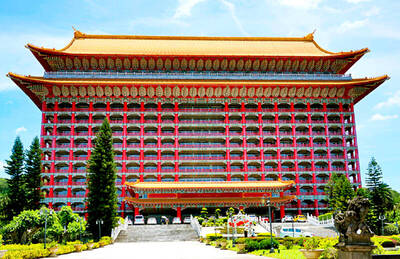
The Grand Hotel Taipei has rejected media reports claiming that the hotel had prevented CBS from broadcasting coverage of the Beijing summit between U.S. President Donald Trump and Chinese President Xi Jinping (習近平) on its premises. Media reports alleging that the hotel owner, dissatisfied with CBS’s coverage, prohibited the network from broadcasting political content on the hotel premises, are not true, the hotel said in a statement issued last night. The reports were “inconsistent with how the hotel actually handled the matter,” it said. The hotel said it received a refund request from a


 RSS
RSS