


More than 100 robotics and artificial intelligence leaders including Elon Musk, Chief Executive of Tesla, on Aug. 20 urged the UN to take action against the dangers of autonomous weapons, also known as “killer robots.”
“Lethal autonomous weapons threaten to become the third revolution in warfare,” warned a letter signed by 116 tech luminaries, including Musk, the chief of Tesla, and Mustafa Suleyman, co-founder of Google’s DeepMind.
“Once developed, they will permit armed conflict to be fought at a scale greater than ever, and at timescales faster than humans can comprehend,” the letter read.
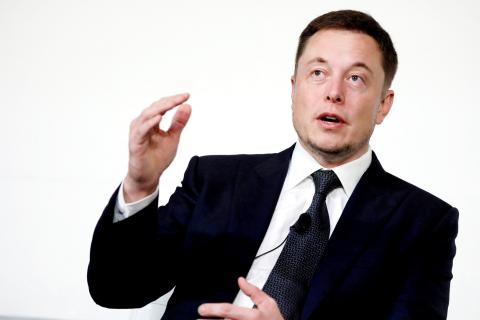
Photo: Reuters
照片:路透
“These can be weapons of terror, weapons that despots and terrorists use against innocent populations, and weapons hacked to behave in undesirable ways.”
A UN group focused on these types of weapons was set to meet on Aug. 21, but it was canceled and postponed until November, according to the UN Web site.
(AFP)
上月二十日,電動車特斯拉執行長伊隆‧馬斯克以及一百多位機器人與人工智慧領域的領導人物共同要求聯合國針對「殺人機器人」自主武器可能帶來的危險採取行動。
一百一十六名科技界領導人物在連署信中警告道:「致命性自主武器可能引發戰爭的第三次革命。」連署人之中除了馬斯克,還有Google的DeepMind共同創辦人穆斯塔法‧蘇雷曼。
連署信並指出:「這種武器一旦發展成功,能帶來的武裝衝突規模將是史無前例的,且戰爭的速度可能會比人類所能理解的還要快。」
「它們可能會被用做恐怖攻擊的武器,被暴君和恐怖份子用來對付無辜的平民,也有可能被駭客掌控後恣意使用。」
根據聯合國網站,負責相關事務的小組原訂於八月二十一日開會,但因故取消,延後到十一月舉行。
(台北時報編譯涂宇安譯自法新社)
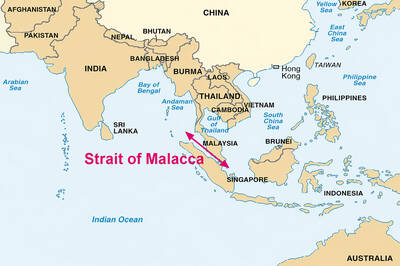
The closure of the Strait of Hormuz has forced policymakers in Asia to face questions over the security of other maritime chokepoints, including the Strait of Malacca, which is the world’s busiest waterway for international trade. WHAT IS THE MALACCA STRAIT? The 900km long Malacca Strait, bounded by Indonesia, Thailand, Malaysia and Singapore, provides the shortest sea route from East Asia to the Middle East and Europe. It carries nearly 22 percent of the world’s maritime trade, according to the Center for Strategic and International Studies (CSIS). This includes oil and gas shipments from the Middle East to the energy-hungry economies of China,
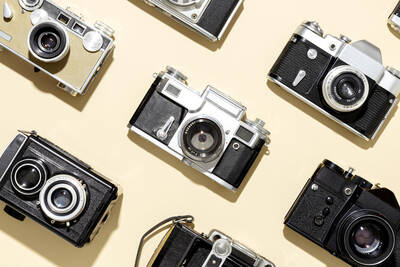
Cameras are everywhere — in our pockets, on our walls and even in space. They capture emotions, preserve history and reflect culture. Through these devices, photography is now essential to modern life, influencing how we perceive ourselves and the world. To understand the root of their power, let’s explore the camera’s remarkable journey. The story begins with the camera obscura, a dark room with a tiny hole. Light passing through the opening projected an inverted image on the opposite wall. Renaissance artists used this principle to paint accurate scenes. However, these images couldn’t be preserved as photographs. That changed
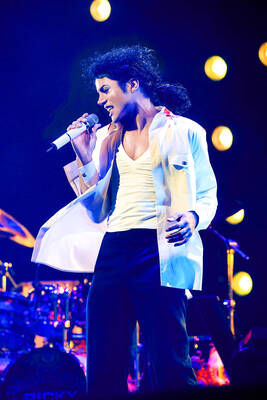
A: This year’s two most anticipated films have finally hit theaters in Taiwan. “Michael” premiered last Wednesday, while “The Devil Wears Prada 2” premiered this Wednesday ahead of its global release. B: Isn’t “Michael” the biopic about the late King of Pop Michael Jackson? A: Yup, it tells the story of Michael’s legendary life, from child star to global icon. And the role is in fact played by his nephew, Jaafar Jackson. B: Michael caused a sensation when touring Taiwan twice in 1993 and 1996. His classic hits, dance moves and music videos reshaped global pop culture at that time. A: I’m gonna
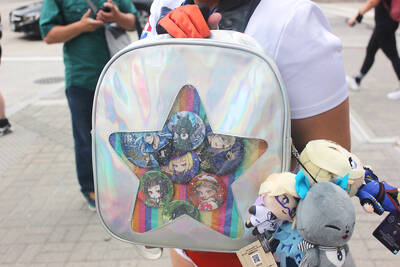
對話 Dialogue 華華:欸,你最近有沒有發現,路上很多人背的包包上還有一個透明的小包包? Huáhua: Èi, nǐ zuìjìn yǒu méiyǒu fāxiàn, lùshàng hěn duō rén bēi de bāobāo shàng hái yǒu yí ge tòumíng de xiǎo bāobāo? 清清:我上次去逛街,也注意到了。我看到好多人把吊飾、照片或娃娃什麼的放進小包裡,掛在包包上。那叫什麼啊? Qīngqīng: Wǒ shàngcì qù guàngjiē, yě zhùyì dào le. Wǒ kàndào hǎo duō rén bǎ diàoshì, zhàopiàn huò wáwa shénme de fàng jìn xiǎo bāo lǐ, guà zài bāobāo shàng. Nà jiào shénme a? 華華:聽說有兩種,一種叫「痛包」,一種叫「娃包」或「曬娃包」。 Huáhua: Tīngshuō yǒu liǎng zhǒng, yì zhǒng jiào “tòngbāo”, yì zhǒng jiào “wábāo” huò “shàiwábāo”. 清清:「痛包」這個說法我聽過,就是在包包上大量展示自己喜歡的東西。但「曬娃包」還是第一次聽到。為什麼叫「曬娃包」? Qīngqīng: “Tòngbāo” zhège shuōfǎ wǒ tīng guò, jiù shì zài bāobāo shàng dàliàng zhǎnshì zìjǐ xǐhuān de dōngxi. Dàn “shàiwábāo” háishì dì yí cì tīng dào. Wèishéme jiào “shàiwábāo”? 華華:因為很多人會把自己喜歡的娃娃放進透明包裡,帶出去拍照,曬給大家看。 Huáhua: Yīnwèi hěn


 RSS
RSS