


Late last year, the Papulu People of Pinnyumayan were arrested and detained by police during their hunting festival, Mangayaw. On Feb. 23, people from 10 Pinnyumayan tribes and representatives from the Paiwan, Bunun and Seediq peoples gathered at the Papulu Tribe in Taitung County and practiced the ritual of sending smoke signals and firing guns in a bid to make their voices heard and protect the Indigenous peoples’ cultural rights.
Father Tai Ming-hsiung, a representative of the Lalalulan People of Paiwan, said that this was not a single problem of a particular tribe, and that the government has not educated itself about the Indigenous culture. As a result, the police find the hunting ritual of the Indigenous culture a likely violation of the law, and make arrests to meet their performance requirements. Tai says that all the Indigenous peoples from various villages should participate in the protests to educate the government. Father Kavas, a representative of the Bunun people, shouted with fury that the Indigenous peoples should express their determination to obtain autonomy by not voting in next year’s presidential and legislative elections.
Lin Chih-hsing, convener of the Pinnyumayan people’s national council, said the lack of understanding of the Pinnyumayan people in the society concerns the tribes when they engage in their cultural activities and pursue their own traditions, which shows that the indigenous peoples lack an autonomous system and the political resource to govern themselves in today’s society. That is why the Indigenous people are practicing the ritual of sending smoke signals to express their vehement protest to the government.
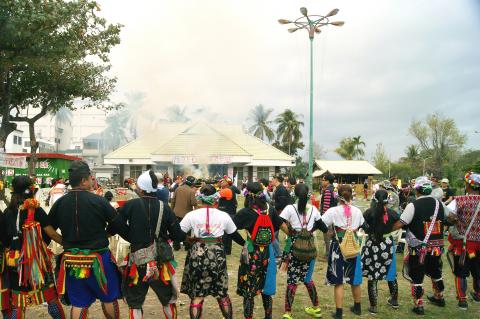
Photo: Wang Hsiu-ting, Liberty Times
照片:自由時報記者王秀亭
(Wang Hsiu-ting, Liberty Times. Translated by Perry Svensson)
卑南族巴布麓部落族人去年底大獵祭期間遭警拘捕移送。二月二十三日卑南族十個部落串聯,排灣、布農、賽德克族代表也齊聚台東縣巴布麓部落聲援,一起施放狼煙、鳴槍,為捍衛原住民族的文化權,向世界發聲。
排灣族拉勞蘭部落代表戴明雄牧師指出,這非單一部落問題,政府始終沒學會認識原住民文化,以致原住民從事文化狩獵活動時,警方認為有「違法空間」,為「考績」拘捕,各族群應以抗爭教育不受教的政府;布農族代表卡法司牧師則憤怒喊出二○一六年總統、立委選舉時以拒絕投票表達原住民自主決心。
卑南族民族議會召集人林志興表示,卑南族人從事文化活動,追求自己的傳統生活之際,卻因社會對卑南族的不認識,造成部落不安,顯現原住民在現今社會缺乏自主體制及自治能量,唯有透過狼煙行動,向政府表達嚴正的抗議。
(自由時報記者王秀亭)

Every few years, the World Baseball Classic (WBC) offers sports fans a real World Series. At its finest, as in the shocking upset on Tuesday last week of the US team by Italy, the games generate the kind of electricity fans feel at the FIFA World Cup. That’s exactly how Major League Baseball (MLB), which owns the WBC, wants it. The tournament, first played in 2006, was designed to boost the league’s profile beyond North America and help it become a global game. In most respects, it’s done better than expected. Yet as the WBC grows, the structure, timing and staging of

Dos & Don’ts — 想想看,這句話英語該怎麼說? 1. 她德語說得和她老師一樣流利。 ˇ Her German is as fluent as her teacher’s. ˇ She speaks German as fluently as her teacher (does). χ Her German is as fluent as her teacher. 註︰這裏所比的是「她的德語」和「她老師的德語」,而不是把她的德語和她的老師這個人相比,所以必須說 her teacher’s,即 her teacher’s German。或把「她說德語」和「她老師說德語」比較。 2. 一般認為北部人生活步調和南部人不同。 ˇ The people of the North are generally described as different from those of the South in terms of pace of life. χ The people of the North are generally described as different from the South in terms of pace of life. 註︰所不同者是北部人和南部人,而不是北部人和南部地區的比較,所以應加 those of,those 代替 the people,以免重複。 3. 他的新小說和上一本風格不同。 ˇ The style of his new novel is different from that of his last one. ˇ His new
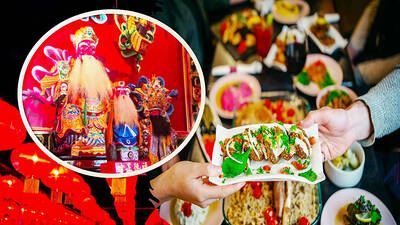
對話 Dialogue 清清:華華,別忘了這禮拜五晚上,老闆請喝春酒喔! Qīngqing: Huáhua, bié wàngle zhè lǐbàiwǔ wǎnshàng, lǎobǎn qǐng hē chūnjiǔ o! 華華:啊!我差點忘了,謝謝提醒。 Huáhua: À! Wǒ chàdiǎn wàngle, xièxie tíxǐng. 清清:老闆人真好,過年前請我們吃尾牙,過完年又請吃春酒。 Qīngqing: Lǎobǎn rén zhēn hǎo, guònián qián qǐng wǒmen chī Wěiyá, guòwán nián yòu qǐng chī chūnjiǔ. 華華:尾牙是感謝我們過去一年的辛勞,春酒是希望我們今年繼續努力啊! Huáhua: Wěiyá shì gǎnxiè wǒmen guòqù yì nián de xīnláo, chūnjiǔ shì xīwàng wǒmen jīnnián jìxù nǔlì a! 清清:給我加薪,我就努力。 Qīngqing: Gěi wǒ jiāxīn, wǒ jiù nǔlì. 華華:還真是「有錢能使鬼推磨」。 Huáhua: Hái zhēn shì “Yǒu qián néng shǐ guǐ tuī mò.” 清清:那還用說。對了!別只顧著吃,頭牙快到了,農曆二月二是土地公生日,記得跟我去拜拜。 Qīngqing: Nà hái yòng shuō. Duìle! Bié zhǐ gùzhe chī, Tóuyá kuài dàole, nónglì èr yuè èr shì Tǔdìgōng shēngrì, jìdé gēn wǒ qù bàibai. 華華:沒問題,東西我來準備,放心吧!一起發大財! Huáhua: Méi wèntí, dōngxi wǒ lái zhǔnbèi, fàngxīn ba!
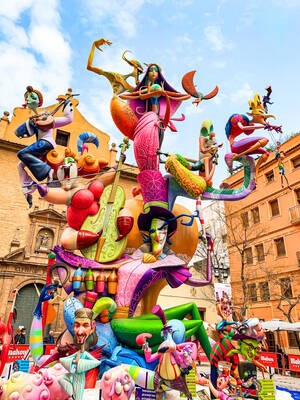
When people think of Spain, they often picture bullfights and flamenco—but there’s another celebration you shouldn’t miss. Every March, Valencia comes alive with “Las Fallas.” Its origins go back centuries to when carpenters burned wooden scraps they no longer needed to welcome spring as winter ended. Over time, the custom evolved from bonfires to giant street sculptures called fallas. This tradition has since developed into a UNESCO-recognized event that attracts millions of visitors. This festival centers on the ritual burning of falla monuments. Each monument is made up of several ninots: giant puppets that are crafted all year by local artists.


 RSS
RSS