


Russia’s pride in Russian composer Pyotr Ilyich Tchaikovsky, even though he was gay, is proof that the country does not discriminate against homosexuals, President Vladimir Putin said.
Putin was apparently seeking to ease concerns that a new law banning “gay propaganda” will be used to clamp down on gay rights.
“Tchaikovsky was gay — although it’s true that we don’t love him because of that — but he was a great musician and we all love his music. So what?,” Putin said in an interview with Russian state Channel 1 television.

Photo: EPA
照片:歐新社
“There is no cause to make a mountain out of a molehill, nothing scary or terrible is happening here in our country.”
Asked whether he would meet members of the gay and lesbian community, Putin said, “I assure you that I work with these people, I sometimes award them with state prizes.”
(Reuters)
俄羅斯總統弗拉吉米爾‧普廷說,即便俄羅斯作曲家彼得‧伊里奇‧柴可夫斯基是同志,但從俄羅斯以他為榮這點來看,證明俄羅斯並未歧視同性戀者。
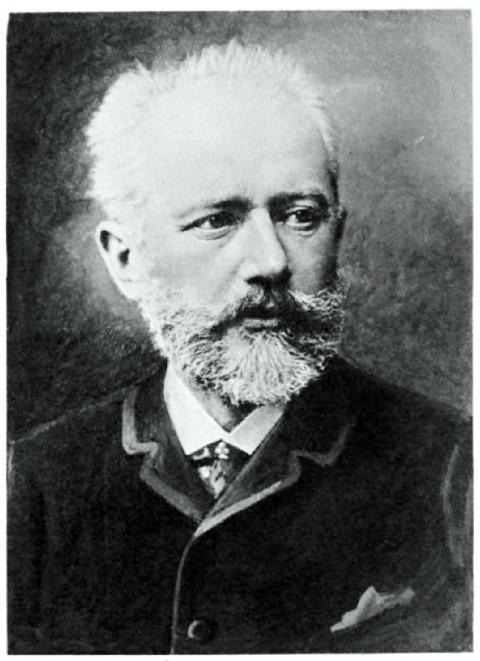
Photo courtesy of The Wikimedia Commons
照片由維基共享資源提供
普廷此言顯然是要舒緩(外界對於)一條禁止「同志宣傳」的新法律會被用來打壓同志權益的憂慮。
普廷在接受俄羅斯國營一號頻道電視專訪時如是說:「柴可夫斯基是同志—雖然老實說我們愛他不是因為這一點—但他是偉大的音樂家,我們都愛他的音樂。(他是同志)又怎樣?」
「沒有理由為此小題大作,我們國家裡沒發生什麼可怕或令人恐懼的事。」
在被問到是否會和男女同志界的成員見面時,普廷說:「我向你保證,我跟這些人合作,我有時還頒發國家級獎給他們。」
(路透/翻譯:張沛元)

As bee populations around the world continue to decline at an alarming rate, scientists are developing an innovative solution: robotic bees. Recent advances at research institutions like Massachusetts Institute of Technology (MIT) in the US have produced tiny flying robots capable of performing pollination tasks similar to those of real bees. These tiny machines represent an impressive technological achievement. MIT’s latest models can hover in the air for over 1,000 seconds and perform complex movements, demonstrating the agility needed for successful pollination. The robots are designed to mimic the flight patterns of natural bees, offering potential support to agriculture

A: Taiwan legalized same-sex marriage on May 24, 2019, so this week marks the seventh anniversary of that milestone. By the end of 2024, a total of 32,126 LGBT couples had tied the knot. B: How many of them got married to foreign partners? A: In 2024, there were 504 cross-border same-sex marriages. By the end of that year, there were 130 cross-strait same-sex marriages between Taiwanese and Chinese — accounting for only about 0.4 percent of the total. B: I’ve heard that a seven-year marriage brings the “seven-year itch.” I bet some couples regret their decisions now. A:

A: While Taiwan is celebrating the 7th anniversary of legalizing same-sex marriage, a poll shows that the support rate for same-sex marriage rose sharply from 37.4 percent seven years ago to 69.9 percent last year. B: Actually, I’m a bit curious about the size of Taiwan’s LGBT population. A: I’m not sure. But if we take a Gallup poll in the US as an example, 9.3 percent of American adults identified as LGBT in 2024. B: Wow, is it because the Americans are relatively open? In many other countries, the figures hover around 5 percent. A: Based on this,
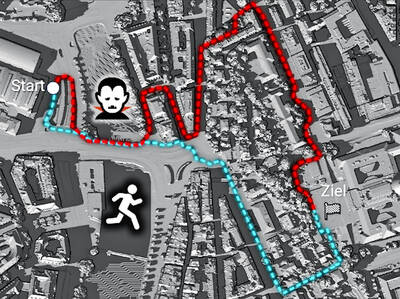
As climate change and urbanization push city temperatures higher, walking outdoors is becoming increasingly uncomfortable in many parts of the world, especially when prolonged time spent in sunlight is involved. As a result, outdoor lovers are now seeking cooler, shaded walking routes. However, most mainstream map apps still do not __1__ shaded footpaths. Enter routing.osm.ch — a Swiss web-based route planner that introduces a novel solution to this problem. Its “Vampire mode,” named after the legendary creatures’ fear of being __2__ natural light, was developed by a Swiss research team led by Professor Stefan Keller. The platform combines open data from


 RSS
RSS