


With no tongue, a fake chin and a hoarse guttural voice, oral cancer patient Chou Pei-yuan rode his scooter with his friend Tsai Wei-kuo, who also has oral cancer, to Hsinchu County on April 29 on his way around Taiwan to talk to children, using an interpreter, telling them to advise their fathers and uncles to give up their cigarettes and betel nuts and warning the kids to never touch the stuff when they grow up.
Chou, known as “Brother A-yuan” at the Sunshine Social Welfare Association, was once a successful car salesperson. He would frequently smoke cigarettes and chew betel nuts with customers to gain favor with them, and rather enjoyed chatting with customers. He was always quite the conversationist.
Chou has had 26 surgeries since being diagnosed with stage four oral cancer 13 years ago, and he stays in the hospital for one or two months each time. Most importantly, however, is that he has no tongue or chin, and spent more than a year learning how to vocalize again. Not being able to have conversations with people because of his craniofacial handicap has been the most miserable thing for Chou.

Photo: Huang Mei-chu, Liberty Times
照片:自由時報記者黃美珠
Chou can no longer enjoy regular food. Instead he can only look at it and return home to eat through a feeding tube every day. When he was diagnosed with oral cancer at the age of 37 his oldest son was still in preschool. Due to the way he looked and being unable to talk, he never went out over the next five years, and never saw his son smile once.
Later when he was walking his dog one day he met a nice woman neighbor by chance. She was not scared at all by his appearance and patiently waited for him to finish each word, allowing him to interact with another person as if nothing had ever happened. Serving as a source of inspiration, it gave him the determination to work hard again for himself, his son and for everyone with oral cancer.
(Liberty Times, Translated by Kyle Jeffcoat)

hoto: Lin Hsin-han, Liberty Times
照片:自由時報記者林欣漢
沒有舌頭,只有「山寨版」下巴,和粗啞喉音,口腔癌友周培圓四月二十九日和「同病加油」的蔡維國,藉騎車環台到新竹縣,透過翻譯「發聲」,告訴小朋友要勸爸爸、阿伯們丟掉香菸、檳榔,自己長大後也不要碰。
被陽光社會福利基金會稱做「阿圓哥」的周培圓,早年是當紅汽車業務員,為了和客戶「搏難」博感情,香菸、檳榔不離口,天南地北,愛聊天、也很能聊天。
沒想到十三年前一發現罹患口腔癌就是四期,迄今動過二十六次手術,每次住院一到兩個月不等不打緊,最重要的是,這個病讓他沒了舌頭、下巴,花了一年多才重新學會發聲,變成顱顏殘疾,更痛苦的是,無法像以前一樣開口暢聊人生。
美食當前他無法享用,只能乾瞪眼,乖乖回去繼續灌食度日,那年他三十七歲,大兒子不過才幼稚園,後面的五年,因為容貌、因為不能交談,他走不出去,兒子也沒再笑過。
後來有次蹓狗,他意外認識一名善心女鄰居,對方沒被他嚇跑,反而耐心聽他慢慢一字字「發聲」,如常人般與他互動。這給他很大鼓勵,他決定要重新振作,為自己、為兒子、也為所有病友。
(自由時報記者黃美珠)


A: Isn’t the 2026 Coachella Valley Music and Arts Festival — a massive music event held every April — about to open in California? B: Yeah the festival is set to take place over two weekends, from April 10 to 12 and 17 to 19, US time. A: I heard this year’s main stage headliners include Sabrina Carpenter, Justin Bieber, Karol G and EDM DJ Anyma. B: The K-pop army is also making an appearance, with legendary group BigBang, SHINee member Taemin and girl group Katseye debuting for the first time. A: Isn’t Coachella also live-streamed on its YouTube

★ Bilingual Story is a fictionalized account. 雙語故事部分內容純屬虛構。 Lucas was already on the ground before he fully understood what was happening. “Hurry! Kneel down!” someone shouted. The asphalt was warm against his knees. Around him, dozens of people lay flat in the narrow street outside Jenn Lann Temple in Dajia. Some pressed their hands together in prayer. Others closed their eyes. Lucas had only come to look at the temple. An hour earlier he had stepped into the noisy courtyard out of curiosity. Inside the main hall, people held incense sticks, bowed three times,

You might think knitting is only for grandmas, but surprisingly, many young people are embracing so-called “grandma hobbies.” On social media platforms, activities such as home cooking, embroidery and gardening are becoming popular among teenagers and young adults who are drawn to their relaxing and creative nature. “Grandma hobbies” typically refer to activities that are slow-paced, handmade and nostalgic. Common examples include knitting scarves, baking cookies, sewing clothes and growing plants. These hobbies were once part of everyday life for many women in previous generations, but today they provide an escape from the fast-paced digital world. The appeal
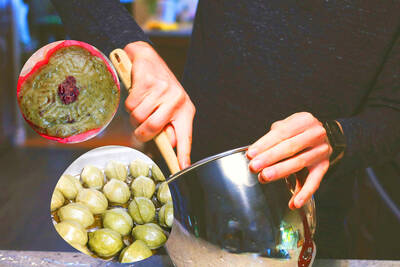
對話 Dialogue 清清:我連假回老家掃墓,帶了一些草仔粿回來,你要不要吃吃看? Qīngqīng: Wǒ liánjià huí lǎojiā sǎomù, dài le yìxiē “tsháu-á-kué” huílái, nǐ yào bú yào chī chī kàn? 華華:哇!看起來就很好吃。這是你們家自己做的嗎? Huáhua: Wa! Kàn qǐlái jiù hěn hǎochī. Zhè shì nǐmen jiā zìjǐ zuò de ma? 清清:對啊,是我阿姨親手做的。每年清明節她都會做。 Qīngqīng: Duì a, shì wǒ āyí qīnshǒu zuò de. Měinián Qīngmíng jié tā dōu huì zuò. 華華:你阿姨手藝真好!看起來好像外面賣的。 Huáhua: Nǐ āyí shǒuyì zhēn hǎo! Kàn qǐlái hǎoxiàng wàimiàn mài de. 清清:口味有鹹的,也有甜的。 Qīngqīng: Kǒuwèi yǒu xián de, yě yǒu tián de. 華華:聞起來好香!裡面包什麼? Huáhua: Wén qǐlái hǎo xiāng! Lǐmiàn bāo shénme? 清清:鹹的是蘿蔔絲的,甜的有紅豆口味和綠豆口味的。你想要哪種? Qīngqīng: Xián de shì luóbo sī de, tián de yǒu hóngdòu kǒuwèi hàn lǜdòu kǒuwèi de. Nǐ xiǎng yào nǎ zhǒng? 華華:我不挑食,哪種都可以,你幫我選吧。謝謝你跟我分享! Huáhua: Wǒ bù tiāoshí, nǎ


 RSS
RSS