


Many parents worry about their children being predisposed to allergies, but what most people do not know is that the month in which a child is born can make a big difference. A recent study shows that Taiwanese children born in October are the most likely to have problems with allergies and that their risk of asthma is 30 percent higher than other babies. Children born in May, on the other hand, are 20 to 30 percent less likely to develop asthma.
During a symposium held by the Taiwan Pediatric Association on April 27, Kuo Ho-chang, an attending physician at Kaohsiung Chang Gung Memorial Hospital’s Department of Pediatric Allergy, Immunology and Rheumatology, discussed the results of a recent health data survey conducted in 2010 that included 15,483 children between the ages of 7 and 15. The study analyzed three different allergic conditions — hay fever, atopic dermatitis and asthma — and the relationship to the month in which a child was born.
It found that the prevalence rates for hay fever and atopic dermatitis show no correlation to the month in which a baby is born. However, the prevalence of asthma among babies born in October was 10.59 percent higher, making them 30 percent more at risk than other babies, followed by August, September and November respectively, all of which had prevalence rates of nine percent. Babies born in May had the lowest prevalence rate of asthma and were 20 to 30 percent less likely to suffer from asthma.
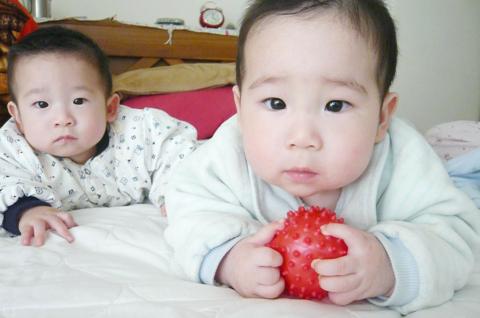
Photo courtesy of Su Hsien-min
照片由蘇嫻敏提供
Kuo says that the purpose of the study was not to scare women into choosing specific months to have their babies, but rather to remind women who will have babies during that particular time to watch their health, keep their surroundings clean and be careful about which baby foods they select for their baby. Kuo says that dust mites multiply during the fall, which could be what causes babies to develop bad allergies, so he says that it is important to keep one’s living environment clean.
Babies are also predisposed to allergies if their mother also has bad allergies, so Kuo says that pregnant women should avoid consuming potential allergens, including crab, shrimp, egg whites and milk, if they have an expected date of delivery in the fall months. When you start giving baby food to babies it is also important to avoid seafood additives and carefully observe which foods give the baby an allergic skin reaction, he says.
(Liberty Times, Translated by Kyle Jeffcoat)
現代家長都擔心家中寶寶變成過敏兒,殊不知寶寶在哪個月出生,大有差別。最新研究顯示,十月出生的台灣寶寶長大後最容易過敏,氣喘風險比其他月份多三成,至於五月出生的孩子,氣喘風險則是比其他月份還低二、三成。
台灣兒科醫學會四月二十七日舉行學術演講會,高雄長庚醫院兒童過敏免疫風濕科主治醫師郭和昌發表研究報告,以二0一0年十萬五千四百八十三位七到十五歲學齡兒童的健保資料,分析他們罹患的三種過敏疾病(過敏性鼻炎、異位性皮膚炎、氣喘)與出生月份的關係。
結果發現,過敏性鼻炎與異位性皮膚炎的盛行率與出生月份無關,但十月出生的孩子氣喘盛行率高達百分之十點五九,風險比其他月份高出三成,其次是八月、九月、十一月,氣喘盛行率都有百分九。反觀五月出生的孩子,氣喘盛行率不但最低,風險也比其他月份低二、三成。
郭和昌醫師表示,這個研究的用意不是要婦女挑月份生孩子,只是提醒預產期在這段期間的孕婦要特別注意自身健康、環境清潔,以及孩子的副食品選擇。郭和昌解釋,塵蟎在秋天大量繁殖,可能是導致寶寶形成過敏體質的原因,要特別注意環境清潔。
他也提醒,孕婦本身若是過敏指數高,也容易使寶寶有過敏體質,提醒預產期在秋天的孕婦,懷孕期間應避免致敏食物,例如螃蟹、蝦子、蛋白、牛奶等食物。開始餵寶寶副食品時,也要特別小心海鮮等前述食物添加,並仔細觀察寶寶對哪些食物會有皮膚紅疹的過敏反應。
(自由時報記者邱宜君)


A: Isn’t the 2026 Coachella Valley Music and Arts Festival — a massive music event held every April — about to open in California? B: Yeah the festival is set to take place over two weekends, from April 10 to 12 and 17 to 19, US time. A: I heard this year’s main stage headliners include Sabrina Carpenter, Justin Bieber, Karol G and EDM DJ Anyma. B: The K-pop army is also making an appearance, with legendary group BigBang, SHINee member Taemin and girl group Katseye debuting for the first time. A: Isn’t Coachella also live-streamed on its YouTube

★ Bilingual Story is a fictionalized account. 雙語故事部分內容純屬虛構。 Lucas was already on the ground before he fully understood what was happening. “Hurry! Kneel down!” someone shouted. The asphalt was warm against his knees. Around him, dozens of people lay flat in the narrow street outside Jenn Lann Temple in Dajia. Some pressed their hands together in prayer. Others closed their eyes. Lucas had only come to look at the temple. An hour earlier he had stepped into the noisy courtyard out of curiosity. Inside the main hall, people held incense sticks, bowed three times,
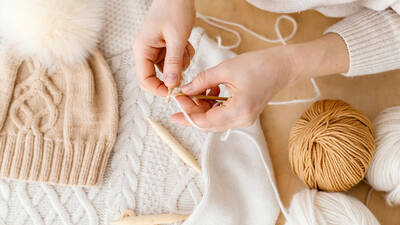
You might think knitting is only for grandmas, but surprisingly, many young people are embracing so-called “grandma hobbies.” On social media platforms, activities such as home cooking, embroidery and gardening are becoming popular among teenagers and young adults who are drawn to their relaxing and creative nature. “Grandma hobbies” typically refer to activities that are slow-paced, handmade and nostalgic. Common examples include knitting scarves, baking cookies, sewing clothes and growing plants. These hobbies were once part of everyday life for many women in previous generations, but today they provide an escape from the fast-paced digital world. The appeal
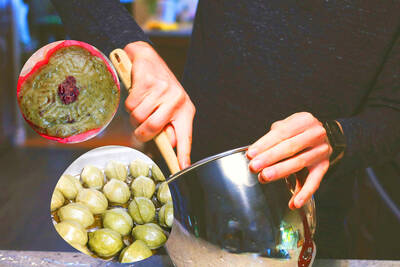
對話 Dialogue 清清:我連假回老家掃墓,帶了一些草仔粿回來,你要不要吃吃看? Qīngqīng: Wǒ liánjià huí lǎojiā sǎomù, dài le yìxiē “tsháu-á-kué” huílái, nǐ yào bú yào chī chī kàn? 華華:哇!看起來就很好吃。這是你們家自己做的嗎? Huáhua: Wa! Kàn qǐlái jiù hěn hǎochī. Zhè shì nǐmen jiā zìjǐ zuò de ma? 清清:對啊,是我阿姨親手做的。每年清明節她都會做。 Qīngqīng: Duì a, shì wǒ āyí qīnshǒu zuò de. Měinián Qīngmíng jié tā dōu huì zuò. 華華:你阿姨手藝真好!看起來好像外面賣的。 Huáhua: Nǐ āyí shǒuyì zhēn hǎo! Kàn qǐlái hǎoxiàng wàimiàn mài de. 清清:口味有鹹的,也有甜的。 Qīngqīng: Kǒuwèi yǒu xián de, yě yǒu tián de. 華華:聞起來好香!裡面包什麼? Huáhua: Wén qǐlái hǎo xiāng! Lǐmiàn bāo shénme? 清清:鹹的是蘿蔔絲的,甜的有紅豆口味和綠豆口味的。你想要哪種? Qīngqīng: Xián de shì luóbo sī de, tián de yǒu hóngdòu kǒuwèi hàn lǜdòu kǒuwèi de. Nǐ xiǎng yào nǎ zhǒng? 華華:我不挑食,哪種都可以,你幫我選吧。謝謝你跟我分享! Huáhua: Wǒ bù tiāoshí, nǎ


 RSS
RSS