


Legend has it that drinking water from a well in Hsinchu County’s Baoshan Township increases a person’s chances of giving birth to twins. Hence dubbed the “twin well,” the legendary well has attracted the interest of the Japanese television network TV Asahi. In order to prove the veracity of the legend for the network crew sent to Taiwan to cover the story, the Baoshan Township Office invited 38 pairs of twins to appear on the program.
Township chief Fan Yu-yen said the well was filled up eight years ago because of a road-widening project. However, local residents rushed to have it dug up again and rebuilt. While rebuilding it, a pair of cute stone figurines representing twins and a large traditional Chinese screen wall used for feng shui were both placed in front of the well. When it began being used again two years ago, 10 pairs of twins were invited to take part in a celebration.
Huang Chien-hsun, a gynecologist at Jhudong Veterans Hospital, said that giving birth to twins is mainly a matter of genetics, and that it is highly improbable that drinking water from the well would result in having twins. A more detailed demographic survey still needs to be done to see whether the rate of twin births in Baoshan Township is actually higher than in other areas in Taiwan.
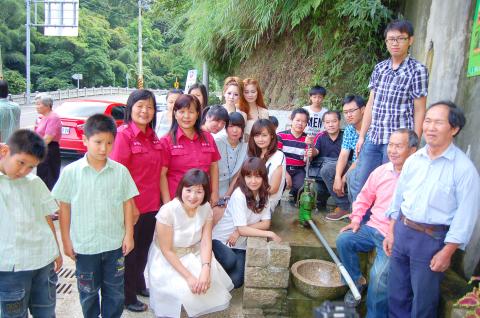
Photo: Huang Mei-chu, Taipei Times
照片:自由時報記者黃美珠
Fan said she was shocked to receive a phone call from someone in Japan saying they wanted to do a story on this well, and had no idea people in Japan had ever heard of the “twin well” in Baoshan Township. Since seeing is believing, Fan decided to invite dozens of twins born in Baoshan to be interviewed by TV Asahi’s crew. The oldest pair of twins invited is already over 60 years old, while the youngest is only two months old.
(Liberty Times, Translated by Taijing Wu)
新竹縣寶山鄉有座井,相傳喝了井水就容易生出雙胞胎。人們因此稱它為雙胞胎井,而這個傳奇的井引起日本朝日電視台的興趣。為了給特別派人來台採訪的電視台證明傳說的真實性,鄉公所邀請了三十八對雙胞胎現身說法。
鄉長范玉燕說,這座井八年前因道路拓寬被掩平,後來地方人士積極奔走重新挖開修建,並在井口前做了一對代表雙胞胎的可愛小人兒石偶,以及修築了一大片風水用的照壁。二年前重新啟用時,還邀請了十對雙胞胎回來慶祝。
竹東榮民醫院婦產科醫師黃建勳說,生雙胞胎大部分和遺傳有關,因喝井水生雙胞胎的可能性不大。寶山鄉的雙胞胎比例是否比台灣其他地方高,要透過比較詳細的人口調查才能證實。
范玉燕說接到日本人說要來採訪的電話,也嚇了一大跳。她沒想到寶山這個雙胞胎井會紅到日本去,為了讓來採訪的日本記者「眼見為憑」,她約了數十對當地出生的雙胞胎接受電視台採訪。受邀的雙胞胎年紀最大的六十幾歲,年紀最小的才二個月大。
(自由時報記者蔡孟尚)

★ Bilingual Story is a fictionalized account. 雙語故事部分內容純屬虛構。 The mango looked perfect. It sat on the fruit stand like a small sunset, red on one side and gold on the other. “I’ll take this one,” said Daniel. The fruit seller shook her head. “Not that one.” Daniel was surprised. “Why not? It looks beautiful.” “Yes,” she said, “but beautiful is not always ready.” She picked up another mango and held it near his nose. “First, smell here.” Daniel smelled the top of the mango. It was sweet and warm. “Good mangoes have a smell,” she said. “Next, feel the weight.”

In 2023, an 80-year-old woman in Taipei suffocated her paralyzed son after over five decades of caring for him. Turning herself in immediately, she confessed that worsening health and anxiety about who would care for him after her death had driven her to act. The court, acknowledging her difficult situation, sentenced her to two-and-a-half years in prison while recommending a presidential pardon. This rare judicial recommendation drew a complicated social response. Supporters argue that the mother’s half-century of caregiving renders her deserving of compassion instead of incarceration, believing that allowing her to live her final years in dignity and
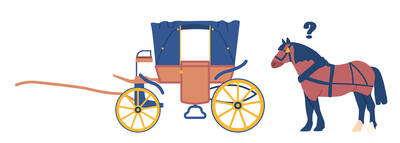
Put the Cart Before the Horse 本末倒置 Iris: I think I’m in love. Carl: What? Iris: We just have so much in common. We like all of the same things. Carl: Yes, but you’ve only chatted with him online. Iris: It doesn’t matter. I know we’ll end up getting married. Carl: I’m afraid you’re putting the cart before the horse. You should at least meet him first. Iris: OK, OK. I’ll do that. 艾瑞絲: 我想我戀愛了。 卡 爾: 什麼? 艾瑞絲: 我們就是有那麼多的共通點。我們喜歡的東西都一樣。 卡 爾: 是沒錯,不過妳和他只在網路上聊過天而已。 艾瑞絲: 那不重要。我知道我們最後一定會步入禮堂。 卡 爾: 妳恐怕是本末倒置了吧。妳至少應該先跟他見個面。 艾瑞絲: 好啦,好啦。我會的啦。 A tough cookie 強悍的人∕堅強的人 Tracy: I heard you went out with Iris last night. Justin: Yeah. We

1. 他非常討厭偽君子。 ˇ He has a deep hatred for hypocrites. χ He has a deep hatred to hypocrites. 註︰表示「對某人懷著愛、恨」等, 常用 have a love for/of, have a hatred for/of。 例如: We have a love for/of science. The working people have a hatred for/of all forms of exploitation. 2. 問題的答案其實不難找。 ˇ The answer to this question is not difficult to find. χ The answer of this question is not difficult to find. 註︰中文中的「的」在英語中不一定都用 of 來表示,有時須用 to。其他的例子如下: 我把房間的鑰匙弄丟了。 I lost the key to the room. 中間矗立著烈士紀念碑。 In the center stands the monument to the martyrs. 這部電影的續集你看過沒有? Have you seen the sequel to the movie? 3. 比起那家餐廳,他更喜歡這家。 ˇ He prefers this restaurant to that one. ˇ He likes


 RSS
RSS