


An expert has warned that Taiwan’s birth rate has dropped drastically since 1950. Back then, the average woman gave birth to seven children, but in 2009 the average was only 1.3 children. The male to female ratio of newborns currently stands at about 110 to 100, and for the third child in a household it is 120 boys to 100 girls. It is estimated that as many as 3,000 female fetuses were aborted during 2009.
Minister without Portfolio James Hsueh, who is also a sociology professor at National Taiwan University (NTU), said that the ratio of male to female newborns is unbalanced. As a warning, Hsueh said that Taiwan’s birth rate has been declining since 1950. Around 191,000 babies were born in 2009, but the figure for 2010 may be less than 180,000. He said that when he goes to a park during holidays, he sees more people walking their dogs than playing with their children.
Hsueh said that 20 to 30 years ago, most women gave birth when they were between 25 and 29 years old, but nowadays people tend to get married later or not all, causing women to postpone getting pregnant until they are between 30 and 34 years old. Statistics show that only 43 percent of women between 25 and 34 years old are married. The decline in the marriage rate is much more obvious than in other countries.
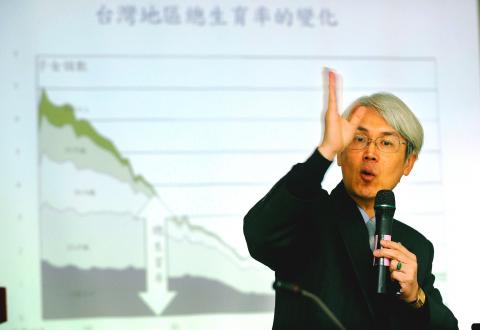
PHOTO: LIN CHENG-KUN, LIBERTY TIMES 照片:自由時報
Professor Chen Yu-hua of NTU said that Aboriginal men and men who only have an elementary school education are getting married later and later. In the early years after the end of World War II, Aboriginal men were getting married at around 24 years old, but now on average they wait until they are 33.4 years old to tie the knot. Men who only have an elementary school education get married three to four years later than university graduates, with financial hardship believed to be the reason.
Recent improvements in the financial status of women may be acting as a deterrent to getting married and starting a family. If the government is serious about increasing the birthrate, it should propose an efficient plan to change the attitude of young people or else the situation is only going to get worse.
Apart from the falling birth rate, the gender imbalance is also an area of concern. Hsueh said that parents’ gender preferences only emerge after the birth of their first child. If the first child happens to be a boy, then the second child’s gender is not an issue. But if the first is a girl, the second tends to be a boy. As the number of children in a family grows, the tendency becomes more and more pronounced, as parents rely on gender selection techniques and abortions, which creates a gender imbalance.
Hsueh estimated that there were 3,000 abortions of female fetuses in 2009, if the gender ratio of newborns remained unchanged. He suggested that regulations in the Genetic Health Law be revised to avoid unnecessary abortions. He also suggested lowering taxes on families with children under six years old.
(LIBERTY TIMES, TRANSLATED BY TAIJING WU)
一位專家近日於研討會警告,台灣生育率自一九五零年一位婦女平均生育七個子女,降為2009年的一點零三個,近年台灣新生兒男、女比例約為一百一十比一百,且到了第三胎,每生一百個女嬰來計算,男嬰高達一百二十個,估計2009年有三千個女嬰遭墮胎。
行政院政務委員、台大社會系教授薛承泰表示,近年來台灣新生兒性別比例失衡。他警告,台灣生育率自一九五零年持續下降。全台2009年生了十九萬一千個嬰兒,2010年全年生育數量可能低於十八萬。他形容,現在假日到公園,遛狗的人比帶小孩的人還多。
薛承泰指出,二、三十年前台灣女性的生育主力是二十五至二十九歲,近期受到「遲婚」或「不婚」影響,女性生育主力已延後到三十至三十四歲,而且台灣二十五至三十四歲的婦女有偶率只有百分之四十三,結婚率下降也較其他國家明顯。
台大教授陳玉華指出,原住民男性、國小學歷男性愈來愈晚婚,原住民男性結婚從終戰初期的二十四歲延後到目前的三十三點四歲,國小學歷男性初婚年齡比大學以上學歷還晚了三、四年,研判是經濟弱勢造成。
近年女性經濟地位的提升也可能會降低結婚和組成家庭機會,政府若想提升出生率,就得提出有效方案去改變年輕人的態度,否則情況會更惡化。
台灣除了生育率下降導致少子女化,也須正視新生兒的性別比例失衡。薛承泰指出,國人對於下一代的性別偏好在生過第一胎後就顯現出來,第一胎若生男,第二胎生男生女都可以,但如果第一胎是生女,第二胎就傾向生男,這種傾向隨著胎次增加愈來愈明顯,並透過性別篩選技術和墮胎,導致新生兒的男女比例失衡。
薛承泰估算,如果每胎生男生女機率維持不變,估計2009年有三千個女嬰遭墮胎。他建議,目前「優生保健法」所規範墮胎條件應加以檢視,避免因為家長的「重男輕女」觀念產生不必要的墮胎。也建議家中若有六歲以下的幼兒,可增加年輕爸媽的免稅額或列舉扣除額。
(自由時報記者胡清暉)

A: The Taipei Xiahai City God Temple’s cultural festival runs from Saturday to early July. Do you want to go? B: In addition to the City God and his wife, the temple worships dozens of deities — including the Matchmaker God,“Yuexia Laoren” (“Yue Lao.”), literally “old man under the moon.” So are you going to pray for a match? A: You got it. The Matchmaker God matches people together, just like a Chinese Cupid. My friend went to worship the matchmaker and met “Mr. Right” that very same day. B: It’s that effective? Can my gay friends pray to
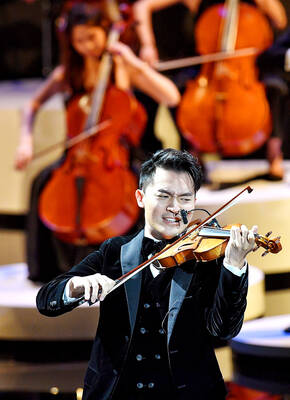
A: Is the Matchmaker God, “Yuexia Laoren” (“Yue Lao”), at the Taipei Xiahai City God Temple that effective? How do people pray for love? Should I tell him my preferred type first? B: Yes, you should. Then request a lucky red string, so he can help you find a match at the other end of the string. What’s your type? A: My ideal type is someone like violinist Ray Chen. Actually, I’ll be attending his recital at the National Concert Hall tomorrow. B: Are you talking about the renowned Taiwanese-Australian violinist? Wow, your standards are so high. You’ll have

A record 48 teams and millions of fans are set to descend on the US, Canada and Mexico for the first World Cup co-hosted by three nations, the largest and most logistically complex edition of the tournament ever staged. The action got under way at Mexico City’s iconic Estadio Azteca on Thursday last week, with co-hosts Mexico taking on South Africa, launching a sprawling, nearly six-week-long spectacle that will culminate in the final at New Jersey’s 82,500-seat MetLife Stadium on July 19. Can Lionel Messi, at the age of 38, settle any lingering debate about his status as the greatest

Demand for secondhand electric vehicle (EV) batteries has risen sharply in Australia, transforming the landscape of salvage auctions. Once largely ignored, written-off EVs now attract buyers primarily interested in their powerful lithium batteries. These batteries can be repurposed for solar storage, off-grid power systems, or temporary energy use at events like music festivals. The auction house Pickles reports selling about 100 salvaged EVs monthly, with sales up 200% year on year. Specialists note that even batteries reduced to 70% capacity remain useful, offering quieter and cleaner alternatives to diesel generators. Repurposed units are also seen as an important part of Australia’s renewable


 RSS
RSS