


The face of Soviet dictator Joseph Stalin will adorn bottles of a soft drink to go on sale next month in Russia, the Komsomolskaya Pravda newspaper reported.
The Stalin drinks are part of a special batch of beverages being released to mark the 67th anniversary of the Soviet victory in the World War II battle of Stalingrad, the daily said, citing the company producing them.
The Pivovar beverage plant in Volgograd, as Stalingrad is now called, will make a limited quantity of the Stalin lemon-flavoured fizzy drink, alongside two other drinks featuring portraits of famed Soviet World War II commanders.
The head of the beverage plant said he saw nothing wrong with the Stalin drinks, but the decision is sure to ruffle the feathers of some Russians. Historians describe Stalin as a ruthless tyrant responsible for the deaths of millions of innocent people.
“I don’t think there’s anything bad here. All three military commanders were significant historical figures. And each of their names is closely tied with Volgograd,” Pivovar chief Boris Izgarshev said.
“I think there will be demand for this soft drink,” he added, quoted by Komsomolskaya Pravda.
In a photograph of the Stalin bottle that the newspaper put on its Web site, the mustachioed leader is shown on a red label with the slogans “1943 — Stalingrad — Victory” and “Our way is right — we are the victors.”
Stalin, who died in 1953, sent millions of people into the brutal Gulag prison system and launched a disastrous campaign to collectivize agriculture that sparked a massive famine.
He is still admired by many Russians, however, largely due to his role in leading the Soviet Union to victory against Nazi Germany.
The two World War II commanders who will be featured on Pivovar’s bottles alongside Stalin are Georgy Zhukov and Konstantin Rokossovsky, both of whom played major roles in the Soviet war effort.
Hundreds of thousands of soldiers on both sides died in the battle of Stalingrad, which ended on Feb. 2, 1943 after five months of vicious urban warfare. The battle is seen as a key turning point of World War II.
(AFP)
俄國《共青團真理報》報導,蘇聯獨裁者喬瑟夫.史達林的肖像將被印在某飲料的瓶身上,預計下個月在俄國販售。
該日報報導中指出,這款史達林飲料是飲料公司為慶祝蘇聯二次世界大戰史達林格勒之役勝利六十七週年,而推出的一系列特殊飲料之一。
位於伐戈格勒(前名為史達林格勒)的皮佛瓦飲料工廠將生產限量的史達林檸檬汽水,以及另外兩款印有二次世界大戰蘇聯知名指揮官肖像的飲料。
該飲料工廠負責人表示,他覺得史達林飲料沒有什麼不妥,但這個決定肯定會激怒一些俄國民眾。歷史學家形容史達林是一個殘酷無情的暴君,害死數百萬無辜的民眾。
皮佛瓦負責人波利斯.伊茲葛雪弗說:「我覺得這沒什麼不好。這三位軍事將領都是偉大的歷史人物。而且他們的名字都和伐戈格勒有深厚的淵源。」
《共青團真理報》引述他的話說:「我認為這款飲料有其市場需求。」
該報紙網站上刊登的史達林瓶身照中,紅色的酒標上印著這位有著大八字鬍的領袖,還寫著「一九四三─史達林格勒─勝利」和「我們方向正確─我們是勝利者」的口號。
一九五三年逝世的史達林,曾把上百萬人送入殘酷的古拉格集中營,並發起集體農場這個引發全國大飢荒的災難性運動。
然而,至今仍有許多俄國人崇拜他,主要是因為他帶領蘇聯戰勝納粹德國。
除了史達林之外,皮佛瓦飲料瓶身的另外兩位主角是二次世界大戰時的指揮官喬基.朱可夫和康士坦丁.羅科索夫斯基,兩位將領在這場蘇聯戰役中都戰功勳彪炳。
歷經五個月猛烈的城市巷戰,史達林格勒之役於一九四三年二月二日結束,雙方都有數十萬士兵在這場戰事中喪生。此戰被視為二次世界大戰關鍵性的轉捩點。
(法新社╱翻譯:袁星塵)
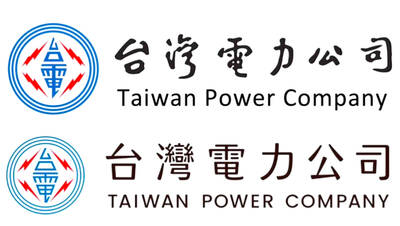
The debate surrounding Taipower’s recent corporate identity reboot has gone well beyond the design community. The controversy began after Taipower replaced the familiar “Taiwan Power Company” wording — widely regarded as the calligraphy of Yu You-ren (1879-1964), former Control Yuan president and master calligrapher — with a modern logotype by designer Aaron Nieh’s team, Aaron Nieh Workshop. Taipower said the change was not a wholesale replacement of old signage, but an “optimization of its identity system,” aimed at meeting the needs of digital media, electronic bills, apps, social media graphics and various small-format applications. Existing physical markings, such as building
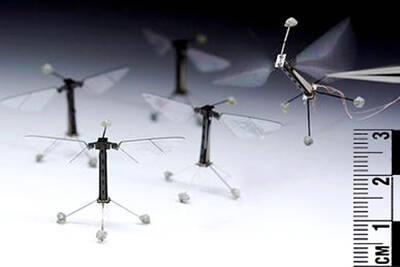
As bee populations around the world continue to decline at an alarming rate, scientists are developing an innovative solution: robotic bees. Recent advances at research institutions like Massachusetts Institute of Technology (MIT) in the US have produced tiny flying robots capable of performing pollination tasks similar to those of real bees. These tiny machines represent an impressive technological achievement. MIT’s latest models can hover in the air for over 1,000 seconds and perform complex movements, demonstrating the agility needed for successful pollination. The robots are designed to mimic the flight patterns of natural bees, offering potential support to agriculture
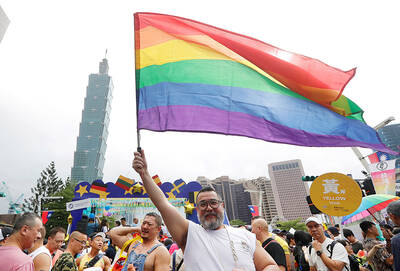
A: Taiwan legalized same-sex marriage on May 24, 2019, so this week marks the seventh anniversary of that milestone. By the end of 2024, a total of 32,126 LGBT couples had tied the knot. B: How many of them got married to foreign partners? A: In 2024, there were 504 cross-border same-sex marriages. By the end of that year, there were 130 cross-strait same-sex marriages between Taiwanese and Chinese — accounting for only about 0.4 percent of the total. B: I’ve heard that a seven-year marriage brings the “seven-year itch.” I bet some couples regret their decisions now. A:
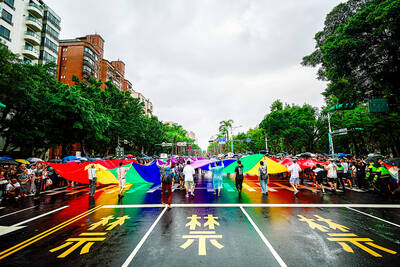
A: While Taiwan is celebrating the 7th anniversary of legalizing same-sex marriage, a poll shows that the support rate for same-sex marriage rose sharply from 37.4 percent seven years ago to 69.9 percent last year. B: Actually, I’m a bit curious about the size of Taiwan’s LGBT population. A: I’m not sure. But if we take a Gallup poll in the US as an example, 9.3 percent of American adults identified as LGBT in 2024. B: Wow, is it because the Americans are relatively open? In many other countries, the figures hover around 5 percent. A: Based on this,


 RSS
RSS