


Dogs’ noses are incredibly keen. They can even detect changes in cortisol levels in human sweat and breath. Known as the “stress hormone,” cortisol increases when humans are under pressure. Recent research indicates that the smell of human stress can influence a dog’s behavior and emotions.
In the study, human volunteers were exposed to the stressful tasks of preparing and delivering a speech on the spot and then solving math problems. __1__ Researchers collected sweat and breath samples from the volunteers on pieces of cloth during both their stressful and restful states.
Meanwhile, other researchers worked with 18 dogs that didn’t know the human volunteers. They placed one food bowl in one of two fixed locations each time. The dogs were trained to distinguish between the spots: only the bowl in a certain spot always had food. __2__ They would run to the spot with the full food bowl and move slowly to the empty bowl.
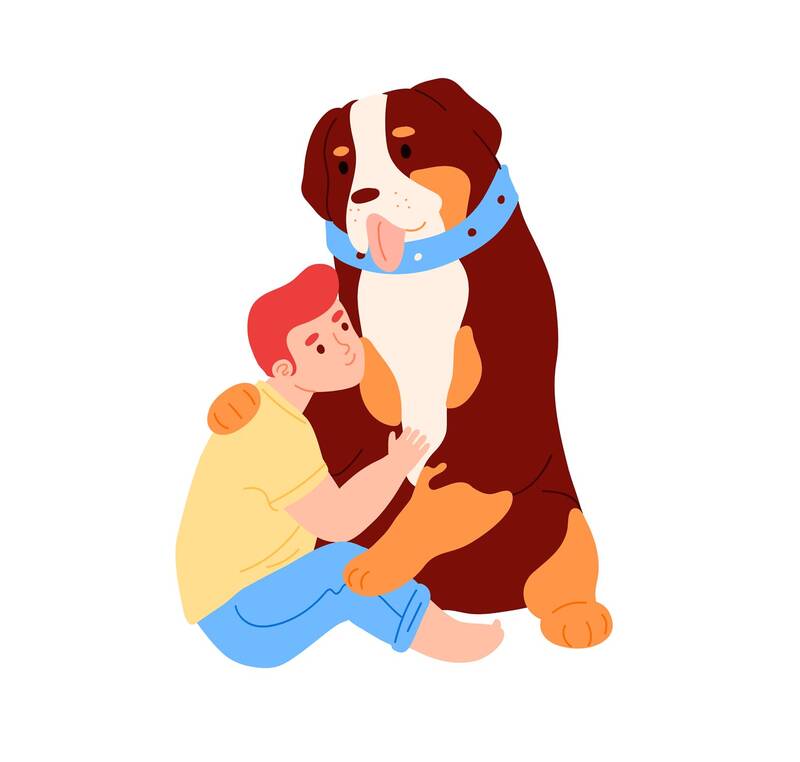
Photo: AdobeStock I 照片: AdobeStock
Once the dogs were fully trained, researchers altered the experiment by removing the two original bowls and placing a new bowl in a third location. __3__ Researchers then let the dogs smell the human sweat and breath samples before they were allowed to approach the bowl each time.
It turned out that when dogs smelled the “stress” cloth, they were more hesitant to head towards the bowl. __4__ By contrast, when dogs sniffed the “relaxed” cloth, they showed no such hesitation. Researchers concluded the smell of human stress might make dogs feel negatively. These findings are useful as they can help develop more effective and humane training practices, especially for working dogs.
狗狗的鼻子非常靈敏。牠們甚至可以察覺到人類汗水和呼吸中皮質醇濃度的變化。皮質醇被稱為「壓力荷爾蒙」,人類承受壓力時,皮質醇會增加。最近的研究顯示人類的壓力氣味會影響狗狗的行為和情緒。
在這項研究中,人類自願受試者被置身於充滿壓力的任務之中:當場準備、發表演講,接著解數學問題。之後,他們可以在舒適的椅子上觀看二十分鐘的自然影片來放鬆身心。研究人員用布片來收集自願受試者處於壓力和放鬆狀態下的汗水和呼吸樣本。
同時,其他研究人員和十八隻不認識那些人類自願受試者的狗狗一起進行了研究。每次他們會將一個餐碗放在兩處固定位置的其中一處。這些狗狗被訓練來區分這些位置:只有某一處位置的餐碗裡總是有食物。隨著時間的推移,狗狗學會將特定位置與食物的存在與否連繫起來。牠們會衝向裝滿食物之餐碗的所在地,至於空碗,牠們則是緩緩走去。
一旦狗狗經過充分訓練,研究人員就改變了實驗,移除了原本的兩個餐碗,並將一個新的餐碗放在第三處位置上。這個改變讓狗狗不清楚碗裡是否有食物。接著,研究人員每次先讓狗狗嗅聞人類汗水和呼吸的樣本,才讓牠們接近餐碗。
結果狗狗聞到「壓力」布片時,牠們會更加猶豫地走向餐碗。這表示狗狗會較為悲觀地預測碗內可能是空的。相較之下,狗狗嗅聞「放鬆」布片時,牠們並沒有表現出這樣的猶豫。研究人員得出結論,人類的壓力氣味可能會讓狗狗感到負面。這些發現很有用,因為可以幫助發展更有效、更人道的訓練方式,特別是針對工作犬而言。
What Did You Learn?
(A) This change made it unclear to the dogs whether the bowl had food.
(B) Too much cortisol in a dog’s body can have negative health consequences.
(C) This suggested a more pessimistic expectation that the bowl might be empty.
(D) Over time, the dogs learned to associate specific locations with the presence or absence of food.
(E) Afterward, they were allowed to relax by watching a 20-minute nature video in a comfortable chair.
答案: 1. E 2. D 3. A 4. C
Word in Use
1. keen a. 敏銳的
My brother has a keen sense of hearing, allowing him to pick up faint sounds.
我弟弟有敏銳的聽覺,因此可以捕捉到細微的聲音。
2. detect vt. 察覺,發現
The dog can detect scents from miles away.
狗狗可以聞到幾英里以外的氣味。
3. sweat n. 汗水
After the marathon, my body was covered in sweat from head to toe.
跑完馬拉松之後,我的身體從頭到腳都覆蓋著汗水。
4. volunteer n. 自願者,義工
The volunteer offered to help search for the missing woman in the forest.
那名自願者主動提出要幫忙找尋那名在森林失蹤的婦女。
5. deliver vt. 進行(演講)
The mayor will deliver the opening remarks at the event later today.
市長今天稍晚將會在活動上開幕致詞。
Practical Phrases
1. be exposed to N/V-ing 暴露於∕接觸…
Workers in the field are often exposed to harsh weather conditions during the summer.
夏季時,在田間工作的人經常暴露在酷熱的天氣環境下。
2. on the spot 當場∕立即;在現場∕到現場
The applicant was hired on the spot after impressing the interview panel with his skills.
那名應徵者的技能讓面試小組留下深刻印象,之後便當場被錄取了。
3. It turns out + that 子句 結果∕竟然……
It turned out that the weather forecast was incorrect; it rained all day.
結果天氣預報不準;一整天都在下雨。
4. by contrast 相較之下= in contrast
The northern region is cold and snowy. By contrast, the southern region is sunny.
北部寒冷又下雪。相較之下,南部出太陽。
聽文章朗讀及講解: https://ivy.pse.is/455bfu
本文出自常春藤解析英語雜誌: www.ivy.com.tw
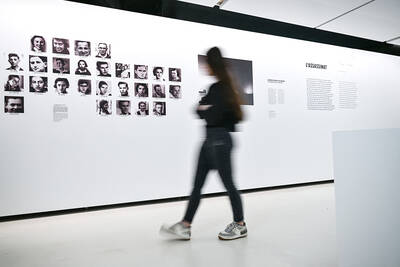
Historians are rethinking the way the Holocaust is being presented in museums as the world marks the 80th anniversary of the liberation of the last Nazi concentration camps this month. Shocking images of the mass killings of Jews were “used massively at the end of World War II to show the violence of the Nazis,” historian Tal Bruttmann, a specialist on the Holocaust, told AFP. But in doing so “we kind of lost sight of the fact that is not normal to show” such graphic scenes of mass murder, of people being humiliated and dehumanized, he said. Up to this

A: Brazilian jiu-jitsu, known as “BJJ,” has become more and more popular. Even Hollywood stars like Halle Berry and Tom Hardy are obsessed with it. B: Some Asian stars, such as Taiwanese actor Eddie Peng and South Korean actor Lee Joon-gi, have also practiced this martial art. A: BJJ is not just a martial art, but also a combat sport. B: I’ve always wanted to try it, but I’m worried about getting injured. A: Diana Wang, a US doctor of physical therapy, is holding a BJJ seminar at PMA Brazilian Jiu-jitsu in Taipei Friday night. Let’s go check out how we

When people listen to music today, they typically use streaming services like YouTube or Spotify. However, traditional formats like vinyl records have regained popularity in recent times. Vinyl records are circular discs that store music in grooves on their surfaces and are played on a turntable. As the turntable’s needle runs along these grooves, it picks up vibrations and translates them into sound. The history of vinyl records dates back to the late 1800s, but material and technological challenges delayed mass production until the 1950s. Despite early versions having short playtimes and poor sound quality, vinyl records introduced a new era
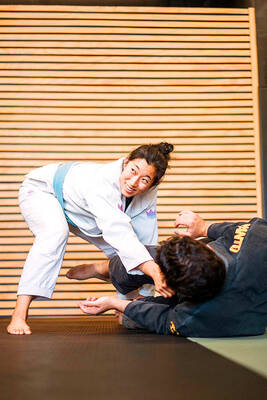
A: Actually, Brazilian jiu-jitsu is particularly good for small people like you. B: Really? How so? A: According to Diana Wang, a US doctor of physical therapy, the BJJ’s purpose is to help smaller, weaker people defend themselves by using various techniques, such as leverage. B: That sounds interesting. What time does Dr Wang’s BJJ seminar begin tonight? A: The event is scheduled for 7:30pm at PMA Brazilian Jiu-jitsu in Taipei. Admission is free, but donations are welcome. A: 其實你的個子比較小,很適合練巴西柔術呢。 B: 真的嗎?為什麼? A: 據美國理療醫師王幼瑞博士說,巴西柔術的概念是讓弱小的人,也能利用槓桿作用等技巧防身。 B: 真有趣,王醫師的巴柔研討會幾點開始? A: 今晚7點半在「台北巴柔運動館」,免費入場自由樂捐唷! (By Eddy Chang, Taipei Times/台北時報張迪)


 RSS
RSS