


Hosting the Olympics has made Beijing’s rough-edged citizens more civil, with social problems such as spitting and queue-jumping on the decline, state media reported.
A bizarre “civic index” that claims to record minute changes in Beijingers’ manners has risen to 82.68 on a scale of 100, up 10 points from last year, the China Daily reported.
Based on a post-Olympics survey of more than 13,200 people and observations at more than 300 public venues, it found just 0.75 percent of respondents “spat wherever and whenever they wanted,” down from 2.5 percent last year, it said.
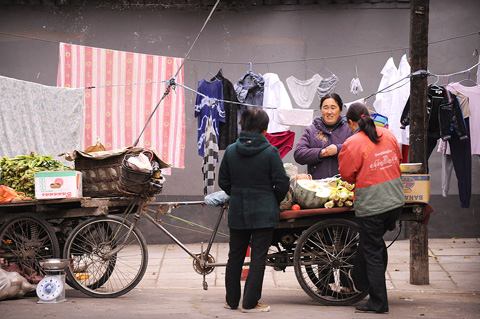
PHOTO: AFP
“The most significant improvement was in the category of spitting,” the newspaper said of the latest index, devised by Beijing’s Renmin University.
Last year, in a speech marking the 12-month countdown to the Games, China’s chief Olympic organizer warned the manners of Beijing residents could leave the host nation with egg on its face.
“We must carry out a campaign for a civilized environment and thoroughly resolve spitting, dumping of garbage and other uncivilized behavior as over four billion people will be watching Beijing,” he said.
These campaigns have included making one day a month a “no queue-jumping” day, while fines for spitting have been dished out and beggars kicked off the streets.
Another day each month was designated “Seat-Giving Day” to encourage people to give up their seats on trains and buses to those in greater need.
Following the campaign, queue-jumping was down to 0.67 percent, from an earlier 1.5 percent, the index found. Littering and seat giving also apparently improved.
(AFP)
中國國營媒體報導,主辦北京奧運已使粗魯無禮的北京市民變得較文明,吐痰和插隊等社會問題也慢慢減少。
《中國日報》報導,一份特別記錄北京市民公共行為改變的「文明指數」已提昇至八十二點六八分(滿分為一百分),比去年高了十分。
報導指出,根據奧運賽後一項在三百多個公眾場合觀察、訪問了一萬三千兩百多人的調查發現,只有百分之零點七五的受訪者會「隨時隨地亂吐痰」,比去年的百分之二點五低。
報導中提到,這項由北京人民大學策劃的最新指數調查指出:「吐痰是改善幅度最大的項目。」
去年,在北京奧運倒數十二個月的一場演講中,中國奧組委主席就曾警告說,北京市民的壞習慣可能會讓主辦國顏面無光。
他說:「我們必須推行文明環境運動,徹底解決北京市民吐痰、隨手亂丟垃圾和其他不文明的行為,因為屆時將有超過四十億人看著北京。」
這一系列運動包括每個月有一天「不插隊日」、對吐痰者祭出罰款政策,及將乞丐趕出大街。
每個月還另外訂定一天「讓座日」,鼓勵民眾在火車和公車上禮讓座位給更需要的人。
該指數反映,這項文明運動讓北京市民的插隊比例,從早先的一點五個百分點,降至零點六七個百分點。亂丟垃圾和讓座方面也有顯著的改善。
(法新社�翻譯:袁星塵)
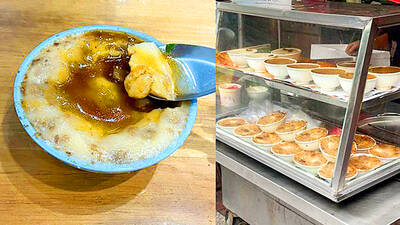
Rice is an essential ingredient in Taiwanese cuisine. Many foods are made of rice, adding more variety to our cooking, such as rice cake, or “gui.” Wagui is made by steaming rice flour batter in a bowl. The term “gui” refers to a type of food made from rice, while “wa” refers to a bowl. The pronunciation of “gui” in Taiwanese Hokkien is similar to the word for “nobility” in Chinese, so it is common for people to prepare various types of gui, including wagui, as offerings to the gods or ancestors,. 米是台灣重要的主食,用米製成的食品十分多元,豐富我們的飲食,如米做成的「粿」。粿的意思是米做成的糕點,碗粿是將在來米漿倒入碗中蒸熟,因而得名。粿因為音同「貴」,因此碗粿等粿食常用作供品祭拜神明和祖先。 nobility (n.) 高貴,高尚;貴族 offering (n.) 供品 While Taiwan may not be
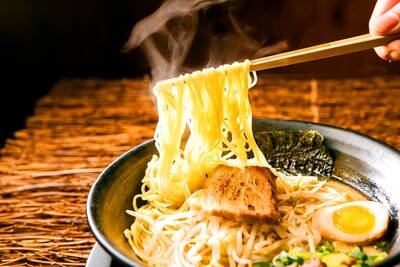
It’s no secret that Japanese people have a deep affection for noodles. Like in the rest of East Asia, noodles are an important staple food, second only to rice. Japanese people have enjoyed noodles for over 1,000 years. The first noodles came from China and were introduced around 800 CE. As time passed, noodles in Japan not only became widespread but also developed some unique Japanese characteristics. The three most popular types of noodles in Japan are ramen, soba, and udon. Ramen, typically made from wheat flour, is usually thin and firm. The dough is kneaded and left to

Drive-through (or drive-thru) restaurants provide people with the immense convenience of being able to purchase and pick up meals without needing to leave their vehicles. These restaurants have been around for decades, and their success has spawned a number of equally handy services. The drive-through concept originated with the drive-in restaurant, the first of which was established in the US in 1921. Patrons would order and eat the food that was delivered to their cars by workers called “carhops.” Ten years later, a drive-through service was introduced, but it was not until 1947 that the first exclusively drive-through restaurant opened its
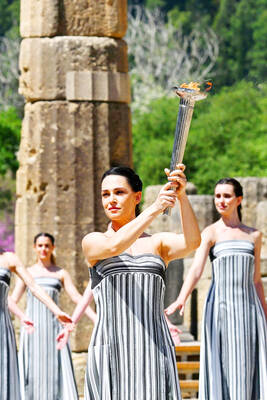
On Tuesday last week, the flame for this summer’s Paris Olympics was lit at the birthplace of the ancient Olympic Games in southern Greece in a meticulously choreographed ceremony. It will then be carried through Greece for more than 5,000km before being handed over to French organizers at the Athens venue used for the first modern Olympics in 1896. The pageantry at Olympia has been an essential part of every Olympics for nearly 90 years since the Games in Berlin. It’s meant to provide an ineluctable link between the modern event and the ancient Greek original on which it was initially modelled. Once


 RSS
RSS