


The world’s tallest man, China’s Bao Xishun, has become a father but his normal-sized son could have trouble filling his dad’s big shoes.
Bao, who stands 2.36m tall, and his wife, Xia Shujun, celebrated the birth of the boy in the northern province of Hebei, Xinhua news agency said earlier this month.
The baby, named “Tianyou”, weighed in at 4.2kg and was 56cm long, slightly taller than most Chinese newborns, the agency said.
Bao, a herdsman from the Inner Mongolia region of northern China, captured the hearts of many worldwide two years ago when he launched a search for a bride who would measure up.
After a lifetime as a bachelor, Bao, who is a celebrity in China, heard back from more than 20 interested women from across the country.
His search ended in July 2007, when after a one-month courtship, he married Xia, who barely reaches his elbow and who, at 29, is about half Bao’s age. Bao is believed to be 57.
The gentle giant also made headlines in 2006 when he was called upon to use his long arms to pull plastic rubbish from the stomachs of two dolphins at an aquarium in northeastern China.
Bao was confirmed as the world’s tallest living man by the Guinness Book of World Records in 2006.
He lost his title last year to Leonid Stadnyk of Ukraine, whose height was certified by a local doctor as a whopping 2.53 metres.
However, Bao has since been reinstated after Stadnyk refused to be measured by an official adjudicator.(AFP)
世界最高男子─中國的鮑喜順當爸爸了,但他體型正常的兒子恐怕難以克紹箕裘了。
新華社本月稍早報導,身高兩百三十六公分的鮑喜順和太太夏淑娟,在中國北部的河北省慶祝兒子的誕生。
報導指出,這個名叫「天佑」的男嬰,體重四千兩百克,身長五十六公分,比一般中國新生兒稍微高一些。
兩年前,來自中國北方內蒙古的牧人鮑喜順公開徵求條件相符的新娘,讓全球許多人感動。
打了一輩子光棍的鮑喜順在中國相當出名,他公開徵婚後,收到中國各地二十幾位女子的回應。
他二OO七年七月認識夏淑娟,經過一個月的追求後,他娶回了美嬌娘。年紀比鮑喜順小了快一半的夏淑娟現年二十九歲,身高還不及他的手肘;據信鮑喜順五十七歲。
這位溫柔的巨人也曾在二OO六年登上報紙頭版,當時他應邀到中國東北一家水族館,用他的長手臂把卡在兩隻海豚胃裡的塑膠垃圾拉出來。
金氏世界紀錄二OO六年確認鮑喜順為世界現存最高的男人。
去年他這個頭銜被烏克蘭的李奧尼德.史塔尼克搶下,當地一位醫生判定他的身高高達兩百五十三公分。
然而,在史塔尼克拒絕接受官方評判員測量身高後,鮑喜順又重新登上第一長人寶座。(法新社�翻譯:袁星塵)

Every few years, the World Baseball Classic (WBC) offers sports fans a real World Series. At its finest, as in the shocking upset on Tuesday last week of the US team by Italy, the games generate the kind of electricity fans feel at the FIFA World Cup. That’s exactly how Major League Baseball (MLB), which owns the WBC, wants it. The tournament, first played in 2006, was designed to boost the league’s profile beyond North America and help it become a global game. In most respects, it’s done better than expected. Yet as the WBC grows, the structure, timing and staging of
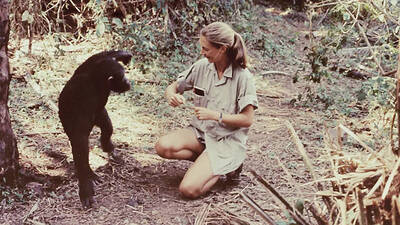
Jane Goodall, the pioneering scientist whose groundbreaking research changed our understanding of chimpanzees and reshaped the study of animal behavior, has died at the age of 91. The Jane Goodall Institute confirmed that she passed away from natural causes in California in October 2025 while on a speaking tour. Born in England, Goodall gained international fame in the 1960s after traveling to Tanzania to study wild chimpanzees under the guidance of anthropologist Louis Leakey. At the time, she had no formal scientific training, yet she lived among the animals and recorded their behavior in remarkable detail. Her discovery that

Dos & Don’ts — 想想看,這句話英語該怎麼說? 1. 她德語說得和她老師一樣流利。 ˇ Her German is as fluent as her teacher’s. ˇ She speaks German as fluently as her teacher (does). χ Her German is as fluent as her teacher. 註︰這裏所比的是「她的德語」和「她老師的德語」,而不是把她的德語和她的老師這個人相比,所以必須說 her teacher’s,即 her teacher’s German。或把「她說德語」和「她老師說德語」比較。 2. 一般認為北部人生活步調和南部人不同。 ˇ The people of the North are generally described as different from those of the South in terms of pace of life. χ The people of the North are generally described as different from the South in terms of pace of life. 註︰所不同者是北部人和南部人,而不是北部人和南部地區的比較,所以應加 those of,those 代替 the people,以免重複。 3. 他的新小說和上一本風格不同。 ˇ The style of his new novel is different from that of his last one. ˇ His new
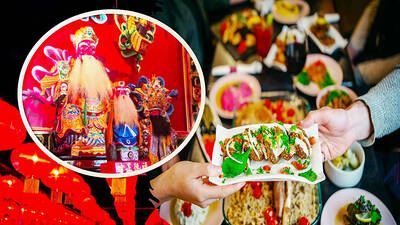
對話 Dialogue 清清:華華,別忘了這禮拜五晚上,老闆請喝春酒喔! Qīngqing: Huáhua, bié wàngle zhè lǐbàiwǔ wǎnshàng, lǎobǎn qǐng hē chūnjiǔ o! 華華:啊!我差點忘了,謝謝提醒。 Huáhua: À! Wǒ chàdiǎn wàngle, xièxie tíxǐng. 清清:老闆人真好,過年前請我們吃尾牙,過完年又請吃春酒。 Qīngqing: Lǎobǎn rén zhēn hǎo, guònián qián qǐng wǒmen chī Wěiyá, guòwán nián yòu qǐng chī chūnjiǔ. 華華:尾牙是感謝我們過去一年的辛勞,春酒是希望我們今年繼續努力啊! Huáhua: Wěiyá shì gǎnxiè wǒmen guòqù yì nián de xīnláo, chūnjiǔ shì xīwàng wǒmen jīnnián jìxù nǔlì a! 清清:給我加薪,我就努力。 Qīngqing: Gěi wǒ jiāxīn, wǒ jiù nǔlì. 華華:還真是「有錢能使鬼推磨」。 Huáhua: Hái zhēn shì “Yǒu qián néng shǐ guǐ tuī mò.” 清清:那還用說。對了!別只顧著吃,頭牙快到了,農曆二月二是土地公生日,記得跟我去拜拜。 Qīngqing: Nà hái yòng shuō. Duìle! Bié zhǐ gùzhe chī, Tóuyá kuài dàole, nónglì èr yuè èr shì Tǔdìgōng shēngrì, jìdé gēn wǒ qù bàibai. 華華:沒問題,東西我來準備,放心吧!一起發大財! Huáhua: Méi wèntí, dōngxi wǒ lái zhǔnbèi, fàngxīn ba!


 RSS
RSS