


In 2006, Waise Azimi flew into Kabul to film a documentary. He knew the subject he wanted: the training of Afghan army recruits. But he didn't know how to get access. So Azimi, an Afghan-American based in the Philippines, called Michael Tucker, who made the Iraq documentary Gunner Palace. Tucker was dismayed that his phone number could be easily found on the Internet, but told Azimi what to do: call the US-led coalition.
Two weeks later Waise (sounds like "wise") Azimi was an embedded journalist at the Kabul Military Training Center, filming the creation of the 55th Battalion of the Afghan National Army under the supervision of coalition forces, mostly US soldiers. The resulting film, Standing Up, vividly chronicles the struggles these men face during basic training. It makes its Taiwan debut tomorrow night as the opening film for this year's Urban Nomad Film Fest.
"I think the US military's new relationship with the press, the goal is to, instead of pushing them away, to bring them very close and to make them in a very sort of informal way a part of their order of battle," Azimi said in a phone interview on Tuesday from Manila.
The purpose of giving a journalist embedded status, he said, is "not necessarily to monitor or control what you see, but to control what you think you see. [When] you put a flack jacket on, you put a gun in [a journalist's] hand, you draw this reporter into some sort of camaraderie with coalition soldiers … . He's less likely to write a damning article about the guy he's been living with for months."
The son of an official at the Asian Development Bank, Azimi, 27, grew up in Manila and graduated with a degree in sociology from a liberal arts college in New York state. He shot his first film, Afghanistan After, about the lives of ordinary Afghans a year after the fall of the Taliban, while still a university student. He got the idea to do Standing Up after reading Absolutely American, a book that follows cadets at the US Military Academy in West Point.
Azimi said obtaining permission to film US and Afghan officers and non-commissioned officers training recruits was "surprisingly easy." Following Tucker's advice, he called the US embassy in Kabul, which connected him with the Camp Eggers public affairs office. They asked to see his proposal and scheduled a meeting two weeks later. At the meeting they told him they were waiting for a legal review, but otherwise their only request was that he send a copy of the film when it was finished. Azimi could film everything except Special Forces troops and base security.
The process was "really straight-forward and hassle-free," he said, because "there isn't that much of a media presence" in Afghanistan compared to Iraq. "They want people to tell stories," he said.
Still, as a member of the media, Azimi encountered "a lot of initial mistrust" from soldiers. "There was a lot talk about liberal media and how journalists only talk about the bad things," he said.
Azimi feels that perception is misguided: "On the balance of things, I would argue that, if a reader is mindful enough, they can read enough sources to put together a fairly accurate picture of what's going on in Iraq and Afghanistan - as long as they're not just relying on Fox News or the New York Times."
Surprisingly, he was only told to stop filming twice during the four months he spent documenting the 55th battalion. The first was when a US drill sergeant was having a conversation with his Afghan counterpart. The soldier felt Azimi was undermining his ability to control and extend his authority over the situation.
The second came when one of the film's main characters, an Afghan recruit, accidentally discharged his AK-47.
"The Afghan officers around him immediately swarmed around him and began kicking the shit out of him," Azimi said.
The young American second lieutenant in charge of the camp's Combat Arms section - who had been away when Azimi was granted permission to film and was not pleased to find him there on his return - told Azimi to stop filming.
"I kept on filming for a little while longer," Azimi said. "He said if you continue to film he would have my access revoked. And then I stopped filming."
Ironically, soon after he turned his camera off, US soldiers from the Combat Arms section arrived to break up the fight.
Azimi already had plenty of footage of abuse in the program by Afghan officers, many of whom were trained by the Soviets, ranging from what he characterized as "moderately repugnant" to "severe and criminal."
It was "very irritating," Azimi said, "because I found a great group of soldiers, and they were very sincere about trying to do a good job. And part of that was stepping in to help this recruit when his drill sergeants started to whale on him. People [who watch the film] will see the beatings and that's all they will see."
Standing Up is not Michael Moore-style agit-prop. Nor is it the kind of Discovery Channel-style documentary that imposes a narrative arc on its subject. There are no good guys or bad guys: Azimi sought out to show what life was like for Afghan recruits and the US soldiers who train them and in the process of editing the film remain as "true to the spirit" of what he witnessed as possible.
"It's a very well-made movie. It's the kind of movie that will have a hard time getting international distributorship," said Urban Nomad organizer (and former Taipei Times reporter) David Frazier. "It's unfortunate that it will be consigned to limited exposure in indie events - but at the same time, we're really happy to show it."
Asked why he had not edited his film to make it more cable-TV-friendly, Azimi said: "Life is not a neat introduction, a climax and a denouement. I didn't set forth to make an argument. I set forth to be witness to an experience."
Standing Up shows tonight at 8:45pm at Capone's restaurant, 312, Zhongxiao E Rd Sec 4, Taipei City (台北市忠孝東路四段312號). Azimi will be present to introduce the film and participate in a question-and-answer session afterwards. There is no minimum charge but viewers are expected to purchase a meal or drinks. Seating is limited. Call (02) 2773-3782 for reservations. For more information on the Urban Nomad Film Fest, which runs through May 2 in Taipei, before moving to Hsinchu, visit urbannomadfilmfest.blogspot.com and see coverage in the Around Town section of Friday's Taipei Times.
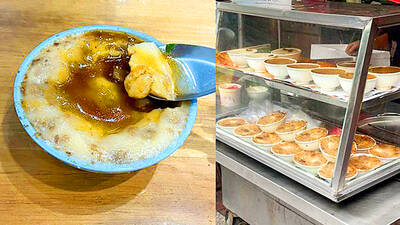
Rice is an essential ingredient in Taiwanese cuisine. Many foods are made of rice, adding more variety to our cooking, such as rice cake, or “gui.” Wagui is made by steaming rice flour batter in a bowl. The term “gui” refers to a type of food made from rice, while “wa” refers to a bowl. The pronunciation of “gui” in Taiwanese Hokkien is similar to the word for “nobility” in Chinese, so it is common for people to prepare various types of gui, including wagui, as offerings to the gods or ancestors,. 米是台灣重要的主食,用米製成的食品十分多元,豐富我們的飲食,如米做成的「粿」。粿的意思是米做成的糕點,碗粿是將在來米漿倒入碗中蒸熟,因而得名。粿因為音同「貴」,因此碗粿等粿食常用作供品祭拜神明和祖先。 nobility (n.) 高貴,高尚;貴族 offering (n.) 供品 While Taiwan may not be

Drive-through (or drive-thru) restaurants provide people with the immense convenience of being able to purchase and pick up meals without needing to leave their vehicles. These restaurants have been around for decades, and their success has spawned a number of equally handy services. The drive-through concept originated with the drive-in restaurant, the first of which was established in the US in 1921. Patrons would order and eat the food that was delivered to their cars by workers called “carhops.” Ten years later, a drive-through service was introduced, but it was not until 1947 that the first exclusively drive-through restaurant opened its
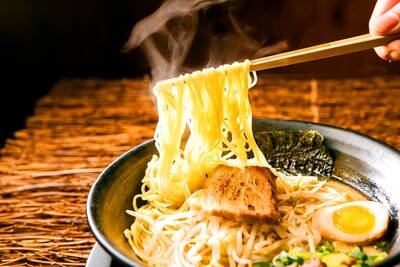
It’s no secret that Japanese people have a deep affection for noodles. Like in the rest of East Asia, noodles are an important staple food, second only to rice. Japanese people have enjoyed noodles for over 1,000 years. The first noodles came from China and were introduced around 800 CE. As time passed, noodles in Japan not only became widespread but also developed some unique Japanese characteristics. The three most popular types of noodles in Japan are ramen, soba, and udon. Ramen, typically made from wheat flour, is usually thin and firm. The dough is kneaded and left to
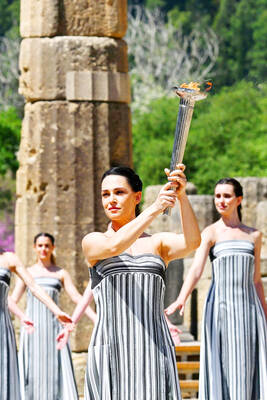
On Tuesday last week, the flame for this summer’s Paris Olympics was lit at the birthplace of the ancient Olympic Games in southern Greece in a meticulously choreographed ceremony. It will then be carried through Greece for more than 5,000km before being handed over to French organizers at the Athens venue used for the first modern Olympics in 1896. The pageantry at Olympia has been an essential part of every Olympics for nearly 90 years since the Games in Berlin. It’s meant to provide an ineluctable link between the modern event and the ancient Greek original on which it was initially modelled. Once


 RSS
RSS