


A woman who hates spiders says they helped save her from a house fire.
Danielle Vigue, 18, says she awoke early on July 17 to find spiders in her room and started killing them. When more showed up, she says she went across the hall and got into bed with her 15-year-old sister, Lauren.
"At first there were five, they were all around the light fixture," Danielle Vigue told The Saginaw News. "I hate spiders, they freak me out."
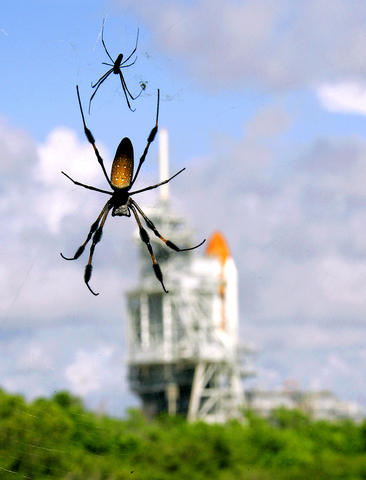
PHOTO: AP
A fire apparently was smoldering in the attic of the home about 145km northwest of Detroit, USA.
A few hours later, Vigue's mother, Debra, and eight-year-old sister, Shelby, smelled smoke. When the family opened the door to the room Danielle Vigue had earlier left, they found it was on fire.
"I will never kill another spider again," Danielle told WNEM-TV in Saginaw.
Richland Township fire chief Gary Wade was surprised by Vigue's story.
"I've never heard of spiders saving someone from a fire before," Wade said.
一名?Q厭蜘蛛的女子說,蜘蛛拯?浀o?K?q家中火?a喪命。
十八歲的丹妮爾.?N格說,她七月十七日清?彃?N荇氶A發現房裡有好?X?氖j蛛,所H?N?}始捕??C她說,愈?虓U多的蜘蛛X現時,她u好穿?V大廳,?]h和她十五歲的妹妹羅蘭擠一?i?氶C
「一?}始有五?氖j蛛X現在照明器?箤|周,」丹妮爾?i?D《薩吉諾時報》說︰「???厭蜘蛛,?e們嚇壞?琱F」
她位於美?磡陵瑹艀醆\_方一百|十五公?蔽漁a中閣樓?鶠A火??Le燒。
?X個小時過後,她的擦侁L博拉與她八歲的妹妹雪?鉭捋D?鴗F燒焦??C當家人??}丹妮爾稍早??驈的房?&氶A發現裡頭著火了。
丹妮爾?i?DWNEM電視x︰「?痤?不會再??`蜘蛛了。」
?蔗_蘭鎮的消??髐長蓋瑞.華德對她的經歷感?鴞Y驚。
華德說︰「??}q?S髏過蜘蛛iH在火?a時?洃H一命。」
(翻?驉J賴美?g)

The debate surrounding Taipower’s recent corporate identity reboot has gone well beyond the design community. The controversy began after Taipower replaced the familiar “Taiwan Power Company” wording — widely regarded as the calligraphy of Yu You-ren (1879-1964), former Control Yuan president and master calligrapher — with a modern logotype by designer Aaron Nieh’s team, Aaron Nieh Workshop. Taipower said the change was not a wholesale replacement of old signage, but an “optimization of its identity system,” aimed at meeting the needs of digital media, electronic bills, apps, social media graphics and various small-format applications. Existing physical markings, such as building

Since 2005, the third Monday in January has come to be known as “Blue Monday.” In other words, that day is believed to be the most depressing day of the year. This concept seems logical at first. After all, Monday marks the start of the school or workweek after two days of rest and fun. Also, blue is a color that is often associated with sadness. Furthermore, in many parts of the world, January is a time when the weather is cold, rainy, and gloomy. But is there any scientific proof that this January day is truly sadder than any of

Continued from yesterday(延續自昨日) https://www.taipeitimes.com/News/lang For the most part, the idea of “Blue Monday” has been rejected as a myth. Some mental health experts also say there is a danger in labeling a certain day as the most depressing time of the entire year. Some argue that if people expect to feel sadder on the third Monday in January, this belief alone may increase their anxiety. One group that is worried about the negative effect of believing in Blue Monday is Samaritans. A mental health charity based in the UK, Samaritans is working to turn Blue Monday into “Brew Monday.” In this
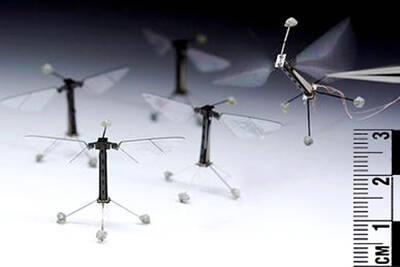
As bee populations around the world continue to decline at an alarming rate, scientists are developing an innovative solution: robotic bees. Recent advances at research institutions like Massachusetts Institute of Technology (MIT) in the US have produced tiny flying robots capable of performing pollination tasks similar to those of real bees. These tiny machines represent an impressive technological achievement. MIT’s latest models can hover in the air for over 1,000 seconds and perform complex movements, demonstrating the agility needed for successful pollination. The robots are designed to mimic the flight patterns of natural bees, offering potential support to agriculture


 RSS
RSS