


New Zealand authorities have blocked a couple's bid to officially name their new son "4real,'' saying numerals are not allowed.
Pat and Sheena Wheaton said they decided to name their new baby "4real'' shortly after glimpsing him for the first time as a fetus during an ultrasound examination and being struck by the reality of his impending arrival.
"For most of us, when we try to figure out what our names mean, we have to look it up in a babies book and ... there's no direct link between the meaning and the name,'' Pat Wheaton told TV One. "With this name, everyone knows what it means.''
But when the parents filed the name with New Zealand's Registry of Births, Deaths and Marriages, they were told names beginning with a number were against the rules.
The government office has opened negotiations with the parents about the name under a policy that says all unusual names must be given case-by-case consideration.
"The name has not at this stage been rejected,'' Registrar-General Brian Clarke said in a statement. "We are currently in discussions with the parents ... to clarify the situation.'' Clarke said the rules are designed to prevent names that are "likely to cause offense to a reasonable person.'' Satan and Adolf Hitler were proposed names that have been declined, he said.
If no compromise has been reached by July 9, the baby will be registered as "Real,'' officials say.
New Zealand law requires all children born in the South Pacific nation to be registered with the Births, Deaths and Marriages registry within two months of birth.
紐西蘭一對夫妻打算將甫出生的兒子命名為「4real」,但紐西蘭當局有意見,認為依法名字不應出現數字。
佩特.威頓與席娜.威頓夫婦說他們第一次做超音波檢查瞥見胎兒時,對新生命即將到來感到震撼,馬上就決定將他命名為「4real」。
「人們想了解自己名字的意義時,大多會翻翻嬰兒書‥‥‥卻找不到名字與涵義的直接關聯,」佩特.威頓告訴TV One 說︰「但人人都明白這個名字的涵義。」
這對父母到紐西蘭「出生、死亡和婚姻登記署」登記這個名字時,被告知名字依規定不可用數字起頭。
現行政策規定,任何不尋常的名字都必須依個案來考量,所以登記署已與這對家長溝通。
「這個名字在現階段尚未被駁回,」登記署署長布萊恩.克拉克在聲明中表示︰「我們正與這對家長討論‥‥‥好釐清狀況。」
克拉克說,這些規定都是為了避免「可能引起一般人反感」的名字。他說,撒旦和阿道夫.希特勒都是登記時遭回絕的名字。
官員們說︰「假如七月九日前未取得妥協,寶寶的名字就會登記為『Real』。」
紐西蘭法律規定,所有出生的寶寶,都得在出生兩個月內向「出生、死亡和婚姻登記署」登記身分。
(美聯社/翻譯︰賴美君)

The debate surrounding Taipower’s recent corporate identity reboot has gone well beyond the design community. The controversy began after Taipower replaced the familiar “Taiwan Power Company” wording — widely regarded as the calligraphy of Yu You-ren (1879-1964), former Control Yuan president and master calligrapher — with a modern logotype by designer Aaron Nieh’s team, Aaron Nieh Workshop. Taipower said the change was not a wholesale replacement of old signage, but an “optimization of its identity system,” aimed at meeting the needs of digital media, electronic bills, apps, social media graphics and various small-format applications. Existing physical markings, such as building

Since 2005, the third Monday in January has come to be known as “Blue Monday.” In other words, that day is believed to be the most depressing day of the year. This concept seems logical at first. After all, Monday marks the start of the school or workweek after two days of rest and fun. Also, blue is a color that is often associated with sadness. Furthermore, in many parts of the world, January is a time when the weather is cold, rainy, and gloomy. But is there any scientific proof that this January day is truly sadder than any of

Continued from yesterday(延續自昨日) https://www.taipeitimes.com/News/lang For the most part, the idea of “Blue Monday” has been rejected as a myth. Some mental health experts also say there is a danger in labeling a certain day as the most depressing time of the entire year. Some argue that if people expect to feel sadder on the third Monday in January, this belief alone may increase their anxiety. One group that is worried about the negative effect of believing in Blue Monday is Samaritans. A mental health charity based in the UK, Samaritans is working to turn Blue Monday into “Brew Monday.” In this
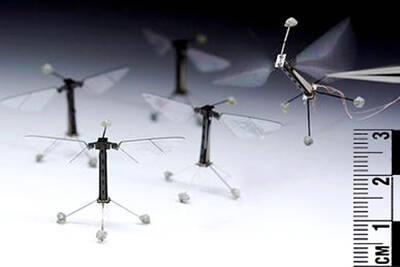
As bee populations around the world continue to decline at an alarming rate, scientists are developing an innovative solution: robotic bees. Recent advances at research institutions like Massachusetts Institute of Technology (MIT) in the US have produced tiny flying robots capable of performing pollination tasks similar to those of real bees. These tiny machines represent an impressive technological achievement. MIT’s latest models can hover in the air for over 1,000 seconds and perform complex movements, demonstrating the agility needed for successful pollination. The robots are designed to mimic the flight patterns of natural bees, offering potential support to agriculture


 RSS
RSS