


The animals in this picture are baby bat-eared foxes. Like other types of foxes the babies are called kits. Bat-eared foxes can only be found in Africa.
If you look carefully at the picture you will see that the kits have ears which seem too big for their heads. Lots of baby animals like puppies and kittens start off with really big ears. Bat-eared foxes are different because their ears stay really big even after they grow up. That is why they are called bat-eared.
Unlike other foxes, dogs and dingos, bat-eared foxes mainly eat insects. They grow to about 60cm long, and their tails add another 30cm. They are pretty small — they only grow to about 40cm tall.

PHOTO: AP
Bat-eared foxes like to live in the woods and on grasslands. They mainly come out at night. They usually live in pairs and both parents raise the kits. Mommy bat-eared foxes have between 1 and 5 kits at a time, so the family in the picture is a big one! They were born sometime in April but have only just started coming out to play.
照片上的動物是小小大耳狐。大耳狐的小寶寶和其他品種的幼狐一樣都叫「kit」。大耳狐是非洲特有的動物。
如果仔細看照片,你會發現這些幼狐的耳朵似乎大到跟自己的頭不成比例。小狗、小貓等許多小動物出生時,也都有著一雙大耳朵,但大耳狐不同的是,即便長大後,那對耳朵還是很大,這是「bat-eared」之所以得名。
和其他狐、狗及澳洲犬不同的是,大耳狐的主食是昆蟲。成狐身長約六十公分,尾長三十公分,體型很小,身高僅有四十公分左右。
大耳狐喜歡生活在樹林裡或草原上,屬夜行性動物的牠們常成雙成對生活,並由雙親共同撫育幼狐。母大耳狐一次可生一到五胎,因此照片上的小小大耳狐是個大家庭!四月左右出生的牠們,直到最近才開始外出玩耍。
(翻譯:林倩如)
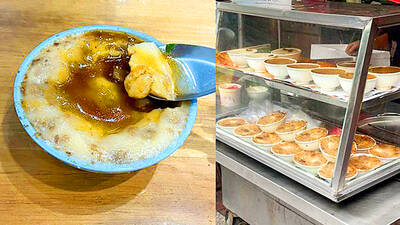
Rice is an essential ingredient in Taiwanese cuisine. Many foods are made of rice, adding more variety to our cooking, such as rice cake, or “gui.” Wagui is made by steaming rice flour batter in a bowl. The term “gui” refers to a type of food made from rice, while “wa” refers to a bowl. The pronunciation of “gui” in Taiwanese Hokkien is similar to the word for “nobility” in Chinese, so it is common for people to prepare various types of gui, including wagui, as offerings to the gods or ancestors,. 米是台灣重要的主食,用米製成的食品十分多元,豐富我們的飲食,如米做成的「粿」。粿的意思是米做成的糕點,碗粿是將在來米漿倒入碗中蒸熟,因而得名。粿因為音同「貴」,因此碗粿等粿食常用作供品祭拜神明和祖先。 nobility (n.) 高貴,高尚;貴族 offering (n.) 供品 While Taiwan may not be
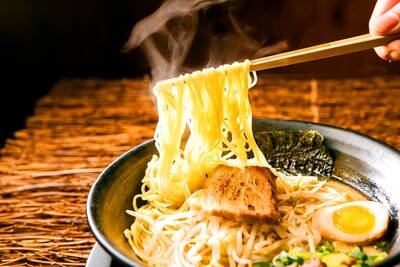
It’s no secret that Japanese people have a deep affection for noodles. Like in the rest of East Asia, noodles are an important staple food, second only to rice. Japanese people have enjoyed noodles for over 1,000 years. The first noodles came from China and were introduced around 800 CE. As time passed, noodles in Japan not only became widespread but also developed some unique Japanese characteristics. The three most popular types of noodles in Japan are ramen, soba, and udon. Ramen, typically made from wheat flour, is usually thin and firm. The dough is kneaded and left to

On Tuesday last week, the flame for this summer’s Paris Olympics was lit at the birthplace of the ancient Olympic Games in southern Greece in a meticulously choreographed ceremony. It will then be carried through Greece for more than 5,000km before being handed over to French organizers at the Athens venue used for the first modern Olympics in 1896. The pageantry at Olympia has been an essential part of every Olympics for nearly 90 years since the Games in Berlin. It’s meant to provide an ineluctable link between the modern event and the ancient Greek original on which it was initially modelled. Once

Drive-through (or drive-thru) restaurants provide people with the immense convenience of being able to purchase and pick up meals without needing to leave their vehicles. These restaurants have been around for decades, and their success has spawned a number of equally handy services. The drive-through concept originated with the drive-in restaurant, the first of which was established in the US in 1921. Patrons would order and eat the food that was delivered to their cars by workers called “carhops.” Ten years later, a drive-through service was introduced, but it was not until 1947 that the first exclusively drive-through restaurant opened its


 RSS
RSS