


Are you good at keeping secrets? Can other people trust you with their private information? If you tell someone a secret that you weren't supposed to tell anyone, you can say that you “spilled the beans.” Can you guess where this phrase comes from?
A long time ago in Greece, people voted by putting beans in a jar. If they wanted to vote “yes” for something, they would put a white bean in the jar. If they wanted to vote “no,” they put a black bean in the jar. However, sometimes when everyone was voting, someone would knock over the jar and “spill the beans.” Then everybody would know what the result of the vote was before they were supposed to know.
Nobody is totally sure if this is why people use the phrase today, but its a good story to help you remember what “spilling the beans” means!

PHOTO: AP
(Marc Langer, staff writer)
你擅長保守祕密嗎?別人可以放心地告訴你祕密嗎?假如你告訴某人一個不可告人的祕密,你可以說自己是「spilled the beans」(打翻了豆子)。你猜得到這個片語源自哪裡嗎?
很久以前在希臘,人們投票的方式是將豆子放入瓶中。假如他們想投「贊成票」,他們會在瓶中放入一顆白色豆子。假如他們想投「反對票」,就會把黑色豆子放入瓶中。不過,有時候大家在投票時,可能會有人打翻了瓶子,「豆子灑了出來」。所以,大家就會事先得知投票結果。
沒有人百分百確定這是否就是這個片語沿用至今的緣由,不過這是一個還不錯的故事,幫你記住「spilling the beans」是什麼意思!
(翻譯︰賴美君)
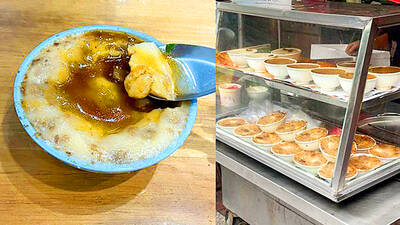
Rice is an essential ingredient in Taiwanese cuisine. Many foods are made of rice, adding more variety to our cooking, such as rice cake, or “gui.” Wagui is made by steaming rice flour batter in a bowl. The term “gui” refers to a type of food made from rice, while “wa” refers to a bowl. The pronunciation of “gui” in Taiwanese Hokkien is similar to the word for “nobility” in Chinese, so it is common for people to prepare various types of gui, including wagui, as offerings to the gods or ancestors,. 米是台灣重要的主食,用米製成的食品十分多元,豐富我們的飲食,如米做成的「粿」。粿的意思是米做成的糕點,碗粿是將在來米漿倒入碗中蒸熟,因而得名。粿因為音同「貴」,因此碗粿等粿食常用作供品祭拜神明和祖先。 nobility (n.) 高貴,高尚;貴族 offering (n.) 供品 While Taiwan may not be
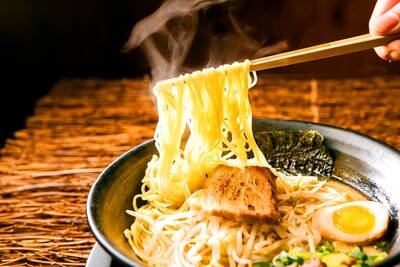
It’s no secret that Japanese people have a deep affection for noodles. Like in the rest of East Asia, noodles are an important staple food, second only to rice. Japanese people have enjoyed noodles for over 1,000 years. The first noodles came from China and were introduced around 800 CE. As time passed, noodles in Japan not only became widespread but also developed some unique Japanese characteristics. The three most popular types of noodles in Japan are ramen, soba, and udon. Ramen, typically made from wheat flour, is usually thin and firm. The dough is kneaded and left to

Drive-through (or drive-thru) restaurants provide people with the immense convenience of being able to purchase and pick up meals without needing to leave their vehicles. These restaurants have been around for decades, and their success has spawned a number of equally handy services. The drive-through concept originated with the drive-in restaurant, the first of which was established in the US in 1921. Patrons would order and eat the food that was delivered to their cars by workers called “carhops.” Ten years later, a drive-through service was introduced, but it was not until 1947 that the first exclusively drive-through restaurant opened its

On Tuesday last week, the flame for this summer’s Paris Olympics was lit at the birthplace of the ancient Olympic Games in southern Greece in a meticulously choreographed ceremony. It will then be carried through Greece for more than 5,000km before being handed over to French organizers at the Athens venue used for the first modern Olympics in 1896. The pageantry at Olympia has been an essential part of every Olympics for nearly 90 years since the Games in Berlin. It’s meant to provide an ineluctable link between the modern event and the ancient Greek original on which it was initially modelled. Once


 RSS
RSS