


The end of the Cold War has removed the shadow of war from the North Atlantic, but the potential still remains in Asia. Of all the flash points in East Asia, the Taiwan Strait is potentially the most explosive, and of tremendous consequence to democracy in the region and beyond. In the hopes of averting armed conflict, and building a bridge of peace over this strait of tension, we respectfully offer our views as follows.
Of the many obstacles towards easing tensions across the Taiwan Strait, three stand out as the most intractable:
1) The PRC has clung to its principle that it is the sole representative of the "one China," of which Taiwan is a part, and that "one country, two systems" is the only acceptable formula for unification.
2) Beijing has refused to renounce the threat of armed aggression against Taiwan, a threat recently fortified on Feb. 21 with one additional triggering condition -- Taipei's indefinite refusal to negotiate a peaceful unification.
The two previous triggering conditions were: a) Taiwan's declaring independence and b) foreign occupation of Taiwan.
3) In the last decade the PRC has nearly doubled its military expenditure. And it has accelerated the strategic modernization of its armed forces, including the recent deployment of M9 and M11 ballistic missiles, with Taiwan as the focus.
For more than two decades the Taiwan Relations Act (TRA) and three US-China communiques have guided Washington in its relations with both Taiwan and China. Embedded in those three communiques, but not in the TRA, is a bargain: The US commits not to challenge the one China myth/policy, while reserving the right of interpretation. In exchange, China agrees to incorporate Taiwan peacefully -- while reserving the right to use force against the latter.
This "creative ambiguity" has enabled Washington and Beijing to bring about a grand strategic realignment of mutual benefit.
The Clinton administration abandoned that ambiguity in 1998. In order to appease Beijing, it en-tered into a "constructive strategic partnership" with China and adopted the so-called "three nos" policy: "We [the US] do not support independence for Taiwan, or two Chinas, or one Taiwan-one China. And we don't believe that Taiwan should be a member in any organization for which statehood is a requirement."
It should be noted that an overwhelming majority of the US Congress does not endorse this new China policy. Many of the most influential US media, regional experts and China scholars, eminent security specialists, and even national security assistants to former US presidents, do not approve of this one-sided appeasing policy either.
The "one China" policy is a myth; since 1949 there have been two Chinas. Nevertheless, Washington has embraced the myth. According to its pre-1972 version, one China meant the ROC on Taiwan. Since then, one China equals the PRC. Creative ambiguity certainly has its merits, but it has drawbacks as well.
While it has temporarily enabled Washington and Beijing to disregard irreconcilable differences and postpone a day of reckoning, it has also engendered misunderstanding.
This leads to miscalculation, and may even mislead policy makers into building long-term plans in the sand, instead of on the solid rock of reality.
Richard Nixon, inventor of the post-1972 version of the "one China" policy, later counseled against it shortly before his death. In his last political testament, titled Beyond Peace, Nixon wrote that the US must accept that "the separation [of Taiwan from the PRC] is permanent politically."
Through democratization, Taiwanese public opinion has come to inform and guide the policy-making process, particularly on issues such as Taiwan's national identity, international status and participation and its relationship with the PRC. Survey after survey in recent years has revealed the following:
1) Taiwan, whose official title is the Republic of China, is a sovereign, independent state. Historically it has been a part of China but not of the PRC.
2) Since the ROC and the PRC are both historically and culturally a part of China, the two should strive together for a unique and friendly state-to-state relationship.
3) Taiwan should participate constructively in the international arena. Legitimate international participation is compatible with improving relations with China.
4) Preservation of the status quo in the Taiwan Strait should and can be achieved through negotiation and agreement. Taiwan should do its part and do its best to end the state of civil war, bringing about peaceful and prosperous co-existence across the Strait.
5) The "one country, two systems" formula is both impractical and unacceptable, and should be rejected.
6) On the basis of equality, the two sides of the Strait should resume dialogue on all issues of interest to both, and negotiate agreements aimed at expanding bilateral cooperation in all domains of mutual benefit.
7) Any changes in the status quo must have the consent of the people of Taiwan in accordance with their democratic process.
8) Proceeding from the premise of "one Chinese nation (with) special state to state relations," Taiwan should not rule out peaceful unification with China, provided that the PRC evolves into a market democracy where rule of law, respect for human rights and party politics prevail.
The above stances are embraced by two thirds to three quarters of our people. As such, they may be regarded as public opinion. [Note: For detailed findings of the surveys, click on www.mac.gov.tw]
In the current election campaign, not one of the three serious contenders has articulated a policy position at odds with this opinion.
The Kashmir conflict between India and Pakistan, the Israel-Arab conflict, and the issue of the Taiwan Strait are the most intractable international issues of our time. For conflicts like these there is no single, quick, one-shot solution, but only an open-ended, evolutionary outcome. Only mutual self-restraint, patience, wisdom and time will lead to a resolution acceptable to all parties concerned. With this in mind, we appeal to the international community to help Taiwan preserve peace and stability across the Taiwan Strait by undertaking the following initiatives:
1) Call upon the leaders of China to observe the UN principle of peaceful settlement and to renounce the use and threat of force against Taiwan.
2) Encourage and help the two sides to reach workable agreements on measures of confidence building and conflict prevention.
3) Assist Taiwan's efforts to participate in regional multilateral security dialogues.
4) Endorse Taiwan's accession to the UN and other international organizations in accordance with the German model.
5) The US and its democratic allies should strive to reach consensus on the Taiwan Strait issue and act upon it.
In short, pending a final solution, legitimizing the status quo should be the priority. The international community can help enact this by seriously considering implementation of the measures suggested above.
In the last six decades, Taiwan and its people have gone from being a colony of imperial Japan, to enduring 40 years of martial law, to orchestrating the first-ever democratic election of a leader in 5,000 years of Chinese history. Taiwan is the only traditionally Chinese society to transform itself into a thriving market democracy. It has become a beacon for all Chinese in the PRC and other peoples aspiring for a democratic way of life. As such, the preservation of the status quo across the Taiwan Strait is in the best interests of the people of China, Taiwan and the free world.
Chen Pi-chao (
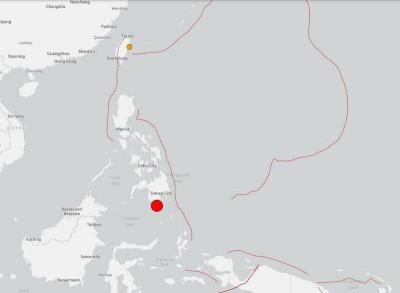
A magnitude 7.8 earthquake struck off the southern coast of Mindanao in the Philippines at 7:38am today, prompting the US Tsunami Warning System to issue an alert for neighboring countries, including Taiwan. The system issued a purple alert indicating a "tsunami threat." The potential threat zone includes Taiwan, the Philippines, Papua New Guinea, Yap and Palau. Philippine authorities were assessing the damage from the quake, with the office of civil defense seeking to verifying initial reports that 15 people had been killed and 129 injured in the region, mostly from falling debris. Arlene Hollero, disaster chief of Maasim town in the Philippines' Sarangani Province,

National Taiwan University (NTU) yesterday said it disqualified a person from an entrance examination for using AI smart glasses to cheat, along with two others for making untruthful statements in their curriculum vitae. The three applicants were given null scores, Taiwan’s highest-ranked university said, calling on prospective students to be honest in the admissions process. NTU registrar Lee Hung-sen (李宏森) said that the cheating applicant wore a hat and thick-rimmed glasses to the second written exam for medical school, claiming that they felt cold. Suspicions were aroused when the applicant stared oddly at the test for long stretches while steadily bringing the paper
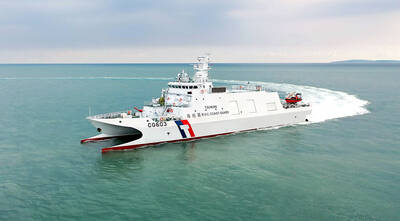
‘GRAY ZONE’ PRESSURE: Beijing’s activities are intended to create the deceitful impression that China has jurisdiction over the area around Taiwan, the CGA said Taiwan’s rights over its territorial waters and exclusive economic zone must not be violated by any country, the Mainland Affairs Council said yesterday, adding that it will not accept any unprovoked actions. The council issued the remarks in response to the China Coast Guard conducting maritime enforcement drills near eastern Taiwan and claiming to fully exercise China’s maritime administrative law enforcement authority. The Coast Guard Administration (CGA) has been closely monitoring the situation and is taking concrete steps to defend the nation’s sovereignty and secure its waters, the council said. China has no sovereign rights over the waters off eastern
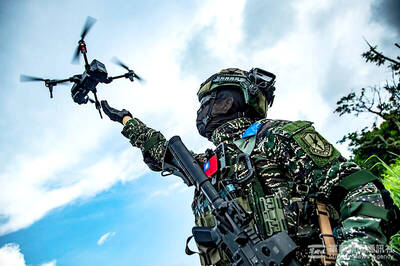
RESILIENCE: Taiwan plays a key role in semiconductors, energy, information infrastructure and advanced manufacturing, AIT Director Raymond Greene said Taiwan’s continued investment in deterrence and resilience remains vital, especially in uncrewed systems and other emerging technologies, American Institute in Taiwan (AIT) Director Raymond Greene said yesterday. Greene made the remarks at the annual National Strategic Summit on Supply Chain Resilience held by the Research Institute for Democracy, Society and Emerging Technology (DSET), a government-backed think tank. As Taiwan last year became the US’ fourth-largest trading partner and supply chain security is becoming more important, cooperation in emerging technologies continues to deepen between the two countries, he said. The US is committed to accelerating innovation, building key infrastructure, strengthening cooperation


 RSS
RSS