


Japanese Prime Minister Sanae Takaichi rebuffed demands from China to retract her recent comments about Taiwan, saying there was no change to Tokyo’s stance on how it would respond to a major regional security crisis.
Takaichi became the first sitting Japanese leader in decades to publicly link a Taiwan Strait crisis with the possible deployment of Japanese troops, prompting a furious response and economic retaliation from Beijing.
Since then, she has limited herself to the more vague positions and reiterated that stance yesterday to reporters before departing for a G20 meeting in South Africa.
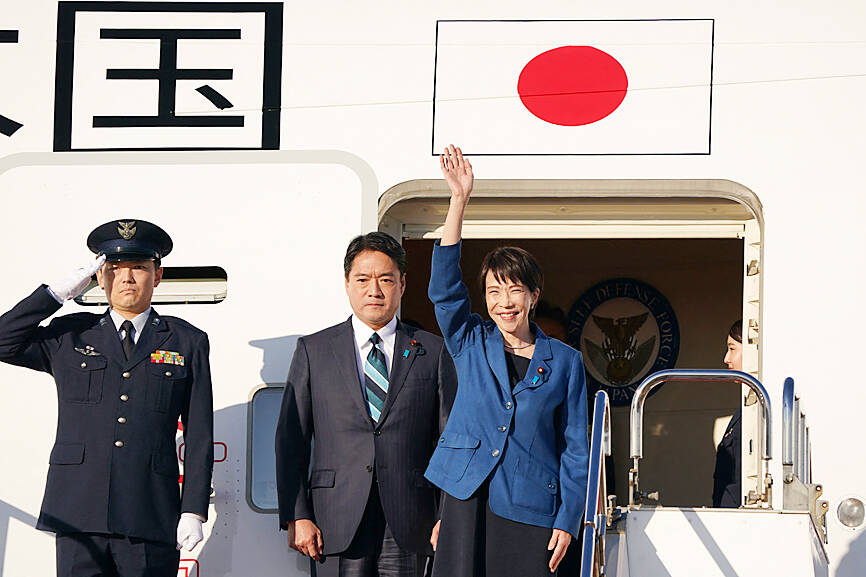
Photo: AFP
“Regarding a situation threatening Japan’s existence, the government will make a comprehensive judgement based on all available information, taking into account the specific circumstances of each actual situation as it arises,” Takaichi said. “I myself have repeatedly stated this position in my responses. The government’s stance remains consistent.”
While Chinese officials, state media and diplomats have mounted an intense effort to pressure her to retract her comments, Takaichi and her senior officials have sought to dial down tensions and move beyond the issue.
So far that approach has come up short.
Japan should “correct the wrongful remarks and wrongdoings at once, and take practical steps to honor its commitments to China,” Chinese Ministry of Foreign Affairs spokeswoman Mao Ning (毛寧) said yesterday.
Takaichi said she wanted to continue to try and improve relations after she met with Chinese President Xi Jinping (習近平) at the APEC summit in South Korea last month.
“President Xi and I confirmed the broad direction of comprehensively advancing our strategic and mutually beneficial relationship, and building a constructive and stable relationship. There has been no change whatsoever in this stance,” Takaichi said.
China is set to be represented at the G20 by Premier Li Qiang (李強), but there are no plans for him to meet with Takaichi.
A meeting between Japanese and Chinese diplomats earlier this week appeared to have done little to soothe tensions.
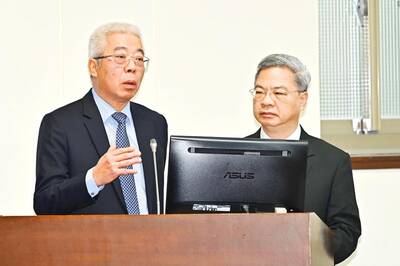
Taiwan has arranged for about 8 million barrels of crude oil, or about one-third of its monthly needs, to be shipped from the Red Sea this month to bypass the Strait of Hormuz and ease domestic supply pressures, CPC Corp, Taiwan (CPC, 台灣中油) said yesterday. The state-run oil company has worked with Middle Eastern suppliers to secure routes other than the Strait of Hormuz, through which about 20 percent of the world’s oil and liquefied natural gas typically passes, CPC chairman Fang Jeng-zen (方振仁) said at a meeting of the legislature’s Economics Committee in Taipei. Suppliers in Saudi Arabia have indicated they
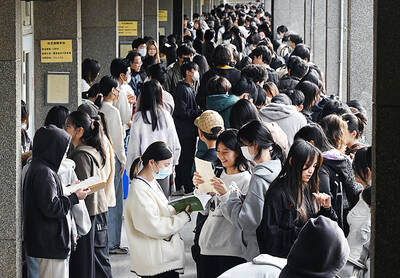
A global survey showed that 60 percent of Taiwanese had attained higher education, second only to Canada, the Ministry of the Interior said. Taiwan easily surpassed the global average of 43 percent and ranked ahead of major economies, including Japan, South Korea and the US, data from the Organisation for Economic Co-operation and Development (OECD) for 2024 showed. Taiwan has a high literacy rate, data released by the ministry showed. As of the end of last year, Taiwan had 20.617 million people aged 15 or older, accounting for 88.5 percent of the total population, with a literacy rate of 99.4 percent, the data
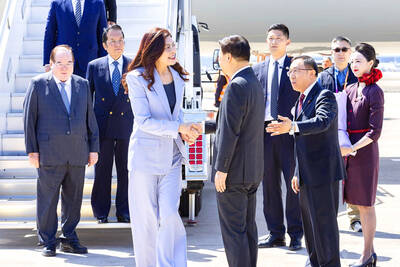
CCP ‘PAWN’? Beijing could use the KMT chairwoman’s visit to signal to the world that many people in Taiwan support the ‘one China’ principle, an academic said Chinese Nationalist Party (KMT) Chairwoman Cheng Li-wun (鄭麗文) yesterday arrived in China for a “peace” mission and potential meeting with Chinese President Xi Jinping (習近平), while a Taiwanese minister detailed the number of Chinese warships currently deployed around the nation. Cheng is visiting at a time of increased Chinese military pressure on Taiwan, as the opposition-dominated Legislative Yuan stalls a government plan for US$40 billion in extra defense spending. Speaking to reporters before going to the airport, Cheng said she was going on a “historic journey for peace,” but added that some people felt uneasy about her trip. “If you truly love Taiwan,
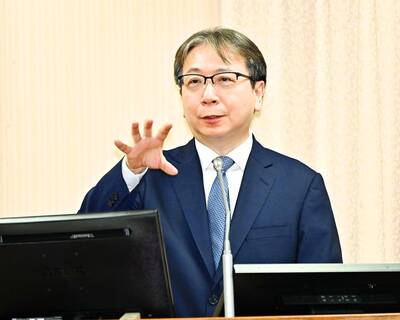
AIR ALERT: China’s reservation of airspace over the Yellow Sea and East China Sea could be an attempt to test the US’ response ahead of a Trump-Xi meeting, the NSB head said China’s attempts to infiltrate Taiwan are systematic, planned and targeted, with activity shifting from recruiting mid-level military officers to rank-and-file enlisted personnel, National Security Bureau (NSB) Director-General Tsai Ming-yen (蔡明彥) said yesterday. The Chinese Communist Party’s (CCP) integrates national security, intelligence operations and “united front” efforts into a dense network to conduct intelligence gathering and espionage in Taiwan, Tsai said at a meeting of the legislature’s Foreign Affairs and National Defense Committee. It uses specific networks to screen targets through exchange activities and recruiting local collaborators to establish intelligence-gathering organizations, he said. China is also shifting who it targets to lower-ranking military personnel,


 RSS
RSS