


Taiwan’s exports last month jumped 34.7 percent year-on-year to a record US$37.95 billion as global demand for tech and non-tech products remained solid, the Ministry of Finance said yesterday.
The momentum is expected to continue this month with an estimated gain of 20 to 25 percent, despite a high comparison base last year, Department of Statistics Director-General Beatrice Tsai (蔡美娜) told an online news conference in Taipei.
“We have observed a strong and broad-based pickup of tech and non-tech shipments for quite a while,” Tsai said.
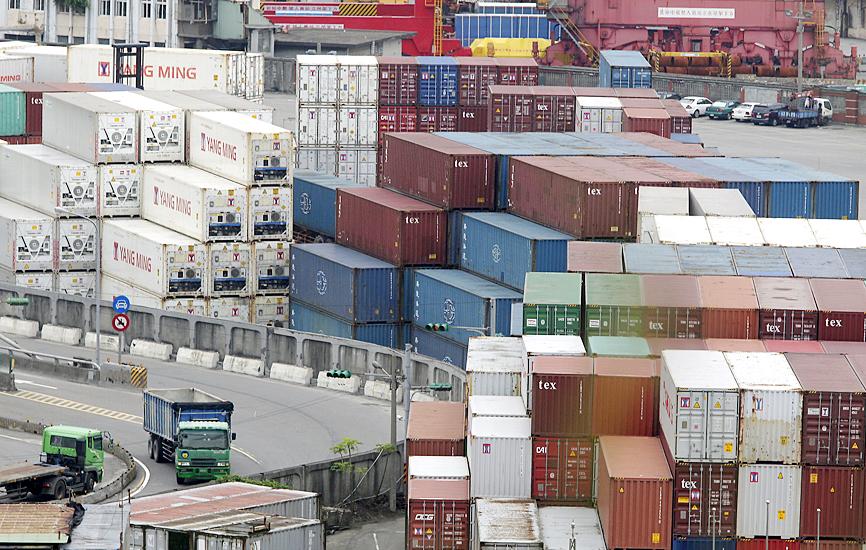
Photo: Reuters
The embrace of digital transformation by global companies and organizations fueled insatiable demand for chips and other electronics, while a warming global economy powered demand for base metal, plastic, chemical and mineral products, Tsai said.
Next-generation smartphones and other consumer electronic gadgets would ramp up business at local component suppliers and push up their selling prices, she said.
Apple Inc is widely expected to release new iPhones and Apple watches next month to capitalize on the back-to-school and Christmas seasons, and rival brands are unlikely to sit on the sidelines.
That would continue to benefit the nation’s exports, although the pace of increase might slow a bit due to a high comparison base this month, Tsai said, adding that the trajectory would not veer off course despite lingering uncertainty.
The Delta variant of SARS-CoV-2 is spreading worldwide, but US and European authorities have said that they are not planning to consider lockdowns, because many people have been vaccinated.
Shipments to all major trading partners posted double-digit percentage growth, led by a 64 percent surge to Europe, the fastest increase in history, the ministry’s report said.
Exports of optical devices — mainly flat panels and phone camera lenses — lost some steam, but still rose 18.9 percent, although analysts have projected a slowdown.
The low comparison base last year enabled shipments of metal, plastic, chemical and mineral products to report improvements of 40 to 114 percent, while electronics commanded much higher absolute values, Tsai said.
Imports advanced 41 percent year-on-year to US$32.05 billion last month, giving Taiwan a trade surplus of US$5.9 billion for the month, the ministry said.
Imports of agricultural and industrial materials accounted for the majority at 69.8 percent, while local semiconductor firms aggressively acquired capital equipment to expand capacity and ease chip supply crunches, it said.
Imports of semiconductor capital equipment swelled 69 percent to US$2.71 billion, it said.
For the first seven months of the year, cumulative exports expanded 31.5 percent to US$58.72 billion, while imports grew 30.4 percent to US$20.71 billion, it said.
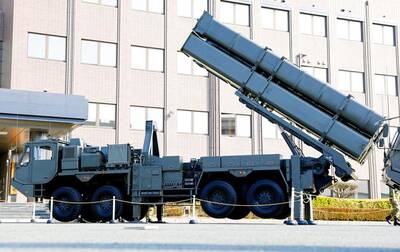
Japan has deployed long-range missiles in a southwestern region near China, the Japanese defense minister said yesterday, at a time when ties with Beijing are at their lowest in recent years. The missiles were installed in Kumamoto in the southern region of Kyushu, as Japan is attempting to shore up its military capacity as China steps up naval activity in the East China Sea. “Standoff defense capabilities enable us to counter the threat of enemy forces attempting to invade our country ... while ensuring the safety of our personnel,” Japanese Minister of Defense Shinjiro Koizumi said. “This is an extremely important initiative for

The nation’s fastest supercomputer, Nano 4 (晶創26), is scheduled to be launched in the third quarter, and would be used to train large language models in finance and national defense sectors, the National Center for High-Performance Computing (NCHC) said. The supercomputer, which would operate at about 86.05 petaflops, is being tested at a new cloud computing center in the Southern Taiwan Science Park in Tainan. The exterior of the server cabinet features chip circuitry patterns overlaid with a map of Taiwan, highlighting the nation’s central position in the semiconductor industry. The center also houses Taiwania 2, Taiwania 3, Forerunner 1 and
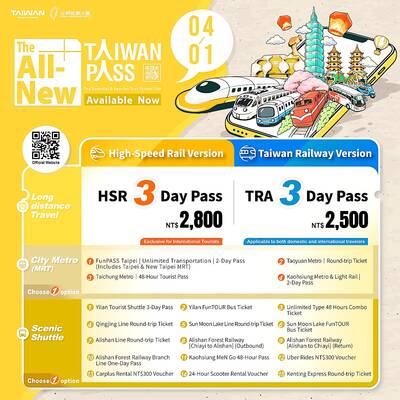
MORE POPULAR: Taiwan Pass sales increased by 59 percent during the first quarter compared with the same period last year, the Tourism Administration said The Tourism Administration yesterday said that it has streamlined the Taiwan Pass, with two versions available for purchase beginning today. The tourism agency has made the pass available to international tourists since 2024, allowing them to access the high-speed rail, Taiwan Railway Corp services, four MRT systems and four Taiwan Tourist Shuttles. Previously, five types of Taiwan Pass were available, but some tourists have said that the offerings were too complicated. The agency said only two types of Taiwan Pass would be available, starting from a three-day pass with the high-speed rail and a three-day pass with Taiwan Railway Corp. The former costs NT$2,800
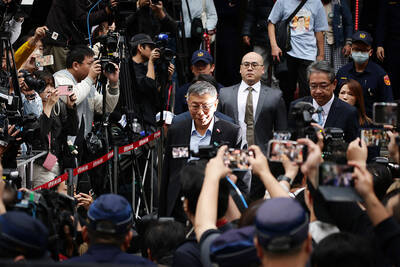
FIRST TRIAL: Ko’s lawyers sought reduced bail and other concessions, as did other defendants, but the bail judge denied their requests, citing the severity of the sentences Former Taipei mayor Ko Wen-je (柯文哲) was yesterday sentenced to 17 years in prison and had his civil rights suspended for six years over corruption, embezzlement and other charges. Taipei prosecutors in December last year asked the Taipei District Court for a combined 28-year, six-month sentence for the four cases against Ko, who founded the Taiwan People’s Party (TPP). The cases were linked to the Core Pacific City (京華城購物中心) redevelopment project and the mismanagement of political donations. Other defendants convicted on separate charges included Chinese Nationalist Party (KMT) Taipei City Councilor Angela Ying (應曉薇), who was handed a 15-year, six-month sentence; Core Pacific


 RSS
RSS