


The Central Epidemic Command Center (CECC) yesterday announced the nation’s 42nd confirmed case of COVID-19, a woman in her 50s related to a patient who had been in the same hospital ward as an earlier case.
The new case is associated with the nation’s 34th case — a woman in her 50s who was confirmed to be infected with the coronavirus after being hospitalized for about two weeks — as they had both been in the same hospital ward, but not the same room, said Minister of Health and Welfare Chen Shih-chung (陳時中), who heads the center.
The 42nd case is a relative of a patient in another room who had not recently traveled overseas, he said, adding that she sought treatment at a clinic for coughing and full-body fatigue on Feb. 23.
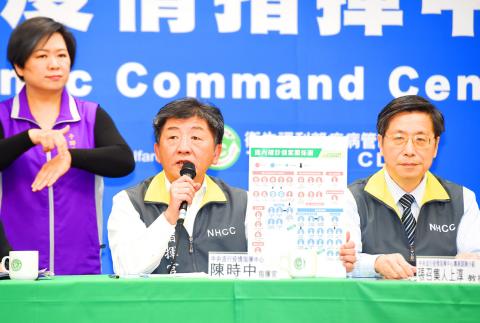
Photo: Liao Chen-huei, Taipei Times
After an extended contact investigation for the 34th case, which included people who were in the same hospital ward when she was hospitalized, the 42nd case was reported as a suspected infection and tested positive for COVID-19 yesterday, he said.
The cluster of coronavirus cases linked to the 34th case has expanded to seven people: her daughter and granddaughter, three nurses and a janitor at the hospital, and the 42nd case.
All patients in the hospital ward have been moved to isolation wards, and the section has been temporarily closed and disinfected, Chen said.
Asked about a debate over whether the personal information and activities of confirmed patients should be made public, Chen said: “We will disclose the information if it helps the nation’s disease-prevention efforts.”
If the center can contact all the people who have had contact with confirmed patients, the personal information of the patients would not be publicized, he said.
“I have been struggling daily with this question of whether such information should be publicized,” Chen said.
He said he is worried that if such information is released, people would only avoid areas that have been visited by confirmed patients and neglect the more important task of taking personal preventive and protective measures.
Chen added that he is even more worried that it would affect people’s willingness to tell the truth if they are associated with confirmed patients, which would negatively affect the center’s contact investigations.
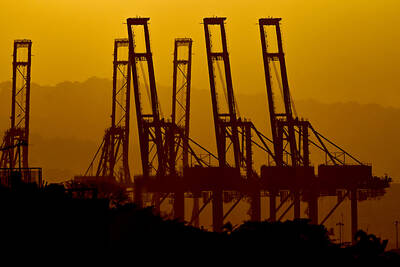
A subsidiary of a Hong Kong-based company that has lost control of two critical ports on the Panama Canal said it is seeking US$2 billion of compensation in damages from Panama over its “illegal” takeover of the ports. Panama Ports Co, a unit of Hong Kong’s CK Hutchison Holdings (長江和記實業), on Friday said in a statement that it is demanding the sum under international arbitration proceedings that it had already started. The Panamanian government last week seized control of the Balboa and Cristobal ports on each end of the Panama Canal, after the country’s Supreme Court declared earlier that a concession allowing
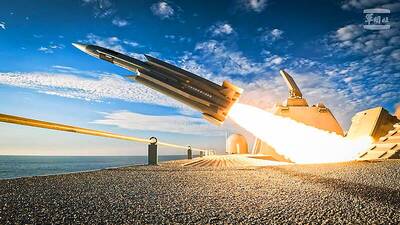
DETERRENCE: With 1,000 indigenous Hsiung Feng II and III missiles and 400 Harpoon missiles, the nation would boast the highest anti-ship missile density in the world With Taiwan wrapping up mass production of Hsiung Feng II and III missiles by December and an influx of Harpoon missiles from the US, Taiwan would have the highest density of anti-ship missiles in the world, a source said yesterday. Taiwan is to wrap up mass production of the indigenous anti-ship missiles by the end of year, as the Chungshan Institute of Science and Technology has been meeting production targets ahead of schedule, a defense official with knowledge of the matter said. Combined with the 400 Harpoon anti-ship missiles Taiwan expects to receive from the US by 2028, the nation would have

POSSIBILITIES EMERGE: With Taiwan’s victory and Japan’s narrow win over Australia, Taiwan now have a chance to advance if South Korea also beat the Aussies Taiwan has high hopes that the national baseball team would advance to the World Baseball Classic (WBC) quarter-finals after clinching a crucial 5-4 victory over South Korea in a nail-biting extra-inning game at the Tokyo Dome yesterday. Boosted by three home runs — two solo shots by Yu Chang (張育成) and Cheng Tsung-che (鄭宗哲) and a two-run homer by Stuart Fairchild — the triumph gave Taiwan a much-needed second victory in the five-team Pool C, where only the top two finishers would advance to the knockout stage in Miami, Florida. Entering extra innings with the game tied at four apiece, Taiwan scored
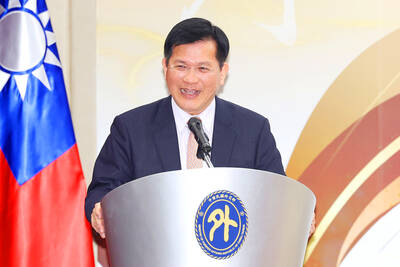
MISSION OF PEACE: The foreign minister urged Beijing to respect Taiwan’s existence as an independent nation, and work together to ensure peace and stability in the region Minister of Foreign Affairs Lin Chia-lung (林佳龍) yesterday rejected Chinese Minister of Foreign Affairs Wang Yi’s (王毅) comments about Taiwan, criticizing China as a “troublemaker” in the international community and a disruptor of cross-strait peace. Speaking at a news conference on the sidelines of the Chinese National People’s Congress, Wang said that Taiwan has always been a territory of China and that it would be impossible for it to become its own country. The “return” of Taiwan to China was the natural outcome of the Chinese people’s resistance against Japan in World War II, and that any pursuit of independence was “doomed


 RSS
RSS