


A Tokyo court yesterday awarded ¥3.3 million (US$30,122) in damages to journalist Shiori Ito, who accused a former TV reporter of rape in one of the most high-profile cases of the #MeToo movement in Japan.
The civil case made headlines in Japan and abroad, as it is rare for rape victims to report the crime to the police; according to a 2017 government survey, only 4 percent of women come forward.
Ito, 30, has become an outspoken symbol for #MeToo in Japan, where the movement against sexual harassment and abuse has struggled to take hold.
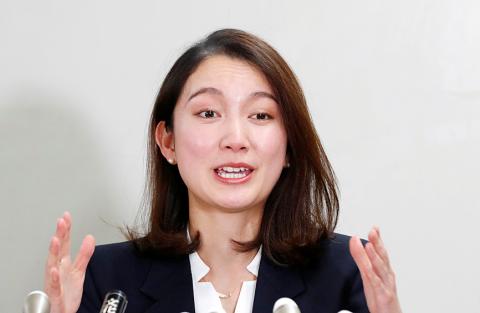
Photo: Reuters
She had sought ¥11 million in compensation from Noriyuki Yamaguchi, a former TV reporter with close links to Japanese Prime Minister Shinzo Abe, alleging that he raped her after inviting her to dinner to discuss a job opportunity in 2015.
Yamaguchi continues to deny any wrongdoing and had filed a countersuit against Ito, seeking ¥130 million in compensation.
“We won. The countersuit was turned down,” Ito said outside the court, holding up a banner that read “victory” as supporters cheered and clapped.
“Honestly, I still don’t know how I feel,” she told reporters, struggling to hold back the tears.
“However, winning this case doesn’t mean this [sexual assault] didn’t happen... This is not the end,” she added.
She said she hoped that the case would change what she called the “underdeveloped” legal and social environment surrounding rape in Japan.
Japan in 2017 hiked minimum jail terms for rapists from three to five years and widened the definition of sexual assault victims to include men for the first time.
Lawmakers decided unanimously to update the 1907 statute to impose tougher penalties on sex offenders and make prosecutions easier, as they look to boost Japan’s low number of convictions.
The latest World Economic Forum report on the gender gap published on the eve of the case ranked Japan 121st out of 153 countries, slipping down the list from 110th the previous year.
Yamaguchi announced that he would appeal the ruling “immediately,” saying: “I have not done anything that goes against the law.”
The significant international media attention around the case might have clouded the judgement of the court, he said, vowing to be more vocal in future.
Ito said she suspects Yamaguchi drugged her, but police failed to test for substances.
“When I regained consciousness, in intense pain, I was in a hotel room and he was on top of me. I knew what had happened, but I couldn’t process it,” she said.
The court said in its written ruling that she was “forced to have sex without contraception, while in a state of unconsciousness and severe inebriation.”
“We acknowledge that the plaintiff continues to suffer from flashbacks and panic attacks until now,” the court said.

CROSS-STRAIT COLLABORATION: The new KMT chairwoman expressed interest in meeting the Chinese president from the start, but she’ll have to pay to get in Beijing allegedly agreed to let Chinese Nationalist Party (KMT) Chairwoman Cheng Li-wun (鄭麗文) meet with Chinese President Xi Jinping (習近平) around the Lunar New Year holiday next year on three conditions, including that the KMT block Taiwan’s arms purchases, a source said yesterday. Cheng has expressed interest in meeting Xi since she won the KMT’s chairmanship election in October. A source, speaking on condition of anonymity, said a consensus on a meeting was allegedly reached after two KMT vice chairmen visited China’s Taiwan Affairs Office Director Song Tao (宋濤) in China last month. Beijing allegedly gave the KMT three conditions it had to
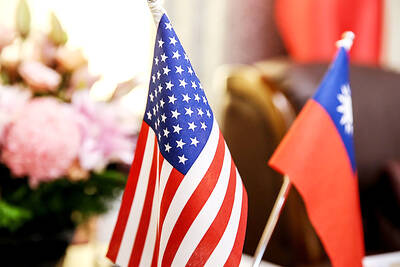
STAYING ALERT: China this week deployed its largest maritime show of force to date in the region, prompting concern in Taipei and Tokyo, which Beijing has brushed off Deterring conflict over Taiwan is a priority, the White House said in its National Security Strategy published yesterday, which also called on Japan and South Korea to increase their defense spending to help protect the first island chain. Taiwan is strategically positioned between Northeast and Southeast Asia, and provides direct access to the second island chain, with one-third of global shipping passing through the South China Sea, the report said. Given the implications for the US economy, along with Taiwan’s dominance in semiconductors, “deterring a conflict over Taiwan, ideally by preserving military overmatch, is a priority,” it said. However, the strategy also reiterated

‘BALANCE OF POWER’: Hegseth said that the US did not want to ‘strangle’ China, but to ensure that none of Washington’s allies would be vulnerable to military aggression Washington has no intention of changing the “status quo” in the Taiwan Strait, US Secretary of Defense Pete Hegseth said on Saturday, adding that one of the US military’s main priorities is to deter China “through strength, not through confrontation.” Speaking at the annual Reagan National Defense Forum in Simi Valley, California, Hegseth outlined the US Department of Defense’s priorities under US President Donald Trump. “First, defending the US homeland and our hemisphere. Second, deterring China through strength, not confrontation. Third, increased burden sharing for us, allies and partners. And fourth, supercharging the US defense industrial base,” he said. US-China relations under
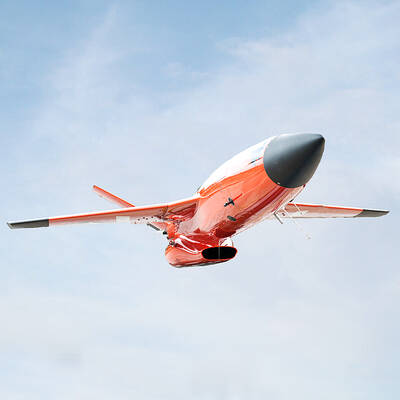
The Chien Feng IV (勁蜂, Mighty Hornet) loitering munition is on track to enter flight tests next month in connection with potential adoption by Taiwanese and US armed forces, a government source said yesterday. The kamikaze drone, which boasts a range of 1,000km, debuted at the Taipei Aerospace and Defense Technology Exhibition in September, the official said on condition of anonymity. The Chungshan Institute of Science and Technology and US-based Kratos Defense jointly developed the platform by leveraging the engine and airframe of the latter’s MQM-178 Firejet target drone, they said. The uncrewed aerial vehicle is designed to utilize an artificial intelligence computer


 RSS
RSS