


A man suspected of planting a bomb near the offices of the Chinese Nationalist Party’s (KMT) Houbi District (後壁) chapter in Tainan was arrested yesterday morning in Kaohsiung following an overnight standoff with police.
Police said that the suspect, surnamed Wu (吳), was captured on surveillance cameras on Thursday night as he approached the building on foot and allegedly placed an improvised explosive device next to the building’s main entrance.
On Friday evening, the Criminal Investigation Bureau and the Kaohsiung City Police Department traced the man to a fourth-floor apartment on Yongle Street in Lingya District (苓雅), police said.
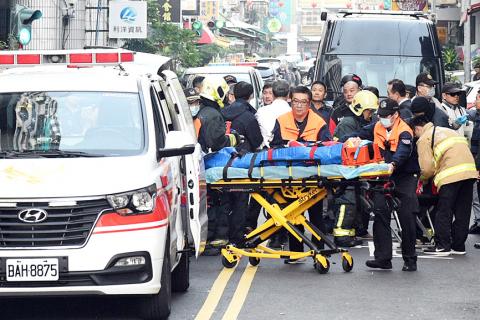
Photo: Chang Chung-yi, Taipei Times
Wu refused to give himself up, so police brought family members to the scene to coax him out of the building, Tainan District Prosecutors’ Office spokesman Lin Chung-pin (林仲斌) said.
However, Wu’s mother’s pleas were unsuccessful, police said, adding that when they refused his demands to meet with Kaohsiung Deputy Mayor Yeh Kuang-shih (葉匡時) or Evelyn Tsai (蔡沁瑜), deputy chief executive of the Yonglin Foundation — launched by Hon Hai Precision Industry Co (鴻海精密) founder Terry Gou (郭台銘) — Wu threw a home-made explosive from the fourth floor.
It did not explode, police said.
When efforts to coax Wu out of the building failed, SWAT officers made successive attempts to break into the apartment at about 4am, 5am and 7am, firing tear gas and exchanging gunfire with Wu, who had a handgun, police said.
Officers fired more than 100 bullets, they said.
In the final attempt, officers arrested Wu, who was transferred to Chung-ho Memorial Hospital for treatment for four non-life-threatening gunshot wounds to his neck and buttocks, and under his left and right arms.
Wu, who is in his late 40s, was renting an apartment in Kaohsiung and the Yongle Street residence where he was arrested belonged to a friend, prosecutors said.
After treatment, he is to be questioned as prosecutors seek details about his professional background and possible motives, Lin said.
The device that Wu is accused of planting in Tainan contained triacetone triperoxide, or TATP, which was used in terrorist attacks in Paris in November 2015 and Brussels in March 2016, Tainan Police Commissioner Chou Yew-woei (周幼偉) said.
The device held nearly 4 liters of TATP, Chou said.
Police also found bottles containing approximately 1kg of the substance in a backpack at the residence in Kaohsiung, as well as suspected bomb-making components in a vehicle rented in Wu’s name, he said.
Residents in homes near the Yongle Street standoff said they had been afraid to sleep, as they could hear the police and Wu trading gunfire.
A man surnamed Ni (倪), who was visiting his mother-in-law in the vicinity, said that the use of TATP was of great concern, as it has half the explosive power of TNT.
“My mother-in-law’s house was at the edge of the area police had cordoned off and I was very worried about collateral damage,” Ni said, adding that he was relieved to see that Wu was arrested.
Preliminary investigations indicate that Wu learned online how to obtain materials to make TATP, Chou said, adding that it was fortunate that he was only able to remotely detonate one device at a time and that his alleged attempt to detonate the device in Houbi was unsuccessful.
KMT deputy spokeswoman Hung Yu-chien (洪于茜) said the KMT thanked the police for their hard work.
Calling on the public to remain rational and calm, the party called on President Tsai Ing-wen’s (蔡英文) administration to issue guarantees for a safe election environment for candidates and voters.
Tsai also thanked the police and called on people to remain calm.
Additional reporting by Yang Chin-cheng, Shih Hsiao-kuang and Ko You-hao

The Tourism Administration yesterday announced that it would reward repeat international visitors with incentives of up to NT$8,000 to boost inbound tourism. The incentives are available to all international tourists, it said, adding that repeat visitors would be rewarded with NT$5,000 and would receive an additional NT$3,000 if they bring travel companions. The nation received 2,990,657 inbound visitors during the first quarter, marking a 3.8 percent increase from the same period last year, agency data showed. Japanese nationals are among groups visiting Taiwan the most. About 1.48 million Japanese tourists arrived last year, a year-on-year increase of more than 12
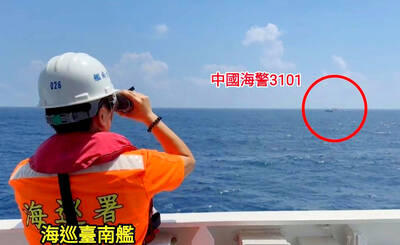
‘BRAZEN’: The holiday did not stop China from activities that infringe on Taiwan’s maritime jurisdiction, but the CGA is ready to defend the nation, Kuan Bi-ling said Beijing is intensifying maritime pressure on Taiwan, but the nation will never yield, Ocean Affairs Council Deputy Minister Sung Chen-en (宋承恩) said. The Coast Guard Administration (CGA) has adopted a “shadowing and monitoring” approach to avoid falling into a Chinese trap to escalate tensions and deepen the conflict, Sung said in an interview published yesterday in the Chinese-language Liberty Times (the Taipei Times’ sister newspaper). China Coast Guard formations patrolling waters east of Taiwan, as well as official Chinese vessels entering areas around Itu Aba Island (Taiping Island, 太平島) and Pratas Islands (Dongsha Islands, 東沙群島) show Beijing’s attempts to significantly step up
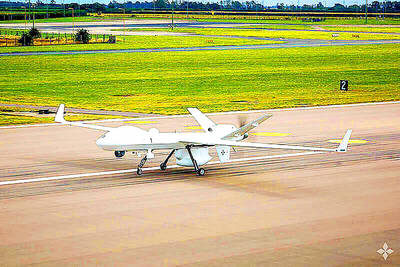
BOOST: By operating the same advanced systems as the US military, Taiwan would be better positioned to share and integrate intelligence with partners, an expert said The first batch of MQ-9B SkyGuardian drones has arrived in Taiwan, and is being assembled and tested by drone manufacturer General Atomics and the military ahead of flight trials as part of the air force’s acquisition to bolster its aerial surveillance capabilities, a source said yesterday. The air force allocated a budget of NT$21.7 billion (US$687 million) from 2022 to 2029 to procure four MQ-9B uncrewed aerial vehicles (UAVs) manufactured by General Atomics along with associated equipment such as ground control stations. The US has agreed to deliver the four MQ-9Bs to Taiwan in two batches this year and next
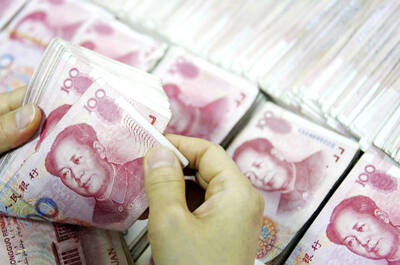
Taiwanese firms’ China investments have dwindled to less than 1 percent of their total foreign investments, putting China-based investments on track for a record low this year, Ministry of Economic Affairs data showed. Taiwan’s investments abroad in the first five months of this year reached US$35.92 billion, Department of Investment Review data showed. Investments outside China totaled US$35.61 billion, up 133.94 percent year-on-year, while investments in China totaled US$310.3 million, down 32.3 percent and about 0.86 percent of the total, data showed. Major overseas projects included Taiwan Semiconductor Manufacturing Co’s (TSMC, 台積電) US$30 billion capital injection into an overseas subsidiary,


 RSS
RSS