


Starlux Airlines Co (星宇航空) has officially become the nation’s seventh international carrier after the Ministry of Transportation and Communications approved its application yesterday.
The Civil Aeronautics Administration (CAA) last week forwarded Starlux’s application to the ministry for final approval after the carrier passed four of the five certification procedures stated in the Regulations of Civil Air Transport Enterprise (民用航空運輸業管理規則).
They included procedures the company was obligated to complete before and after it filed the application, as well as the CAA’s review of its paperwork and aircraft tests.
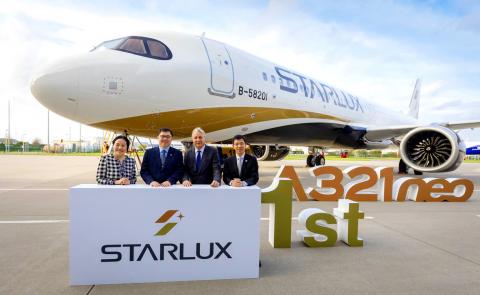
Photo courtesy of Starlux Airlines
The fifth and final stage was approval by Minister of Transportation and Communications Lin Chia-lung (林佳龍).
The CAA will be in charge of issuing an air operator’s certificate to the airline following the ministry’s approval, Lin said.
Although it has obtained an air operator’s certificate, Starlux still has to apply for an airline call sign from the International Civil Aviation Organization, as well as an airline code from the International Air Transport Association, the company said.
The airline code is used to label the flight number in the ticket-booking system, it said.
Starlux also needs to obtain air route certificates from the CAA to offer flights to Macau, Vietnam’s Da Nang City and Malaysia’s Penang state — three destinations that it plans to launch simultaneously on Jan. 23.
The company has not announced when travelers can start booking tickets for the three inaugural flights.
Media reports had said that Starlux chairman Chang Kuo-wei (張國煒), who is a licensed pilot, could operate one of the inaugural flights himself.
However, Starlux spokesman Nieh Kuo-wei (聶國維) said that it is not likely, as Jan. 23 would be the first day of the airline’s operation and Chang would be busy hosting guests.
“We will not engage in a price war with other airlines, even though we are a new carrier. By the time we launch our operations, the nation will be about to celebrate the Lunar New Year holiday and many people are scheduled to travel and return homeduring that period. We will consider offering discounts from time to time after the launch of our services,” he said.
The company has leased 10 Airbus A321neo aircraft, with the first one arriving at the end of October.
The second and third aircraft are to arrive this month and in the middle of next month.
Deliveries of all 10 aircraft should be completed by 2022.
Starlux this year also signed a contract to purchase 17 Airbus A350 aircraft, which are to be delivered between 2021 and 2024.
It is scheduled to launch flight services to the US using the A350 aircraft in 2022.
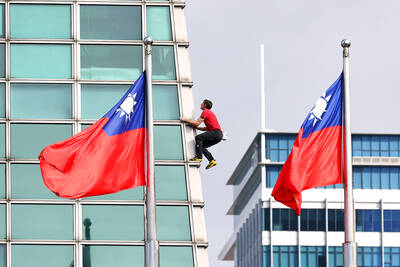
DAREDEVIL: Honnold said it had always been a dream of his to climb Taipei 101, while a Netflix producer said the skyscraper was ‘a real icon of this country’ US climber Alex Honnold yesterday took on Taiwan’s tallest building, becoming the first person to scale Taipei 101 without a rope, harness or safety net. Hundreds of spectators gathered at the base of the 101-story skyscraper to watch Honnold, 40, embark on his daredevil feat, which was also broadcast live on Netflix. Dressed in a red T-shirt and yellow custom-made climbing shoes, Honnold swiftly moved up the southeast face of the glass and steel building. At one point, he stepped onto a platform midway up to wave down at fans and onlookers who were taking photos. People watching from inside
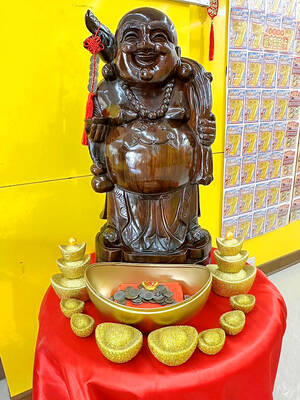
A Vietnamese migrant worker yesterday won NT$12 million (US$379,627) on a Lunar New Year scratch card in Kaohsiung as part of Taiwan Lottery Co’s (台灣彩券) “NT$12 Million Grand Fortune” (1200萬大吉利) game. The man was the first top-prize winner of the new game launched on Jan. 6 to mark the Lunar New Year. Three Vietnamese migrant workers visited a Taiwan Lottery shop on Xinyue Street in Kaohsiung’s Gangshan District (崗山), a store representative said. The player bought multiple tickets and, after winning nothing, held the final lottery ticket in one hand and rubbed the store’s statue of the Maitreya Buddha’s belly with the other,
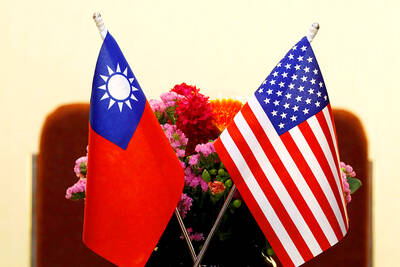
‘NATO-PLUS’: ‘Our strategic partners in the Indo-Pacific are facing increasing aggression by the Chinese Communist Party,’ US Representative Rob Wittman said The US House of Representatives on Monday released its version of the Consolidated Appropriations Act, which includes US$1.15 billion to support security cooperation with Taiwan. The omnibus act, covering US$1.2 trillion of spending, allocates US$1 billion for the Taiwan Security Cooperation Initiative, as well as US$150 million for the replacement of defense articles and reimbursement of defense services provided to Taiwan. The fund allocations were based on the US National Defense Authorization Act for fiscal 2026 that was passed by the US Congress last month and authorized up to US$1 billion to the US Defense Security Cooperation Agency in support of the

‘COMMITTED TO DETERRENCE’: Washington would stand by its allies, but it can only help as much as countries help themselves, Raymond Greene said The US is committed to deterrence in the first island chain, but it should not bear the burden alone, as “freedom is not free,” American Institute in Taiwan Director Raymond Greene said in a speech at the Institute for National Defense and Security Research’s “Strengthening Resilience: Defense as the Engine of Development” seminar in Taipei yesterday. In the speech, titled “Investing Together and a Secure and Prosperous Future,” Greene highlighted the contributions of US President Donald Trump’s administration to Taiwan’s defense efforts, including the establishment of supply chains for drones and autonomous systems, offers of security assistance and the expansion of


 RSS
RSS