


Hong Kong Chief Executive Carrie Lam (林鄭月娥) yesterday said that US legislation supporting protesters might damage business confidence in the territory, and announced a fourth round of relief measures to boost an economy battered by months of demonstrations.
Lam told reporters after a weekly meeting with advisers that the Hong Kong Human Rights and Democracy Act signed into law by US President Donald Trump on Friday last week was “wholly unnecessary.”
Hong Kong is grappling with its first recession in a decade.
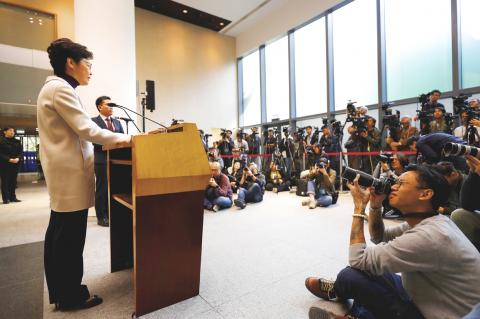
Photo: AP
Lam also said that clashes between protesters and police last weekend, in which police used tear gas and pepper spray balls in skirmishes as protesters blocked streets and vandalized some shops, have dampened her hopes that a recent lull in violence would allow the territory’s economy to recover.
The clashes were much smaller than earlier ones, but Lam said they threw cold water on her hopes that the relative peace would hold.
“Again, we’re seeing violent scenes that we don’t want to see anymore,” she told reporters after a weekly meeting with advisers.
Lam did not specify what the next round of relief measures would include, except that they would support business, protect jobs and offer economic relief.
“We have freedom of the press, freedom of assembly, religious freedom — we enjoy a high degree of freedom in many areas,” Lam said. “There’s an overseas government that interfered with Hong Kong affairs, and that is most regrettable.”
The Hong Kong Human Rights and Democracy Act requires an annual review by the US Department of State of the favorable trading status that the US grants to the territory. It also threatens sanctions for human rights violations.
“The impact currently is on confidence,” Lam said.
Companies “will be worried about the actions the US government may take in the future after they review this legislation,” she said.
Lam is to visit Beijing on Dec. 16 and meet with Chinese President Xi Jinping (習近平), Hong Kong broadcaster Cable TV reported last night, citing sources.
Meanwhile, Hong Kong Secretary for Justice Teresa Cheng (鄭若驊) said she would return to her office today after being on sick leave for more than two weeks following an altercation in London during which she was injured.
The government said she was targeted by a “violent mob” while on a trip to promote Hong Kong.
Cheng, who returned home from Beijing yesterday, told reporters that she had suffered a bone fracture around her wrist and had an operation in London.
Additional reporting by AP

CROSS-STRAIT COLLABORATION: The new KMT chairwoman expressed interest in meeting the Chinese president from the start, but she’ll have to pay to get in Beijing allegedly agreed to let Chinese Nationalist Party (KMT) Chairwoman Cheng Li-wun (鄭麗文) meet with Chinese President Xi Jinping (習近平) around the Lunar New Year holiday next year on three conditions, including that the KMT block Taiwan’s arms purchases, a source said yesterday. Cheng has expressed interest in meeting Xi since she won the KMT’s chairmanship election in October. A source, speaking on condition of anonymity, said a consensus on a meeting was allegedly reached after two KMT vice chairmen visited China’s Taiwan Affairs Office Director Song Tao (宋濤) in China last month. Beijing allegedly gave the KMT three conditions it had to
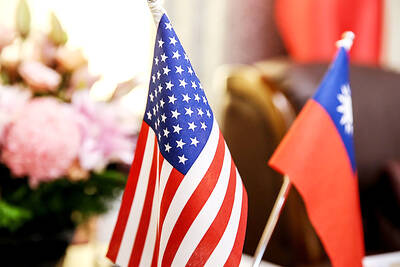
STAYING ALERT: China this week deployed its largest maritime show of force to date in the region, prompting concern in Taipei and Tokyo, which Beijing has brushed off Deterring conflict over Taiwan is a priority, the White House said in its National Security Strategy published yesterday, which also called on Japan and South Korea to increase their defense spending to help protect the first island chain. Taiwan is strategically positioned between Northeast and Southeast Asia, and provides direct access to the second island chain, with one-third of global shipping passing through the South China Sea, the report said. Given the implications for the US economy, along with Taiwan’s dominance in semiconductors, “deterring a conflict over Taiwan, ideally by preserving military overmatch, is a priority,” it said. However, the strategy also reiterated
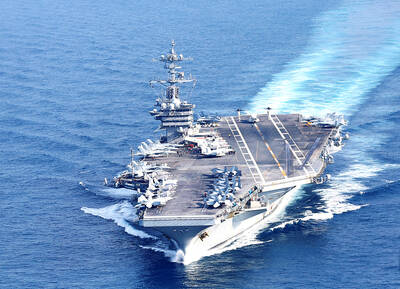
‘BALANCE OF POWER’: Hegseth said that the US did not want to ‘strangle’ China, but to ensure that none of Washington’s allies would be vulnerable to military aggression Washington has no intention of changing the “status quo” in the Taiwan Strait, US Secretary of Defense Pete Hegseth said on Saturday, adding that one of the US military’s main priorities is to deter China “through strength, not through confrontation.” Speaking at the annual Reagan National Defense Forum in Simi Valley, California, Hegseth outlined the US Department of Defense’s priorities under US President Donald Trump. “First, defending the US homeland and our hemisphere. Second, deterring China through strength, not confrontation. Third, increased burden sharing for us, allies and partners. And fourth, supercharging the US defense industrial base,” he said. US-China relations under
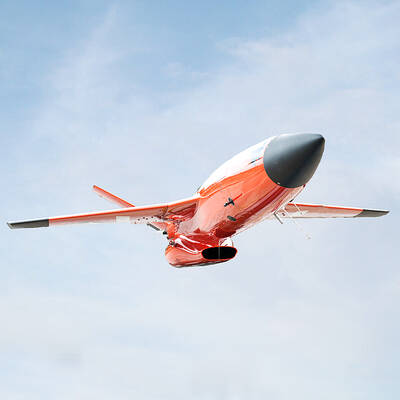
The Chien Feng IV (勁蜂, Mighty Hornet) loitering munition is on track to enter flight tests next month in connection with potential adoption by Taiwanese and US armed forces, a government source said yesterday. The kamikaze drone, which boasts a range of 1,000km, debuted at the Taipei Aerospace and Defense Technology Exhibition in September, the official said on condition of anonymity. The Chungshan Institute of Science and Technology and US-based Kratos Defense jointly developed the platform by leveraging the engine and airframe of the latter’s MQM-178 Firejet target drone, they said. The uncrewed aerial vehicle is designed to utilize an artificial intelligence computer


 RSS
RSS