


Taiwanese generally do not consider themselves very humorous, while people who are prone to sarcasm have been found to have inferior brain efficiency, National Taiwan Normal University researchers said yesterday, citing surveys conducted over several years.
At a news conference at the Ministry of Science and Technology in Taipei, College of Education dean Chen Hsueh-chih (陳學志) shared his research on cultural and gender differences in humor based on quantified questionnaires and functional magnetic resonance imaging (fMRI) data that he accumulated over the past five years.
Chen said that he started studying humor and its related effects more than 20 years ago due to a desire to improve his own sense of humor, adding that the subject was not considered serious enough for academic research at the time.

Photo: Chien Hui-ju, Taipei Times
In an international survey on how people evaluate their own sense of humor, Italians found themselves to be the most humorous, while Taiwanese ranked only 15th out of 25 nations and regions, Chen said.
Taiwan presented the biggest differences between men and women on self-perceived humor, with male respondents saying that they use more corrective humor, while female respondents leaned toward benevolent humor, he said.
The survey, which involved researchers from the University of Zurich and other schools, gathered 7,226 samples, mainly in Europe, and its findings were published in the journal Frontiers in Psychology last year, he added.
In another survey of only Taiwanese, Chen’s team divided humor into four types — self-promoting, self-deprecating, compassionate and sarcastic — and used fMRI data to measure respondents’ brain activity.
People who prefer sarcasm had weaker connections between various regions of the brain, while those who use compassionate humor demonstrated higher efficiency in those connections, Chen said, adding that the results suggest that aggressive humor pertains more to intuition.
Women were found to use compassionate humor more than men, perhaps because they are more empathetic and care more about interpersonal relationships, he said.
Meanwhile, people with Asperger syndrome can tell jokes, but they have difficulty doing so without hurting others’ feelings, he added.
Asked if Taipei Mayor Ko Wen-je (柯文哲) — who claims to have Asperger’s and often apologizes for remarks that provoke an undesired reaction — is an example of someone who uses more sarcastic humor, Chen said that Ko previously used more sarcastic humor, but appears to have modified his humor.
Asked about then-Taipei Agricultural Products Marketing Co general manager Han Kuo-yu (韓國瑜), who is now Kaohsiung mayor and the Chinese Nationalist Party’s (KMT) presidential candidate, saying that he was a “bald man following the moon” — a Chinese idiom for basking in the light of someone else, in this case Ko — when fielding a harsh question from a Taipei city councilor, Chen said Han’s remark is an example of self-deprecating humor employed to gain favor.
A person’s humorousness is not correlated to their IQ, he added.
Humor employed by politicians is hard to classify, as their expressions are part of their political performance and might vary depending on the occasion, Department of Educational Psychology and Counseling assistant professor Chang Yu-lin (張雨霖) said.

CROSS-STRAIT COLLABORATION: The new KMT chairwoman expressed interest in meeting the Chinese president from the start, but she’ll have to pay to get in Beijing allegedly agreed to let Chinese Nationalist Party (KMT) Chairwoman Cheng Li-wun (鄭麗文) meet with Chinese President Xi Jinping (習近平) around the Lunar New Year holiday next year on three conditions, including that the KMT block Taiwan’s arms purchases, a source said yesterday. Cheng has expressed interest in meeting Xi since she won the KMT’s chairmanship election in October. A source, speaking on condition of anonymity, said a consensus on a meeting was allegedly reached after two KMT vice chairmen visited China’s Taiwan Affairs Office Director Song Tao (宋濤) in China last month. Beijing allegedly gave the KMT three conditions it had to
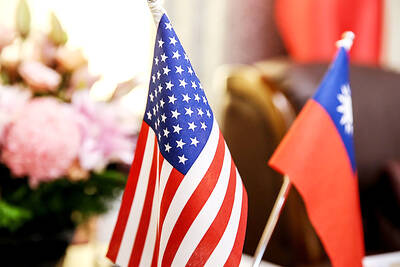
STAYING ALERT: China this week deployed its largest maritime show of force to date in the region, prompting concern in Taipei and Tokyo, which Beijing has brushed off Deterring conflict over Taiwan is a priority, the White House said in its National Security Strategy published yesterday, which also called on Japan and South Korea to increase their defense spending to help protect the first island chain. Taiwan is strategically positioned between Northeast and Southeast Asia, and provides direct access to the second island chain, with one-third of global shipping passing through the South China Sea, the report said. Given the implications for the US economy, along with Taiwan’s dominance in semiconductors, “deterring a conflict over Taiwan, ideally by preserving military overmatch, is a priority,” it said. However, the strategy also reiterated

‘BALANCE OF POWER’: Hegseth said that the US did not want to ‘strangle’ China, but to ensure that none of Washington’s allies would be vulnerable to military aggression Washington has no intention of changing the “status quo” in the Taiwan Strait, US Secretary of Defense Pete Hegseth said on Saturday, adding that one of the US military’s main priorities is to deter China “through strength, not through confrontation.” Speaking at the annual Reagan National Defense Forum in Simi Valley, California, Hegseth outlined the US Department of Defense’s priorities under US President Donald Trump. “First, defending the US homeland and our hemisphere. Second, deterring China through strength, not confrontation. Third, increased burden sharing for us, allies and partners. And fourth, supercharging the US defense industrial base,” he said. US-China relations under
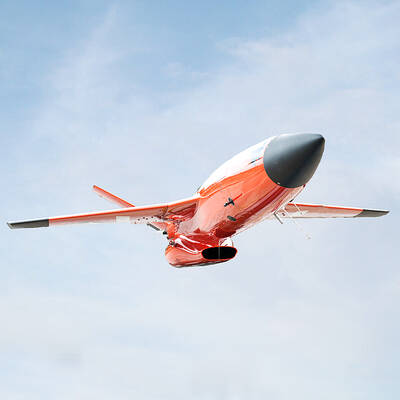
The Chien Feng IV (勁蜂, Mighty Hornet) loitering munition is on track to enter flight tests next month in connection with potential adoption by Taiwanese and US armed forces, a government source said yesterday. The kamikaze drone, which boasts a range of 1,000km, debuted at the Taipei Aerospace and Defense Technology Exhibition in September, the official said on condition of anonymity. The Chungshan Institute of Science and Technology and US-based Kratos Defense jointly developed the platform by leveraging the engine and airframe of the latter’s MQM-178 Firejet target drone, they said. The uncrewed aerial vehicle is designed to utilize an artificial intelligence computer


 RSS
RSS