


South Korea yesterday decided against scrapping a critical military intelligence-sharing pact with Japan in a dramatic 11th-hour U-turn that will come as a relief to the US.
The pact was due to expire at midnight amid a sharp deterioration in ties between the two democracies and market economies that has alarmed Washington as it seeks to curb the threat from nuclear-armed North Korea.
However, after a flurry of last-ditch diplomacy, Seoul announced that it would “conditionally” suspend the expiry of the agreement with just six hours left on the clock.
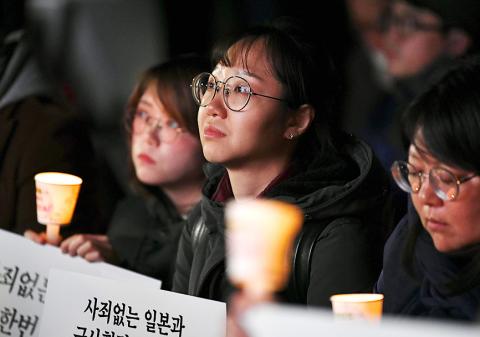
Photo: AFP
Kim You-geun, a national security official at Seoul’s presidential Blue House, confirmed that the Japan–South Korea General Security of Military Information Agreement would not be allowed to lapse at midnight.
“The Japanese government has expressed their understanding,” Kim said, but warned that the pact could still “be terminated at any time.”
Japanese Prime Minister Shinzo Abe said that three-way coordination between Tokyo, Seoul and Washington was “extremely important,” adding that he believed South Korea had taken its decision from a “strategic point of view.”
However, Japanese Minister of Defense Taro Kono stressed that it was a temporary measure and urged Seoul to extend the pact “in a firm manner.”
Officials were scrambling to arrange bilateral talks between Japanese Minister of Foreign Affairs Toshimitsu Motegi and South Korean Minister of Foreign Affairs Kang Kyung-wha on the sidelines of a meeting of G20 foreign ministers in Nagoya, Japan.
Seoul had announced the scrapping of the pact in August, as a trade row sparked by historical disputes between the pair spiraled into one of their worst diplomatic spats in years.
Seoul and Tokyo are both major US allies seen as an anchor of stability in a tinderbox region with overbearing China and wayward, nuclear-armed North Korea.
However, their relationship is heavily colored by territorial and historical disputes stemming from Japan’s bitterly resented 35-year colonial rule over the Korean Peninsula, including the use of wartime “comfort women” and forced labor.
“The biggest issue and the root problem is the issue related to former laborers from the Korean Peninsula,” Motegi told reporters. “We continue to strongly demand South Korea to remedy as soon as possible the current situation that violates the international law.”
The agreement, signed in 2016, enabled the two US allies to share military secrets, particularly over Pyongyang’s nuclear and missile capacity.
The US had frequently urged its two main allies in the region to bury the hatchet, with officials admitting privately that the poor relations have been complicating diplomacy in the region.
Ditching the pact would have been “a huge setback for one of the pillars of East Asia’s security that Japan, South Korea and the United States have established,” said Kenichiro Sasae, a former top Japanese Ministry of Foreign Affairs official and ambassador to the US.
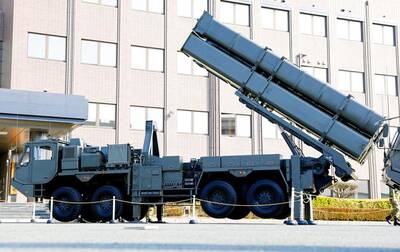
Japan has deployed long-range missiles in a southwestern region near China, the Japanese defense minister said yesterday, at a time when ties with Beijing are at their lowest in recent years. The missiles were installed in Kumamoto in the southern region of Kyushu, as Japan is attempting to shore up its military capacity as China steps up naval activity in the East China Sea. “Standoff defense capabilities enable us to counter the threat of enemy forces attempting to invade our country ... while ensuring the safety of our personnel,” Japanese Minister of Defense Shinjiro Koizumi said. “This is an extremely important initiative for
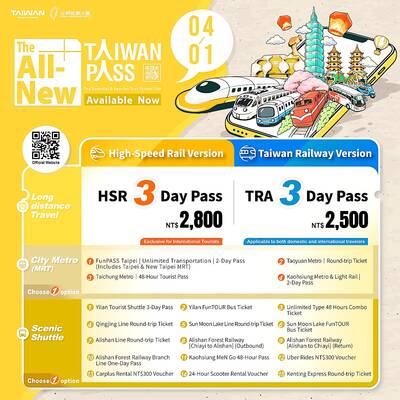
MORE POPULAR: Taiwan Pass sales increased by 59 percent during the first quarter compared with the same period last year, the Tourism Administration said The Tourism Administration yesterday said that it has streamlined the Taiwan Pass, with two versions available for purchase beginning today. The tourism agency has made the pass available to international tourists since 2024, allowing them to access the high-speed rail, Taiwan Railway Corp services, four MRT systems and four Taiwan Tourist Shuttles. Previously, five types of Taiwan Pass were available, but some tourists have said that the offerings were too complicated. The agency said only two types of Taiwan Pass would be available, starting from a three-day pass with the high-speed rail and a three-day pass with Taiwan Railway Corp. The former costs NT$2,800

POLLS CONCERNS: There are concerns within the KMT that a Cheng Li-wun-Xi Jinping meeting could trigger a voter backlash in elections in November Chinese Nationalist Party (KMT) Chairwoman Cheng Li-wun (鄭麗文) accepted an invitation from Chinese President Xi Jinping (習近平) to visit next month, her party and Chinese state media reported yesterday. Cheng, who took up her role in November last year, “gladly accepted” the invitation to lead a delegation to China, the KMT said in a statement, confirming a Xinhua news agency report. Cheng “looks forward to joint efforts by both parties to advance the peaceful development of cross-strait relations, promote cross-strait exchanges and cooperation, and work for peace in the Taiwan Strait and greater well-being for people on both sides,” the statement said. Chinese
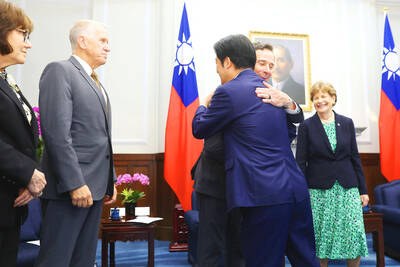
SIGNIFICANT TO THE WORLD: The delegation’s visit aims to send a clear message that bipartisan support for Taiwan is consistent, US Senator Jeanne Shaheen said The US Senate’s bipartisan support for Taiwan remains strong and Taiwan-US ties would continue for decades to come, a US Senate delegation said in Taipei yesterday, while calling on the legislature to swiftly pass a special defense budget bill. A US delegation led by Democratic US Senator Jeanne Shaheen and Republican US Senator John Curtis — both members of the US Senate Committee on Foreign Relations — arrived in Taiwan yesterday for a two-day visit. The other senators of the delegation included Senate Taiwan Caucus cochair Thom Tillis and Senate Committee on Armed Services senior member Jacky Rosen. Shaheen told a news


 RSS
RSS