


A move by MSCI Inc to cut Taiwan’s weighting in two of its major indices is expected to prompt foreign institutional investors to remit about NT$1.1 billion (US$37.49 million) out of the nation, an estimate by the Financial Supervisory Commission (FSC) showed.
A fund drain following MSCI’s latest weighting cut was expected to hit about US$38 million, Securities and Futures Bureau (SFB) Chief Secretary Chien Hung-ming (簡宏明) said before the start of the Lunar New Year holiday last week.
However, the fund outflow was unlikely to have an adverse impact on the local equity market, as the money is dwarfed by NT$1.37 trillion in market capitalization owned by foreign institutional investors, Chien said.
MSCI announced on Tuesday that after a quarterly index review it had decided to cut Taiwan’s weighting in the MSCI Emerging Markets Index by 0.01 percentage point to 11.47 percent, and its weighting in the MSCI All-Country Asia ex-Japan Index by 0.01 percentage point to 13.30 percent.
Taiwan’s weighting in the MSCI All-Country World Index was cut by 0.01 percentage point to 1.38 percent, it said.
MSCI conducts index reviews in February, May, August and November every year.
Its latest adjustments are scheduled to take effect after the Taiwan Stock Exchange closes on Feb. 27.
The last trading session of Taiwan’s stock market ahead of the Lunar New Year holiday was Monday last week, so there was no immediate reaction from the market.
The TAIEX closed up 0.48 percent that day at 10,421.09 points on the back of a higher Wall Street.
Trading is scheduled to resume on Wednesday.
MSCI’s adjustments in Taiwan’s weighting are no longer the only factor moving local share prices at a time when the TAIEX is trading above 10,000 points, with local economic fundamentals growing at a stable pace on the back of solid global demand, JPMorgan Asset Management Taiwan Ltd (摩根資產管理) executive director James Yeh (葉鴻儒) said.
Yeh said that he expected the companies listed on the Tawain Stock Exchange to report a 10 percent year-on-year increase in profit for this year, which could make their shares attractive to foreign investors.
The average dividend yield of Taiwan’s equities — the ratio of a company’s dividend payout to its share price — have been ranging about 4 percent, another factor boosting foreign institutional buying interest in local shares, Yeh added.
Foreign institutional investors make up about 40 percent of the total market value of Taiwan’s equity market in reflection of the nation’s continued efforts to boost the stock market’s globalization, he said.
Such efforts in globalization are expected to encourage foreign investors to move more funds into Taiwan, he said.
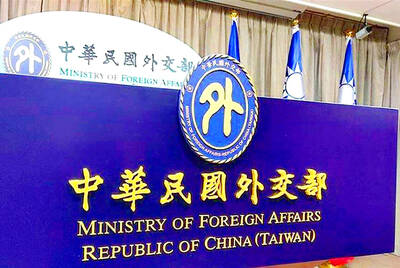
The Ministry of Foreign Affairs (MOFA) yesterday said it is closely monitoring developments in Venezuela, and would continue to cooperate with democratic allies and work together for regional and global security, stability, and prosperity. The remarks came after the US on Saturday launched a series of airstrikes in Venezuela and kidnapped Venezuelan President Nicolas Maduro, who was later flown to New York along with his wife. The pair face US charges related to drug trafficking and alleged cooperation with gangs designated as terrorist organizations. Maduro has denied the allegations. The ministry said that it is closely monitoring the political and economic situation

Conflict with Taiwan could leave China with “massive economic disruption, catastrophic military losses, significant social unrest, and devastating sanctions,” a US think tank said in a report released on Monday. The German Marshall Fund released a report titled If China Attacks Taiwan: The Consequences for China of “Minor Conflict” and “Major War” Scenarios. The report details the “massive” economic, military, social and international costs to China in the event of a minor conflict or major war with Taiwan, estimating that the Chinese People’s Liberation Army (PLA) could sustain losses of more than half of its active-duty ground forces, including 100,000 troops. Understanding Chinese

UNRELENTING: China attempted cyberattacks on Taiwan’s critical infrastructure 2.63 million times per day last year, up from 1.23 million in 2023, the NSB said China’s cyberarmy has long engaged in cyberattacks against Taiwan’s critical infrastructure, employing diverse and evolving tactics, the National Security Bureau (NSB) said yesterday, adding that cyberattacks on critical energy infrastructure last year increased 10-fold compared with the previous year. The NSB yesterday released a report titled Analysis on China’s Cyber Threats to Taiwan’s Critical Infrastructure in 2025, outlining the number of cyberattacks, major tactics and hacker groups. Taiwan’s national intelligence community identified a large number of cybersecurity incidents last year, the bureau said in a statement. China’s cyberarmy last year launched an average of 2.63 million intrusion attempts per day targeting Taiwan’s critical
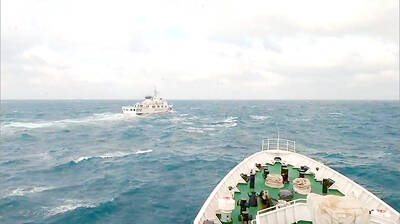
‘SLICING METHOD’: In the event of a blockade, the China Coast Guard would intercept Taiwanese ships while its navy would seek to deter foreign intervention China’s military drills around Taiwan this week signaled potential strategies to cut the nation off from energy supplies and foreign military assistance, a US think tank report said. The Chinese People’s Liberation Army (PLA) conducted what it called “Justice Mission 2025” exercises from Monday to Tuesday in five maritime zones and airspace around Taiwan, calling them a warning to “Taiwanese independence” forces. In a report released on Wednesday, the Institute for the Study of War said the exercises effectively simulated blocking shipping routes to major port cities, including Kaohsiung, Keelung and Hualien. Taiwan would be highly vulnerable under such a blockade, because it


 RSS
RSS