


Environmentalists have mostly praised the Executive Yuan’s proposal to push consumers of large amounts of electricity to install renewable energy generators, but said that it should provide more detailed plans on achieving its goal of generating 27 gigawatts (GW) of electricity from alternative energy sources by 2025.
The Cabinet on Thursday approved a draft amendment to the Renewable Energy Development Act (再生能源發展條例) proposed by the Ministry of Economic Affairs, saying that it would send the bill for legislative review.
The government’s goal of generating 20 percent of the nation’s electricity from renewable energy sources by 2025 has been turned into a specific figure — 27GW — in the draft, Deputy Minister of Economic Affairs Kung Ming-hsin (龔明鑫) said on Thursday.
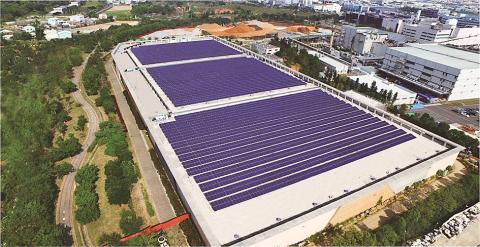
Photo courtesy of AU Optronics
About 20GW are to be generated by solar power and 5.5GW from offshore wind power, while the rest can be generated by hydroelectric, onshore wind power and other renewable energy sources, he said.
The draft also stipulates a requirement for large consumers of electricity to install renewable power generators with a capacity proportional to their energy consumption, or pay a fee or purchase renewable energy vouchers.
Details on renewable energy sources are to be stipulated in minor regulations, while the ministry would provide “minimum standards” and allow local governments to establish more specific rules, Kung said.
Two environmentalists yesterday said they largely agreed with the bill’s direction and urged the government to present more thorough package measures.
It is good that large consumers of electricity would be forced to use renewable energy sources with less carbon emissions, as most of them still use power generated from fossil fuels, Citizen of the Earth, Taiwan’s Energy and Industry Division director Tsai Hui-sun (蔡卉荀) said.
As the Tainan and Taichung city governments have already asked large consumers of electricity — defined as those that use an average of more than 800 kilowatts (kW) of electricity per month — to source 10 percent of their energy from renewable energy sources, the central government should set a higher ratio and a timetable to gradually increase it, she said.
The government should clarify penalties and other package measures for large consumers of energy that fail to install renewable energy sources, Green Citizens’ Action Alliance researcher Wu Cheng-cheng (吳澄澄) said.
In addition to imposing mandatory regulations, the government should also help small and medium-sized businesses that lack the know-how to develop renewable energy sources to save energy or improve their energy-consuming facilities, she said.
The process of building renewable power installations should also involve more civil participation, so that controversies around “green” energy development, such as farmland appropriation, can be avoided, she added.
Photovoltaic panels installed at the Central Taiwan Science Park have exceeded a total capacity of 36 megawatts (MW), Central Taiwan Science Park Director-General Chen Ming-huang (陳銘煌) said, adding that AU Optronics Corp (友達光電) is one of the park’s most active developers of solar power.
The bureau has installed 100kW of solar panels on the rooftops of buildings in the science park, while the panels of about 490 businesses have reached an aggregate capacity of 11,655kW, Hsinchu Science Park Bureau Deputy Director-General Chang Ching-feng (張金豐) said by telephone.
The Southern Taiwan Science Park Bureau said solar panels installed on the rooftops of the park’s buildings have reached a total capacity of 8MW, which it plans to expand to 25MW with more installations, without providing a time frame for the goal.

AGING: As of last month, people aged 65 or older accounted for 20.06 percent of the total population and the number of couples who got married fell by 18,685 from 2024 Taiwan has surpassed South Korea as the country least willing to have children, with an annual crude birthrate of 4.62 per 1,000 people, Ministry of the Interior data showed yesterday. The nation was previously ranked the second-lowest country in terms of total fertility rate, or the average number of children a woman has in her lifetime. However, South Korea’s fertility rate began to recover from 2023, with total fertility rate rising from 0.72 and estimated to reach 0.82 to 0.85 by last year, and the crude birthrate projected at 6.7 per 1,000 people. Japan’s crude birthrate was projected to fall below six,
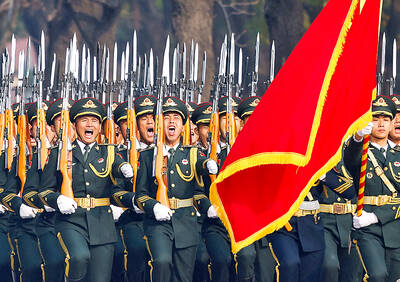
Conflict with Taiwan could leave China with “massive economic disruption, catastrophic military losses, significant social unrest, and devastating sanctions,” a US think tank said in a report released on Monday. The German Marshall Fund released a report titled If China Attacks Taiwan: The Consequences for China of “Minor Conflict” and “Major War” Scenarios. The report details the “massive” economic, military, social and international costs to China in the event of a minor conflict or major war with Taiwan, estimating that the Chinese People’s Liberation Army (PLA) could sustain losses of more than half of its active-duty ground forces, including 100,000 troops. Understanding Chinese
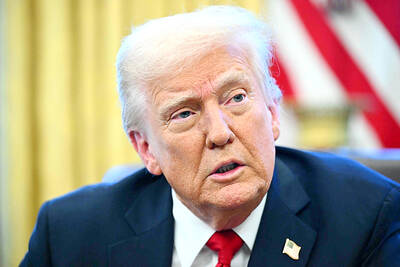
US President Donald Trump in an interview with the New York Times published on Thursday said that “it’s up to” Chinese President Xi Jinping (習近平) what China does on Taiwan, but that he would be “very unhappy” with a change in the “status quo.” “He [Xi] considers it to be a part of China, and that’s up to him what he’s going to be doing, but I’ve expressed to him that I would be very unhappy if he did that, and I don’t think he’ll do that. I hope he doesn’t do that,” Trump said. Trump made the comments in the context
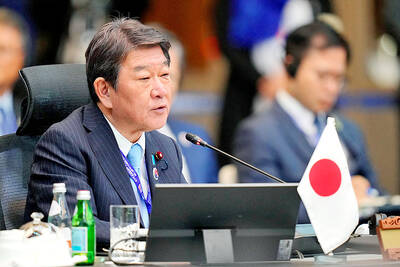
SELF-DEFENSE: Tokyo has accelerated its spending goal and its defense minister said the nation needs to discuss whether it should develop nuclear-powered submarines China is ramping up objections to what it sees as Japan’s desire to acquire nuclear weapons, despite Tokyo’s longstanding renunciation of such arms, deepening another fissure in the two neighbors’ increasingly tense ties. In what appears to be a concerted effort, China’s foreign and defense ministries issued statements on Thursday condemning alleged remilitarism efforts by Tokyo. The remarks came as two of the country’s top think tanks jointly issued a 29-page report framing actions by “right-wing forces” in Japan as posing a “serious threat” to world peace. While that report did not define “right-wing forces,” the Chinese Ministry of Foreign Affairs was


 RSS
RSS