


The government congratulated US President Donald Trump and US Vice President Mike Pence following their inauguration on Friday, the Ministry of Foreign Affairs said in a statement, adding that it looks forward to working with the new administration to advance bilateral ties.
Taiwan and the US share common values, such as respect for freedom, democracy and human rights, and have maintained cooperation based on the principles of mutual trust and reciprocity, the ministry said.
The two nations have established a close relationship in the areas of politics, security, economy and culture, the ministry said, adding that Taiwan looks forward to working with the new US administration to promote peace, stability and prosperity in the Asia-Pacific region.
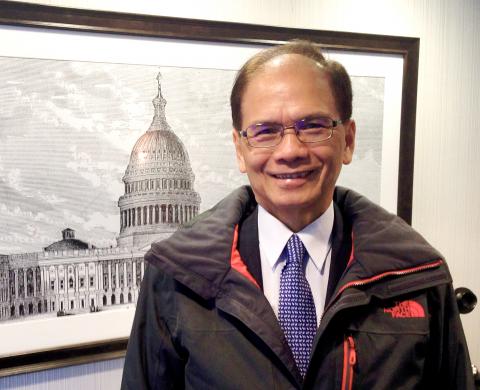
Photo: AP
President Tsai Ing-wen (蔡英文) also congratulated Trump and Pence on their inauguration.
In a tweet on her recently reactivated Twitter account, she said she hoped for stronger ties between Taiwan and the US during Trump’s tenure and that she looks forward to advancing the two nations’ friendship.
Taiwan’s delegation to the inauguration ceremony was led by former premier Yu Shyi-kun and comprised of lawmakers and politicians representing the major political parties.
After attending the ceremony, Yu said it was impressive that former US secretary of state Hillary Rodham Clinton — the Democratic candidate in the US presidential election in November last year — received a warm welcome from Trump’s supporters when she arrived at his inauguration.
The US is a mature democracy and can always implement a peaceful transition of power, despite fierce competition during electoral campaigns, Yu said, citing it as a good example for Taiwan.
China should learn from the US’ experience and see the value of democracy, he said.
Taipei and Washington should focus on innovative industries when it comes to trade, Yu said.
Taiwan should boost efforts to negotiate a free-trade agreement with the US if Trump withdraws from the Trans-Pacific Partnership (TPP), he said.
The Trump administration’s “America first” foreign policy includes withdrawal from the TPP, according to information on a revamped White House Web site.
Among other “pointed questions,” Yu said he asked former Heritage Foundation president Edwin Feulner about the possibility of Trump “selling out” Taiwan.
According to Yu, Feulner asked how any US president could betray Taiwan when the Taiwan Relations Act (TRA) exists.
The TRA outlines US commitments to Taiwan.
Feulner, an adviser to Trump’s transition team, said that Taiwan should not worry so much, according to Yu.
Yu said Feulner’s response meant that the US president could not sell out Taiwan even if he wanted to.
The TRA was enacted in 1979 to maintain commercial, cultural and other unofficial relations between Taiwan and the US after Washington switched diplomatic recognition from Taipei to Beijing.
The TRA requires the US “to provide Taiwan with arms of a defensive character.”

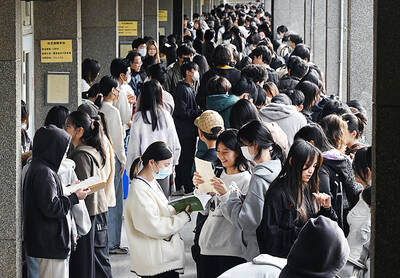
A global survey showed that 60 percent of Taiwanese had attained higher education, second only to Canada, the Ministry of the Interior said. Taiwan easily surpassed the global average of 43 percent and ranked ahead of major economies, including Japan, South Korea and the US, data from the Organisation for Economic Co-operation and Development (OECD) for 2024 showed. Taiwan has a high literacy rate, data released by the ministry showed. As of the end of last year, Taiwan had 20.617 million people aged 15 or older, accounting for 88.5 percent of the total population, with a literacy rate of 99.4 percent, the data

NEW LOW: The council in 2024 based predictions on a pessimistic estimate for the nation’s total fertility rate of 0.84, but last year that rate was 0.69, 17 percent lower An expected National Development Council (NDC) report expects the nation’s population to drop below 12 million by 2065, with the old-age dependency ratio to top 100 percent sooner than 2070, sources said yesterday. The council is slated to release its latest population projections in August, using an ultra-low fertility model, the sources said. The previous report projected that Taiwan’s population would fall to 14.37 million by 2070, but based on a new estimate of the total fertility rate (TFR) — the average number of children born to a woman over her lifetime — the population is expected to reach 12 million by
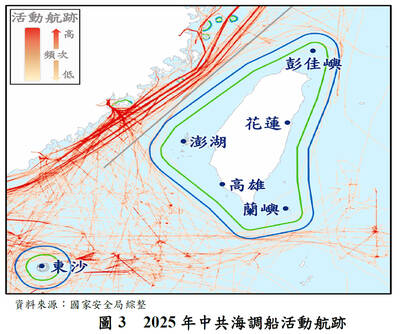
INTENSIFYING THREATS: Beijing’s tactics include massive attacks on the government service network, aircraft and naval vessel incursions and damaging undersea cables China is prepared to interfere in November’s nine-in-one local elections by launching massive attacks on the Taiwanese government’s service network (GSN), a report published by the National Security Bureau showed. The report was submitted to the Legislative Yuan ahead of the bureau’s scheduled briefing at the Foreign Affairs and National Defense Committee tomorrow. The national security team has identified about 13,000 suspicious Internet accounts and 860,000 disputed messages, the bureau said of China’s cognitive warfare against Taiwan. The disputed messages focus on major foreign affairs, national defense and economic issues, which were produced using generative artificial intelligence (AI) and distributed through Chinese
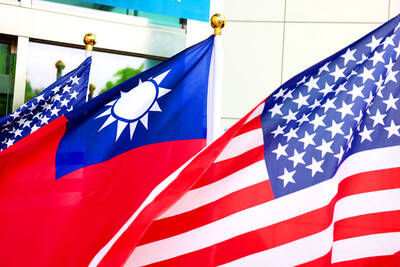
COUNTERING HOSTILITY: The draft bill would require the US to increase diplomatic pressure on China and would impose sanctions on those who sabotage undersea cable networks US lawmakers on Thursday introduced a bipartisan bill to bolster the resilience of Taiwan’s submarine cables to counter China’s hostile activities. The proposal, titled the critical undersea infrastructure resilience initiative act, was cosponsored by Republican representatives Mike Lawler and Greg Stanton, and Democratic Representative Dave Min. US Senators John Curtis and Jacky Rosen also introduced a companion bill in the US Senate, which has passed markup at the chamber’s Committee on Foreign Relations. The House’s version of the bill would prioritize the deployment of sensors to detect disruptions or potential sabotage in real-time and enhance early warning capabilities through global intelligence sharing frameworks,


 RSS
RSS