


The Chung-Hua Institution for Economic Research (CIER, 中華經濟研究院) yesterday cut its forecast for GDP growth this year to 1.36 percent, from its previous forecast of 2.24 percent in December last year, as soft external demand weighs on exports.
Exports, which account for 70 percent of GDP, might make a parlous contribution this year as rivals in China and other emerging markets increasingly catch up with Taiwanese technological development and cut their imports from local suppliers, CIER president Wu Chung-shu (吳中書) said.
“The incoming government should take notice of the trend and embark on structural reform without delay,” Wu told a news conference.
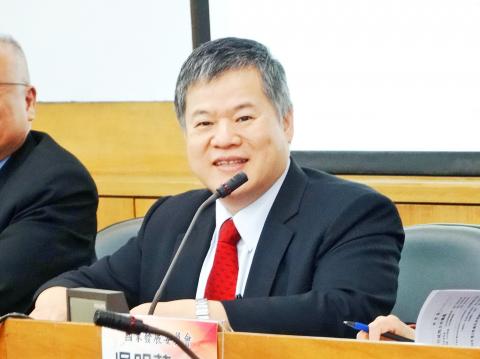
Photo: Wang Meng-lun, Taipei Times
The economy could have contracted 0.8 percent during the first quarter, extending three consecutive quarters of decline, dragged by disappointing exports that more than subdued a mild increase in private consumption, the Taipei-based institute said.
SinoPac Financial Holdings Co (永豐金控) chief economist Jack Huang (黃蔭基) voiced concern that Taiwan has lagged behind global trade performance since 2008, suggesting the need for reform of the nation’s industrial policy.
“All sectors know why trade terms are deteriorating, so incoming policymakers should skip the discussions and take action to put the nation back on the right course,” Huang said.
For years, government officials, industry leaders and academics have blamed the predicament on the nation’s concentration on the information technology and communication sectors, as well as the pursuit of low-value-added business models.
Heavy dependence on the Chinese and ASEAN markets has not only delayed industrial upgrades and innovation, but it has also squeezed wage growth, analysts say.
Exports are forecast to contract 3.64 percent year-on-year this year, while imports are expected to decline 4.99 percent, rendering a modest trade surplus, CIER said.
The incoming government should make it clear which industries it would be promoting and cut back on its trade ties with China so that the private sector would know how to adjust its business strategies, Huang said.
Local banks have been seeking to expand in China for the past eight years to better serve Taiwanese firms with operations there, but that expansion hit a snag after the cross-strait service trade agreement failed to clear the legislature, he said.
The nation could see a fragile rebound this quarter and beyond as bigger declines in imports continue to generate trade surpluses, CIER researcher Peng Su-ling (彭素玲) said.
National Central University economics professor Chiu Chun-jung (邱俊榮), who is to help monitor the National Stabilization Fund for the incoming government, said deteriorating trade terms spell opportunity for change and local firms should shift to a high-value-added business model.
Just as local hotels are wooing tourists from Southeast Asia to offset a drop in the number of Chinese tourists, local manufacturers should also reach out to customers in emerging markets other than China, Chiu said.
A quick fix would serve only to delay, rather than solve, the fundamental problems with the economy, he said.

The Tourism Administration yesterday announced that it would reward repeat international visitors with incentives of up to NT$8,000 to boost inbound tourism. The incentives are available to all international tourists, it said, adding that repeat visitors would be rewarded with NT$5,000 and would receive an additional NT$3,000 if they bring travel companions. The nation received 2,990,657 inbound visitors during the first quarter, marking a 3.8 percent increase from the same period last year, agency data showed. Japanese nationals are among groups visiting Taiwan the most. About 1.48 million Japanese tourists arrived last year, a year-on-year increase of more than 12
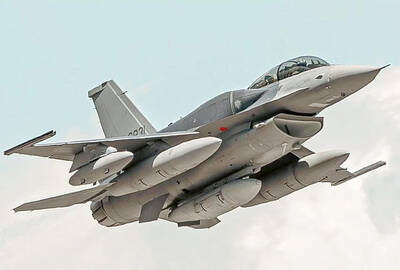
66 FIGHTER JETS: The aircraft is likely undergoing preparations for its transfer to Taiwan — a significant step forward in the nation’s modernization program, a lawmaker said The first of Taiwan’s order of F-16V Block 70 aircraft has been sighted in Texas ahead of delivery, Democratic Progressive Party (DPP) Legislator Wang Ting-yu (王定宇) said. Taiwan’s first F-16V Block 70 two-seat aircraft, tail number 6831, was seen flying from Lockheed Martin’s production facility in Greenville, South Carolina, to Naval Air Station Joint Reserve Base Fort Worth in Texas, Wang wrote on Facebook yesterday. The plane is likely undergoing preparations for its transfer to Taiwan, marking a significant step forward in the Republic of China Air Force’s modernization program, Wang said, citing military analysts. The F-16V Block 70 is a new-build version
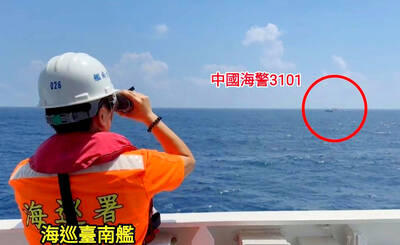
‘BRAZEN’: The holiday did not stop China from activities that infringe on Taiwan’s maritime jurisdiction, but the CGA is ready to defend the nation, Kuan Bi-ling said Beijing is intensifying maritime pressure on Taiwan, but the nation will never yield, Ocean Affairs Council Deputy Minister Sung Chen-en (宋承恩) said. The Coast Guard Administration (CGA) has adopted a “shadowing and monitoring” approach to avoid falling into a Chinese trap to escalate tensions and deepen the conflict, Sung said in an interview published yesterday in the Chinese-language Liberty Times (the Taipei Times’ sister newspaper). China Coast Guard formations patrolling waters east of Taiwan, as well as official Chinese vessels entering areas around Itu Aba Island (Taiping Island, 太平島) and Pratas Islands (Dongsha Islands, 東沙群島) show Beijing’s attempts to significantly step up
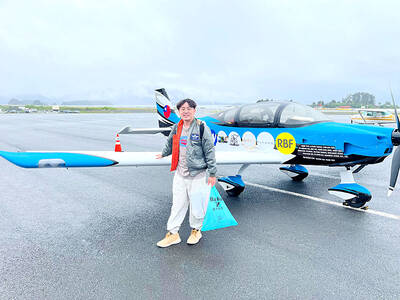
Taiwanese aviator Roger Lin (林睿哲) returned to Taiwan on Saturday after completing a nine-day round-the-world journey in a single-engine aircraft, becoming the first Taiwanese pilot to achieve the feat. Lin departed on June 5 from Los Angeles, California, and continued through Alaska, Japan, Taiwan, the Philippines, Indonesia, Malaysia, Thailand, Nepal, Jordan, Norway, Iceland and Canada before landing at the Taipei International Airport (Songshan) via Los Angeles and Japan. Lin shared numerous photos and videos of his journey on a Facebook page titled “Pilot Roger’s Around the World Flight,” including a video showing his aircraft flying over the Danjiang Bridge and


 RSS
RSS