


China yesterday marked the fifth anniversary of the Sichuan earthquake that killed more than 80,000, but some said questions remained over the thousands of children who died as their schools collapsed.
The magnitude 8.0 earthquake struck Sichuan Province on the afternoon of May 12, 2008, with its epicenter at Wenchuan County. Another 4.45 million were hurt in China’s worst quake in more than three decades.
The mouthpiece of the Chinese Communist Party, the People’s Daily, praised government efforts toward reconstruction, but outspoken Internet commentators remembered the thousands of children who died.
“It’s the fifth anniversary of the earthquake, as well as Mother’s Day. Hard to forget those young faces lying under the school buildings,” Fengguo De Wuhou 1117 said on a microblog.
“Five years and the promise to thoroughly investigate the ‘tofu-built’ projects in the quake area still lingers around the ears,” the posting said, using a Chinese phrase for shoddy construction.
Thousands of children died and 7,000 schools were badly damaged in the earthquake, triggering accusations of poor construction and corruption, especially as some other buildings nearby remained standing.
Calls for transparency from the government on how many students were killed led to beatings and arrests of activists, including dissident artist Ai Weiwei (艾未未).
Ai yesterday tweeted a link to his work Remembrance, voice recordings of people reading the names of students who died in the earthquake.
Ai was badly beaten by police when he tried to testify in support of activist Tan Zuoren (譚作人), who had investigated the school buildings.
The People’s Daily called the earthquake a “grave catastrophe,” but said the recovery was a symbol of China’s strength.
“In less than three years, the Wenchuan disaster zone has completed the task of reconstruction with impressive speed,” the newspaper said in a front-page commentary.
“To achieve a new victory of building a prosperous society, this is the best way to commemorate the fifth anniversary of the Wenchuan earthquake,” it said.

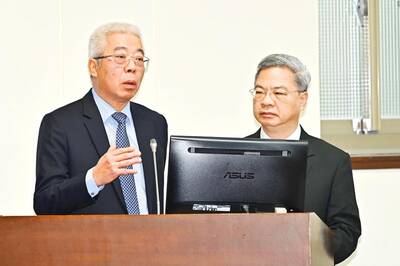
Taiwan has arranged for about 8 million barrels of crude oil, or about one-third of its monthly needs, to be shipped from the Red Sea this month to bypass the Strait of Hormuz and ease domestic supply pressures, CPC Corp, Taiwan (CPC, 台灣中油) said yesterday. The state-run oil company has worked with Middle Eastern suppliers to secure routes other than the Strait of Hormuz, through which about 20 percent of the world’s oil and liquefied natural gas typically passes, CPC chairman Fang Jeng-zen (方振仁) said at a meeting of the legislature’s Economics Committee in Taipei. Suppliers in Saudi Arabia have indicated they
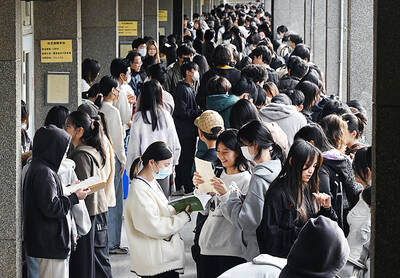
A global survey showed that 60 percent of Taiwanese had attained higher education, second only to Canada, the Ministry of the Interior said. Taiwan easily surpassed the global average of 43 percent and ranked ahead of major economies, including Japan, South Korea and the US, data from the Organisation for Economic Co-operation and Development (OECD) for 2024 showed. Taiwan has a high literacy rate, data released by the ministry showed. As of the end of last year, Taiwan had 20.617 million people aged 15 or older, accounting for 88.5 percent of the total population, with a literacy rate of 99.4 percent, the data

CCP ‘PAWN’? Beijing could use the KMT chairwoman’s visit to signal to the world that many people in Taiwan support the ‘one China’ principle, an academic said Chinese Nationalist Party (KMT) Chairwoman Cheng Li-wun (鄭麗文) yesterday arrived in China for a “peace” mission and potential meeting with Chinese President Xi Jinping (習近平), while a Taiwanese minister detailed the number of Chinese warships currently deployed around the nation. Cheng is visiting at a time of increased Chinese military pressure on Taiwan, as the opposition-dominated Legislative Yuan stalls a government plan for US$40 billion in extra defense spending. Speaking to reporters before going to the airport, Cheng said she was going on a “historic journey for peace,” but added that some people felt uneasy about her trip. “If you truly love Taiwan,

NEW LOW: The council in 2024 based predictions on a pessimistic estimate for the nation’s total fertility rate of 0.84, but last year that rate was 0.69, 17 percent lower An expected National Development Council (NDC) report expects the nation’s population to drop below 12 million by 2065, with the old-age dependency ratio to top 100 percent sooner than 2070, sources said yesterday. The council is slated to release its latest population projections in August, using an ultra-low fertility model, the sources said. The previous report projected that Taiwan’s population would fall to 14.37 million by 2070, but based on a new estimate of the total fertility rate (TFR) — the average number of children born to a woman over her lifetime — the population is expected to reach 12 million by


 RSS
RSS