


In one of the biggest ever bank heists, a global cybercrime ring stole US$45 million from two Middle Eastern banks by hacking into credit card processing firms and withdrawing money from ATMs in 27 countries, US prosecutors said on Thursday.
The US Department of Justice accused eight men of allegedly forming the New York-based cell of the organization, and said seven of them have been arrested. The eighth, allegedly a leader of the cell, was reported to have been murdered in the Dominican Republic on April 27.
The ringleaders are believed to be outside the US, but prosecutors declined to give details, citing the ongoing investigation.
What is clear is the sheer scope and speed of the crimes: in one of the attacks, in just over 10 hours, US$40 million was raided from ATMs in 24 countries involving 36,000 transactions.
“In the place of guns and masks, this cybercrime organization used laptops and the Internet,” US Attorney for the Eastern District of New York Loretta Lynch said at a news conference. “Moving as swiftly as data over the Internet, the organization worked its way from the computer systems of international corporations to the streets of New York City.”
The case demonstrates the major threat that cybercrime poses to banks around the world. It also shows how increasingly international and sophisticated criminal gangs have become, particularly those using the Internet.
Prosecutors highlighted the “surgical precision” of these hackers, the global nature of their organization, and the speed and coordination with which they executed operations in 27 countries.
According to the complaint, the gang broke into the computers of two credit card processors, one in India in December last year and the other in the US this February. The companies were not identified.
The hackers increased the available balance and withdrawal limits on prepaid MasterCard debit cards issued by Bank of Muscat of Oman, and National Bank of Ras Al Khaimah PSC (RAKBANK) of the United Arab Emirates, according to the complaint. They then distributed counterfeit debit cards to “cashers” around the world, enabling them to siphon millions of dollars from ATMs in a matter of hours.
For example, in New York, members of the cell fanned out into the city on the afternoon of Feb. 19, armed with cards bearing a single Bank of Muscat account number. Ten hours later, they had completed 2,904 withdrawals for US$2.4 million in all, the final transaction coming about 1:26am, prosecutors said.
Casher crews in other countries were busy doing the same, pulling some US$40 million from Bank of Muscat to add to the US$5 million they stole from RAKBANK in December last year, according to the indictment.
In total, cashers made some 40,500 withdrawals in 27 countries during the two coordinated incidents. Prosecutors said the method of attack was known as “Unlimited Operations” in the cyberunderworld.
Representatives for the two banks could not be reached for comment outside of regular business hours.
In a statement, Mastercard said it had cooperated with law enforcement in the investigation and stressed that its systems were not involved or compromised in the attacks.

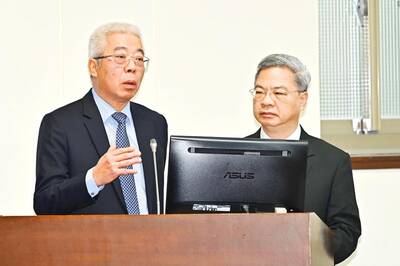
Taiwan has arranged for about 8 million barrels of crude oil, or about one-third of its monthly needs, to be shipped from the Red Sea this month to bypass the Strait of Hormuz and ease domestic supply pressures, CPC Corp, Taiwan (CPC, 台灣中油) said yesterday. The state-run oil company has worked with Middle Eastern suppliers to secure routes other than the Strait of Hormuz, through which about 20 percent of the world’s oil and liquefied natural gas typically passes, CPC chairman Fang Jeng-zen (方振仁) said at a meeting of the legislature’s Economics Committee in Taipei. Suppliers in Saudi Arabia have indicated they
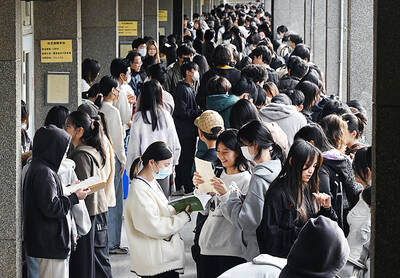
A global survey showed that 60 percent of Taiwanese had attained higher education, second only to Canada, the Ministry of the Interior said. Taiwan easily surpassed the global average of 43 percent and ranked ahead of major economies, including Japan, South Korea and the US, data from the Organisation for Economic Co-operation and Development (OECD) for 2024 showed. Taiwan has a high literacy rate, data released by the ministry showed. As of the end of last year, Taiwan had 20.617 million people aged 15 or older, accounting for 88.5 percent of the total population, with a literacy rate of 99.4 percent, the data

CCP ‘PAWN’? Beijing could use the KMT chairwoman’s visit to signal to the world that many people in Taiwan support the ‘one China’ principle, an academic said Chinese Nationalist Party (KMT) Chairwoman Cheng Li-wun (鄭麗文) yesterday arrived in China for a “peace” mission and potential meeting with Chinese President Xi Jinping (習近平), while a Taiwanese minister detailed the number of Chinese warships currently deployed around the nation. Cheng is visiting at a time of increased Chinese military pressure on Taiwan, as the opposition-dominated Legislative Yuan stalls a government plan for US$40 billion in extra defense spending. Speaking to reporters before going to the airport, Cheng said she was going on a “historic journey for peace,” but added that some people felt uneasy about her trip. “If you truly love Taiwan,

NEW LOW: The council in 2024 based predictions on a pessimistic estimate for the nation’s total fertility rate of 0.84, but last year that rate was 0.69, 17 percent lower An expected National Development Council (NDC) report expects the nation’s population to drop below 12 million by 2065, with the old-age dependency ratio to top 100 percent sooner than 2070, sources said yesterday. The council is slated to release its latest population projections in August, using an ultra-low fertility model, the sources said. The previous report projected that Taiwan’s population would fall to 14.37 million by 2070, but based on a new estimate of the total fertility rate (TFR) — the average number of children born to a woman over her lifetime — the population is expected to reach 12 million by


 RSS
RSS