


Malaysian Prime Minister Najib Razak was sworn in for a second term by Malaysia’s king yesterday, after his 56-year-old ruling coalition retained power in elections branded as fraudulent by the opposition.
Opposition leader Anwar Ibrahim called for a rally to protest against a victory which he said was achieved via the “worst electoral fraud in our history.”
The coalition that has ruled since independence in 1957 held off a spirited opposition challenge to retain a firm parliamentary majority in elections widely forecast to be the biggest-ever threat to the ruling bloc.
However, the opposition bitterly alleges major fraud by Najib’s Barisan Nasional (National Front) coalition and bias by the Election Commission.
“I call upon as many Malaysians to join hands and express our rejection and disgust at the unprecedented electoral fraud committed by Najib Razak and the Election Commission,” Anwar said in a statement.
The rally is due to be held tomorrow in a stadium on the outskirts of the capital Kuala Lumpur.
“The government has lost its legitimacy,” Anwar, 65, said earlier in an interview, calling the conduct of the polls a “crime” against Malaysians.
Supporters of the three-party Pakatan Rakyat (People’s Pact) opposition alliance were left bitter and despondent after an election which they hoped would result in a historic change of government, but which left Pakatan with only modest gains.
Najib, 59, who had promised free and fair polls and has since brushed off numerous allegations of irregularities, was sworn in at the ornate national palace in Kuala Lumpur.
Shortly after his victory, he acknowleged the election — which indicated that ethnic Chinese had continued a trend of deserting Barisan — had laid bare deep racial divisions.
“Overall, the results show a trend of polarization which worries the government. If it is not addressed it can create tension or division in the country,” he said, promising to pursue reconciliation.
Anwar said the opposition would look into fraud allegations in dozens of constituencies and decide “whether [to file] election petitions or to go to the courts.”
Azizuddin Sani, a political analyst from Universiti Utara Malaysia, said it would be “very difficult” to challenge the result.
“Anwar can complain, but I don’t think it will change the results,” he said.
Pakatan has made major inroads in recent years under Anwar — a former Barisan star who was ousted and jailed by the regime in a 1998 power struggle — by capitalizing on public fatigue with corruption and authoritarianism.
Outraged voters took to the Internet in droves to complain that indelible ink which Najib touted as a guarantee against multiple voting was found to easily wash off.
Videos, pictures and first-hand accounts of angry citizens confronting purportedly foreign “voters” at polling centers also went viral online.
Anwar has alleged there was a scheme to fly tens of thousands of “dubious” and possibly foreign voters to sway the outcome in key constituencies.
The vote saw a record turnout of more than 10 million people.
Najib, who took office in 2009, has faced rising public calls for reform.
He has responded with some limited liberalization moves which his critics dismiss as cosmetic steps that dodge deep change to avoid upsetting a ruling elite.
Barisan’s clear majority was secured with just 48 percent of the votes cast, according to tallies by independent online media, which reform advocates said proved the electoral system was skewed in its favor.
Sunday’s outcome raised the specter of an end to the remarkable career of the charismatic Anwar.
He has vowed to step aside as opposition leader if Pakatan fails to unseat the government.

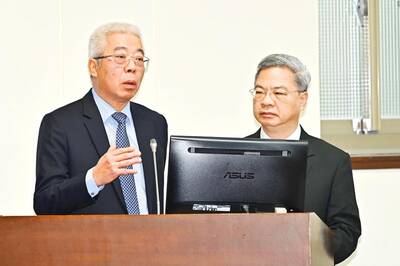
Taiwan has arranged for about 8 million barrels of crude oil, or about one-third of its monthly needs, to be shipped from the Red Sea this month to bypass the Strait of Hormuz and ease domestic supply pressures, CPC Corp, Taiwan (CPC, 台灣中油) said yesterday. The state-run oil company has worked with Middle Eastern suppliers to secure routes other than the Strait of Hormuz, through which about 20 percent of the world’s oil and liquefied natural gas typically passes, CPC chairman Fang Jeng-zen (方振仁) said at a meeting of the legislature’s Economics Committee in Taipei. Suppliers in Saudi Arabia have indicated they
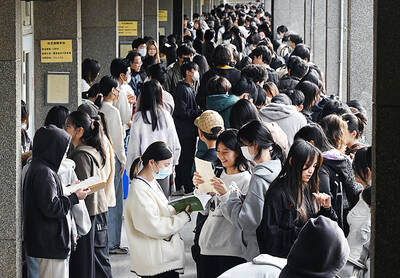
A global survey showed that 60 percent of Taiwanese had attained higher education, second only to Canada, the Ministry of the Interior said. Taiwan easily surpassed the global average of 43 percent and ranked ahead of major economies, including Japan, South Korea and the US, data from the Organisation for Economic Co-operation and Development (OECD) for 2024 showed. Taiwan has a high literacy rate, data released by the ministry showed. As of the end of last year, Taiwan had 20.617 million people aged 15 or older, accounting for 88.5 percent of the total population, with a literacy rate of 99.4 percent, the data

CCP ‘PAWN’? Beijing could use the KMT chairwoman’s visit to signal to the world that many people in Taiwan support the ‘one China’ principle, an academic said Chinese Nationalist Party (KMT) Chairwoman Cheng Li-wun (鄭麗文) yesterday arrived in China for a “peace” mission and potential meeting with Chinese President Xi Jinping (習近平), while a Taiwanese minister detailed the number of Chinese warships currently deployed around the nation. Cheng is visiting at a time of increased Chinese military pressure on Taiwan, as the opposition-dominated Legislative Yuan stalls a government plan for US$40 billion in extra defense spending. Speaking to reporters before going to the airport, Cheng said she was going on a “historic journey for peace,” but added that some people felt uneasy about her trip. “If you truly love Taiwan,

NEW LOW: The council in 2024 based predictions on a pessimistic estimate for the nation’s total fertility rate of 0.84, but last year that rate was 0.69, 17 percent lower An expected National Development Council (NDC) report expects the nation’s population to drop below 12 million by 2065, with the old-age dependency ratio to top 100 percent sooner than 2070, sources said yesterday. The council is slated to release its latest population projections in August, using an ultra-low fertility model, the sources said. The previous report projected that Taiwan’s population would fall to 14.37 million by 2070, but based on a new estimate of the total fertility rate (TFR) — the average number of children born to a woman over her lifetime — the population is expected to reach 12 million by


 RSS
RSS