


Israel carried out its second air strike in days on Syria yesterday in an attack that shook Damascus with a series of powerful blasts and drove columns of fire into the night sky, a Western intelligence source said.
Israel declined to comment, but Syria accused the Jewish state of striking a military facility just north of the capital — one which its jets had first targeted three months ago.
Iran, a key ally of Syrian President Bashar al-Assad and an archenemy of Israel, urged states in the region to resist the Israeli attack.
People living near the Jamraya base spoke of explosions over several hours in various places near Damascus, including a town housing senior officials.
The Western intelligence source told reporters the operation hit Iranian-supplied missiles headed for Lebanon’s Hezbollah, a similar target to the two previous strikes this year, which have been defended as justifiable by the US
“In last night’s attack, as in the previous one, what was attacked were stores of Fateh-110 missiles that were in transit from Iran to Hezbollah,” the intelligence source said.
An Israeli official had confirmed a similar raid on Friday. In Lebanon, Hezbollah declined to comment.
Video footage uploaded to the Internet by activists showed a series of explosions. One lit up the skyline of Damascus, while another sent up a tower of flames and secondary blasts.
Syrian state media accused Israel of attacking in response to al-Assad’s forces’ recent successes against rebels who, with Western approval, have been trying to topple him for two years.
For 40 years since a war with a Syria then ruled by al-Assad’s father, Israel has been locked in a cold standoff with Damascus, fought Hezbollah in Lebanon in 2006 and is threatening to attack Iran, accusing Tehran of trying to develop nuclear weapons.
However, it is wary of instability in Syria, has long viewed Hezbollah as the more immediate threat and has shown little enthusiasm for US and European calls for al-Assad’s overthrow.
The raid follows intense debate in the US over whether the use of chemical weapons by Syrian troops might push US President Barack Obama to intervene more forcefully on the rebel side, but Western powers remain concerned at the presence of anti-Western Islamist fighters among al-Assad’s opponents.
It was unclear whether Israel sought US approval for the action; in the past, officials have indicated that Israel sees a need only to inform Washington once a mission was under way.
At a routine public appearance, Israeli Prime Minister Benjamin Netanyahu made no direct reference to the strikes, but spoke pointedly of his responsibility to ensure Israel’s future.
He maintained a plan to fly to China later in the day, suggesting a confidence that, as with the raid in January, al-Assad — and Hezbollah — would limit any reprisal. However, an Israeli military source said the army had deployed more anti-missile defense systems near the northern borders in recent days.
“The sky was red all night. We didn’t sleep a single second. The explosions started after midnight and continued through the night,” said one man from Hameh, a short distance from the Jamraya military research facility.
“There were explosions on all sides of my house,” he added, saying people hid in basements during the events.
Another witness spoke of fire near Qura al-Assad, a town around 5km west of Jamraya where many high-level government officials live. In the center of Damascus, people said their first thought was that there was an earthquake.
Identified by Syrian media as the Jamraya military research center, the target was also hit by Israel in another assault on Jan. 30. Jamraya, on the northern approaches to Damascus, is just 15km from the Lebanese border.

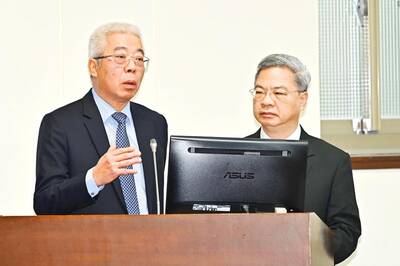
Taiwan has arranged for about 8 million barrels of crude oil, or about one-third of its monthly needs, to be shipped from the Red Sea this month to bypass the Strait of Hormuz and ease domestic supply pressures, CPC Corp, Taiwan (CPC, 台灣中油) said yesterday. The state-run oil company has worked with Middle Eastern suppliers to secure routes other than the Strait of Hormuz, through which about 20 percent of the world’s oil and liquefied natural gas typically passes, CPC chairman Fang Jeng-zen (方振仁) said at a meeting of the legislature’s Economics Committee in Taipei. Suppliers in Saudi Arabia have indicated they
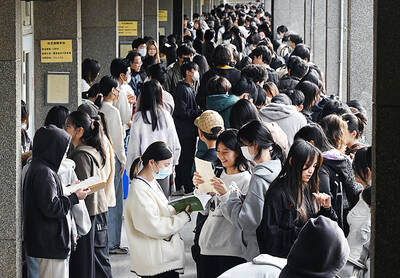
A global survey showed that 60 percent of Taiwanese had attained higher education, second only to Canada, the Ministry of the Interior said. Taiwan easily surpassed the global average of 43 percent and ranked ahead of major economies, including Japan, South Korea and the US, data from the Organisation for Economic Co-operation and Development (OECD) for 2024 showed. Taiwan has a high literacy rate, data released by the ministry showed. As of the end of last year, Taiwan had 20.617 million people aged 15 or older, accounting for 88.5 percent of the total population, with a literacy rate of 99.4 percent, the data
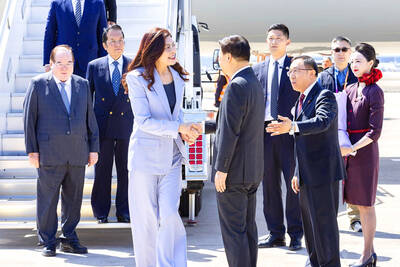
CCP ‘PAWN’? Beijing could use the KMT chairwoman’s visit to signal to the world that many people in Taiwan support the ‘one China’ principle, an academic said Chinese Nationalist Party (KMT) Chairwoman Cheng Li-wun (鄭麗文) yesterday arrived in China for a “peace” mission and potential meeting with Chinese President Xi Jinping (習近平), while a Taiwanese minister detailed the number of Chinese warships currently deployed around the nation. Cheng is visiting at a time of increased Chinese military pressure on Taiwan, as the opposition-dominated Legislative Yuan stalls a government plan for US$40 billion in extra defense spending. Speaking to reporters before going to the airport, Cheng said she was going on a “historic journey for peace,” but added that some people felt uneasy about her trip. “If you truly love Taiwan,

NEW LOW: The council in 2024 based predictions on a pessimistic estimate for the nation’s total fertility rate of 0.84, but last year that rate was 0.69, 17 percent lower An expected National Development Council (NDC) report expects the nation’s population to drop below 12 million by 2065, with the old-age dependency ratio to top 100 percent sooner than 2070, sources said yesterday. The council is slated to release its latest population projections in August, using an ultra-low fertility model, the sources said. The previous report projected that Taiwan’s population would fall to 14.37 million by 2070, but based on a new estimate of the total fertility rate (TFR) — the average number of children born to a woman over her lifetime — the population is expected to reach 12 million by


 RSS
RSS