


Islands at the center of a territorial row between Japan and China are covered by a military protection accord between Washington and Tokyo, US Secretary of Defense Chuck Hagel said on Monday.
“The United States does not take a position on the ultimate sovereignty of the islands, but we do recognize they are under the administration of Japan and fall under our security treaty obligations,” Hagel said at a news conference with his Japanese counterpart, Itsunori Onodera.
Hagel’s comments came amid rising tensions over the uninhabited islands known in Japan as the Senkaku Islands, as the Diaoyutai Islands (釣魚台) in Taiwan and as the Diaoyu Archipelago (釣魚群島) by China.
On April 23, Japanese Prime Minister Shinzo Abe vowed to “expel by force” any Chinese landing on the islands after a flotilla sailed into the disputed waters in the East China Sea.
The Chinese flotilla was the biggest to do so in a single day since Japan nationalized part of the island chain in September last year.
Calling the dispute a key regional security challenge, Hagel said it “must be resolved peacefully and cooperatively between the parties involved.”
Washington “opposes any unilateral or coercive action that seeks to undermine Japan’s administrative control,” he said, in reference to the recent Chinese actions.
“Any actions that could raise tensions or lead to miscalculations affect the stability of the entire region,” he said.
In the talks with Hagel, Onodera said he “explained Japan’s basic position that the islands are clearly an inherent part of the territory of Japan in light of historical facts and based upon international law, and that Japan is determined to protect its land, water and air.”
Turning to North Korea, Hagel said the country’s “provocative behavior” was “the most obvious threat to stability in the region.”
“Minister Onodera and I agree that continued close coordination between US and Japanese forces will be essential for monitoring and responding to any further provocations, particularly cooperation on missile defense,” he said.
Hagel said progress had been made on plans to deploy a second TPY-2 radar to Japan. He confirmed the deployment of a second squadron of MV-22 Osprey aircraft to Japan this summer.

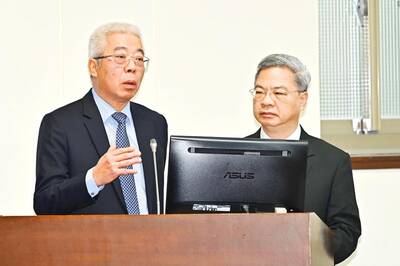
Taiwan has arranged for about 8 million barrels of crude oil, or about one-third of its monthly needs, to be shipped from the Red Sea this month to bypass the Strait of Hormuz and ease domestic supply pressures, CPC Corp, Taiwan (CPC, 台灣中油) said yesterday. The state-run oil company has worked with Middle Eastern suppliers to secure routes other than the Strait of Hormuz, through which about 20 percent of the world’s oil and liquefied natural gas typically passes, CPC chairman Fang Jeng-zen (方振仁) said at a meeting of the legislature’s Economics Committee in Taipei. Suppliers in Saudi Arabia have indicated they
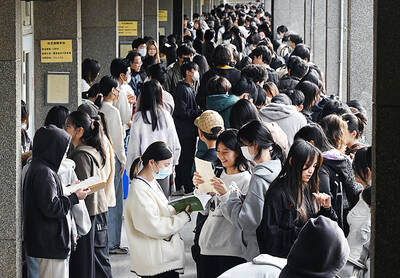
A global survey showed that 60 percent of Taiwanese had attained higher education, second only to Canada, the Ministry of the Interior said. Taiwan easily surpassed the global average of 43 percent and ranked ahead of major economies, including Japan, South Korea and the US, data from the Organisation for Economic Co-operation and Development (OECD) for 2024 showed. Taiwan has a high literacy rate, data released by the ministry showed. As of the end of last year, Taiwan had 20.617 million people aged 15 or older, accounting for 88.5 percent of the total population, with a literacy rate of 99.4 percent, the data
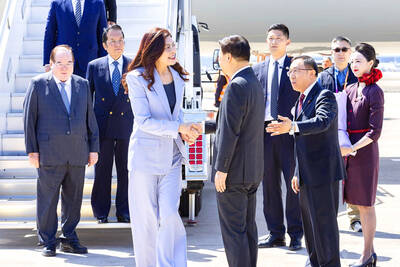
CCP ‘PAWN’? Beijing could use the KMT chairwoman’s visit to signal to the world that many people in Taiwan support the ‘one China’ principle, an academic said Chinese Nationalist Party (KMT) Chairwoman Cheng Li-wun (鄭麗文) yesterday arrived in China for a “peace” mission and potential meeting with Chinese President Xi Jinping (習近平), while a Taiwanese minister detailed the number of Chinese warships currently deployed around the nation. Cheng is visiting at a time of increased Chinese military pressure on Taiwan, as the opposition-dominated Legislative Yuan stalls a government plan for US$40 billion in extra defense spending. Speaking to reporters before going to the airport, Cheng said she was going on a “historic journey for peace,” but added that some people felt uneasy about her trip. “If you truly love Taiwan,

NEW LOW: The council in 2024 based predictions on a pessimistic estimate for the nation’s total fertility rate of 0.84, but last year that rate was 0.69, 17 percent lower An expected National Development Council (NDC) report expects the nation’s population to drop below 12 million by 2065, with the old-age dependency ratio to top 100 percent sooner than 2070, sources said yesterday. The council is slated to release its latest population projections in August, using an ultra-low fertility model, the sources said. The previous report projected that Taiwan’s population would fall to 14.37 million by 2070, but based on a new estimate of the total fertility rate (TFR) — the average number of children born to a woman over her lifetime — the population is expected to reach 12 million by


 RSS
RSS