


Department of Health (DOH) Minister Chiu Wen-ta (邱文達) yesterday floated the idea of increasing the tobacco health and welfare surcharge by NT$20 per pack, but added the department would make further evaluations before coming to a final decision.
Chiu made his remarks during an interview with the Chinese-language United Evening News yesterday.
According to the Tobacco Hazards Prevention Act (菸害防制法), the department has the authority to re-evaluate the Tobacco Health and Welfare Surcharge (added to tobacco products’ consumer price). Three years have passed since the surcharge was last raised in 2009, Chiu was quoted as saying in the interview, adding that it is necessary to consider another raise.
The surcharge was advocated by civic groups in 2000 and a surcharge of NT$5 per pack was first imposed in 2002, followed by another NT$5 raise in 2006, which was increased to NT$10 in 2009, culminating in the current charge of NT$20 per pack.
Compared with places such as Hong Kong, China and some countries in Southeast Asia, tobacco products in Taiwan are relatively cheap and many visitors from overseas often buy cigarettes in Taiwan to bring back to their home countries, Chiu said.
The relatively low prices of tobacco products have made it difficult to reduce the smoking rate among young people in Taiwan, he added.
“The smoking rate would obviously drop if the Tobacco Health and Welfare Surcharge was increased,” Chiu was quoted as saying in the interview, adding that taking into account the average price of tobacco products around the world, the current surcharge would ideally be increased to NT$40.
Separately, Tobacco and Liquor Corp president Hsu An-hsuen (徐安旋) was quoted by the United Evening News as saying that if the surcharge is increased by NT$20 at once, the price of most cigarettes would be about NT$100 per pack and such a large increase in price would greatly impact the market.
In addition, cheap counterfeit cigarettes and smuggled tobacco are already causing serious problems in the tobacco market, Hsu said, adding that if the increase of the surcharge is too big and the existing issues are unsolved, the industry’s problems will only get worse.

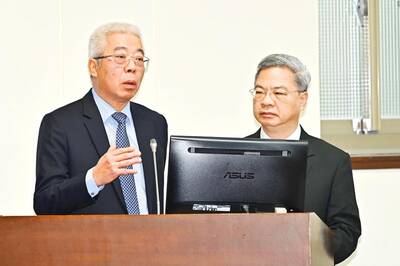
Taiwan has arranged for about 8 million barrels of crude oil, or about one-third of its monthly needs, to be shipped from the Red Sea this month to bypass the Strait of Hormuz and ease domestic supply pressures, CPC Corp, Taiwan (CPC, 台灣中油) said yesterday. The state-run oil company has worked with Middle Eastern suppliers to secure routes other than the Strait of Hormuz, through which about 20 percent of the world’s oil and liquefied natural gas typically passes, CPC chairman Fang Jeng-zen (方振仁) said at a meeting of the legislature’s Economics Committee in Taipei. Suppliers in Saudi Arabia have indicated they
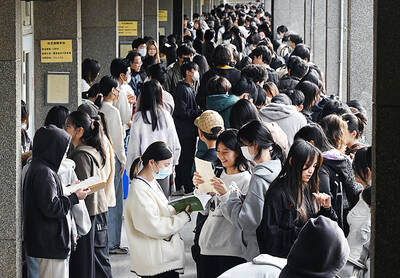
A global survey showed that 60 percent of Taiwanese had attained higher education, second only to Canada, the Ministry of the Interior said. Taiwan easily surpassed the global average of 43 percent and ranked ahead of major economies, including Japan, South Korea and the US, data from the Organisation for Economic Co-operation and Development (OECD) for 2024 showed. Taiwan has a high literacy rate, data released by the ministry showed. As of the end of last year, Taiwan had 20.617 million people aged 15 or older, accounting for 88.5 percent of the total population, with a literacy rate of 99.4 percent, the data
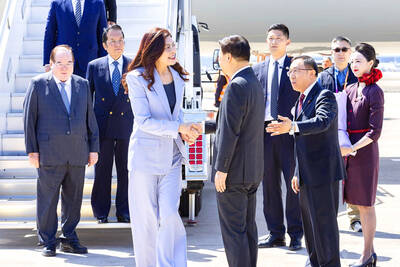
CCP ‘PAWN’? Beijing could use the KMT chairwoman’s visit to signal to the world that many people in Taiwan support the ‘one China’ principle, an academic said Chinese Nationalist Party (KMT) Chairwoman Cheng Li-wun (鄭麗文) yesterday arrived in China for a “peace” mission and potential meeting with Chinese President Xi Jinping (習近平), while a Taiwanese minister detailed the number of Chinese warships currently deployed around the nation. Cheng is visiting at a time of increased Chinese military pressure on Taiwan, as the opposition-dominated Legislative Yuan stalls a government plan for US$40 billion in extra defense spending. Speaking to reporters before going to the airport, Cheng said she was going on a “historic journey for peace,” but added that some people felt uneasy about her trip. “If you truly love Taiwan,

NEW LOW: The council in 2024 based predictions on a pessimistic estimate for the nation’s total fertility rate of 0.84, but last year that rate was 0.69, 17 percent lower An expected National Development Council (NDC) report expects the nation’s population to drop below 12 million by 2065, with the old-age dependency ratio to top 100 percent sooner than 2070, sources said yesterday. The council is slated to release its latest population projections in August, using an ultra-low fertility model, the sources said. The previous report projected that Taiwan’s population would fall to 14.37 million by 2070, but based on a new estimate of the total fertility rate (TFR) — the average number of children born to a woman over her lifetime — the population is expected to reach 12 million by


 RSS
RSS