

The Centers for Disease Control (CDC) yesterday said the number of hospital visits for flu symptoms have risen for five consecutive weeks and that 15 new severe cases have come to light in the past week, showing that the country has officially entered the peak flu season.
Cold fronts and wet weather in recent weeks have contributed to the increasing number of people affected by the flu, the CDC said.
Not only has the number of outpatients and emergency visits resulting from flu and flu-like symptoms been on the rise for five straight weeks, hospitals across the country have seen huge increases in the number of emergency visits, CDC Deputy Director-General Lin Ting (林頂) said.
Last week, the number of emergency visits totaled roughly 4,000, a 10 percent increase from the previous week and a 23 percent increase from two weeks ago, Lin said.
In the past week, 15 severe cases of flu have been newly reported, signaling that the public needs to be extra careful, Lin said.
Lin added that in the past month, officials monitoring the flu situation have found that about two in every three people with flu symptoms were affected by the A(H1N1) flu virus.
On the other hand, the cold weather has helped conditions dramatically improve in terms of dengue fever, especially in southern Taiwan where only 16 cases of indigenous dengue fever were confirmed last week, the CDC said.
However, the number of people with symptoms of stomach flu such as diarrhea, vomiting and fever has risen. Last week, 6 percent of all hospital emergency visits involved stomach flu symptoms, most of which affected newborns and children aged up to six, the CDC said.
The CDC said that only about 130,000 publicly funded flu shots are left in the country, so those who plan to receive the vaccine should call clinics near them to check for availability.
The CDC maintained that the vaccines are a form of effective prevention against the various forms of flu viruses and that those who are not vaccinated should wash their hands especially frequently.
Those experiencing discomfort in their respiratory system, such as a sore throat and nasal congestion, should wear face masks or avoid going out, the CDC said.

Taiwan has suspended visa processing for Moroccans in response to Morocco halting visa applications for Taiwanese travelers worldwide, the Ministry of Foreign Affairs said yesterday. The Moroccan embassy in Japan on Thursday last week informed Taiwanese travel agencies that it would suspend its visa confirmation letter application service for Taiwanese seeking to travel to Morocco, the ministry said in a statement. Taiwanese are required to obtain the letter before traveling to Morocco, the Bureau of Consular Affairs Web site says. Applications are submitted through the Moroccan embassy in Japan, which forwards them to Morocco for review. Once approved, the authorization

MORE WORK AHEAD: Trains must be assembled when they arrive, and undergo static and dynamic testing, while operation-critical systems must be established, an official said Taiwan High Speed Rail Corp (THSRC) yesterday said it would implement its largest timetable overhaul in 20 years, including the introduction of “super express” trains linking northern and southern Taiwan without intermediate stops. The new timetable is scheduled to be announced in the fourth quarter of this year and could be implemented as early as the beginning of next year, it said. The last major timetable revision was in 2015, when stops in Miaoli, Changhua and Yunlin counties were added to select services. All 12 new N700ST trainsets are scheduled to enter service by September 2028, expanding the fleet to 46 from
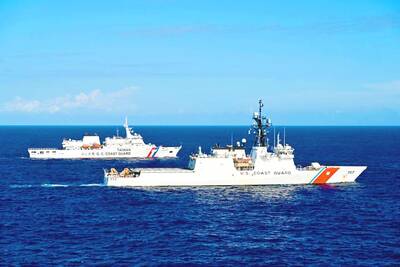
SIDE-BY-SIDE: The US appreciates Taiwan’s partnership in maritime security and safety, and supports its strong contributions to global maritime law enforcement, the AIT said The American Institute in Taiwan (AIT) yesterday for the first time shared a photograph of Taiwanese and US coast guard vessels operating side-by-side, saying that the two sides conducted joint operations ranging from search-and-rescue to maritime law enforcement. The Coast Guard Administration (CGA) and the US Coast Guard are “coordinating shared objectives such as search and rescue, preparing for tropical storms, disaster relief, preserving maritime resources, countering illegal fishing, and interdicting illegal drug shipments at sea,” the AIT said on Facebook. “The US appreciates Taiwan’s partnership in maritime security and safety, and supports Taiwan’s meaningful contributions on global issues including maritime law
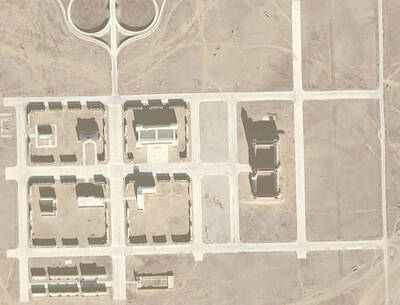
TARGETS: Taiwan has consistently planned for all possible scenarios involving Chinese action against the country and developed contingency measures, a major general said The Ministry of National Defense yesterday said it is monitoring the construction of full-scale replicas of military and government sites in Taiwan by the Chinese People’s Liberation Army’s (PLA). The comments from ministry spokesman Major General Sun Li-fang (孫立方) come after a report by the Telegraph on satellite imagery showing replicas of Taiwan’s Presidential Office Building, Suao Naval Base and other sites. Citing satellite imagery and defense analysts, the report, published on Sunday, said that the PLA had built life-size replicas of key government facilities to rehearse military operations under realistic conditions. The report described the scale and specificity of the training


 RSS
RSS