


Yemeni forces searched yesterday for suspected al-Qaeda militants behind a plot to bomb Jewish targets in Chicago, uncovered by the interception in Britain and Dubai of parcels with explosives sent from Yemen.
US President Barack Obama addressed the nation on Friday, saying US authorities would spare no effort to find the source of the packages that he called a “credible terrorist threat” aimed at two places of Jewish worship.
One parcel intercepted in Dubai had a bomb hidden in a printer, which bore all the hallmarks of al-Qaeda, said Dubai police, whose experts defused the device. British forensic experts were examining the other parcel yesterday.
“The parcel was prepared in a professional way where a closed electrical circuit was connected to a mobile phone SIM card hidden inside the printer,” a Dubai police statement said.
The plot originating in Yemen will further heighten security concerns about the unstable Arab state, seen by the West as the home of al-Qaeda’s most inventive and audacious affiliate.
Yemen-based al-Qaeda in the Arabian Peninsula (AQAP) and one of its leading figures, US-born Muslim cleric Anwar al-Awlak, have been priority US targets since it took responsibility for a failed plot to blow up a US jet on Christmas Day last year.
Dubai police said they found pentaerythritol trinitrate in a printer and cartridge, the same chemical explosive used in the bomb sewn into the underwear of a Nigerian man charged with the attempted Christmas attack.
There was no immediate claim of responsibility for the parcels, but US officials suspect AQAP, which is affiliated with al-Qaeda, whose militants killed 3,000 people using hijacked airliners in the Sept. 11, 2001, attacks on the US
The White House said Saudi Arabia had helped to identify the threat from Yemen, while Britain and the United Arab Emirates also provided information.
One of the packages was found on a United Parcel Service (UPS) cargo plane at East Midlands Airport, about 260km north of London. The other was discovered at a FedEx Corp facility in Dubai.
UPS and FedEx said they were halting shipments from Yemen. UPS planes were searched and then cleared in New Jersey and Philadelphia.
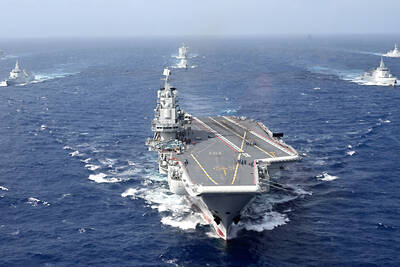
PROVOCATIVE: Chinese Deputy Ambassador to the UN Sun Lei accused Japan of sending military vessels to deliberately provoke tensions in the Taiwan Strait China denounced remarks by Japan and the EU about the South China Sea at a UN Security Council meeting on Monday, and accused Tokyo of provocative behavior in the Taiwan Strait and planning military expansion. Ayano Kunimitsu, a Japanese vice foreign minister, told the Council meeting on maritime security that Tokyo was seriously concerned about the situation in the East China and South China seas, and reiterated Japan’s opposition to any attempt to change the “status quo” by force, and obstruction of freedom of navigation and overflight. Stavros Lambrinidis, head of the EU delegation to the UN, also highlighted South China Sea

SILENCING CRITICS: In addition to blocking Taiwan, China aimed to prevent rights activists from speaking out against authoritarian states, a Cabinet department said The Ministry of Foreign Affairs (MOFA) yesterday condemned transnational repression by Beijing after RightsCon, a major digital human rights conference scheduled to be held in Zambia this week, was abruptly canceled due to Chinese pressure over Taiwanese participation. This year’s RightsCon, the world’s largest conference discussing issues “at the intersection of human rights and technology,” was scheduled to take place from tomorrow to Friday in Lusaka, and expected to draw 2,600 in-person attendees from 150 countries, along with 1,100 online participants. However, organizers were forced to cancel the event due to behind-the-scenes pressure from China, the ministry said, expressing its “strongest condemnation”
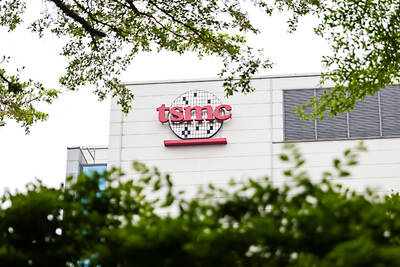
Taiwan Semiconductor Manufacturing Co (TSMC, 台積電), the world’s largest contract chipmaker, said it expects its 2-nanometer (2nm) chip capacity to grow at a compound annual rate of 70 percent from this year to 2028. The projection comes as five fabs begin volume production of 2-nanometer chips this year — two in Hsinchu and three in Kaohsiung — TSMC senior vice president and deputy cochief operating officer Cliff Hou (侯永清) said at the company’s annual technology symposium in Silicon Valley, California, last week. Output in the first year of 2-nanometer production, which began in the fourth quarter of last year, is expected to
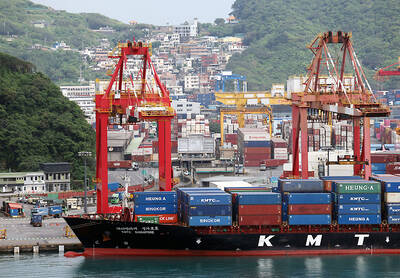
Taiwan’s economy grew far faster than expected in the first quarter, as booming demand for artificial intelligence (AI) applications drove a surge in exports, spilling over into investment and consumption, the Directorate-General of Budget, Accounting and Statistics (DGBAS) said yesterday. GDP growth was 13.69 percent year-on-year during the January-to-March period, beating the DGBAS’ February forecast by 2.23 percentage points and marking the most robust growth in nearly four decades, DGBAS senior official Chiang Hsin-yi (江心怡) told a news conference in Taipei. The result was powered by exports, which remain the backbone of Taiwan’s economy, Chiang said. Outbound shipments jumped 51.12 percent year-on-year to


 RSS
RSS